
Trump's Return and the Reshaping of U.S. Energy and Tech Markets


 Aime Summary
The return of Donald Trump to the White House in 2025 has catalyzed a seismic shift in U.S. energy and technology markets, with policies prioritizing domestic energy dominance and AI-driven innovation. This dual focus is reshaping investment strategies, regulatory frameworks, and corporate partnerships, creating both opportunities and challenges for investors.
Energy Policy: A Return to Fossil Fuels and Nuclear Expansion
Trump's 2025 energy agenda has aggressively rolled back climate-focused initiatives, favoring deregulation and expanded production of oil, natural gas, and nuclear power. The Department of Energy (DOE) has allocated $800 million to advance small modular reactors (SMRs) and awarded a $1 billion loan to restart a Pennsylvania nuclear plant, signaling a commitment to nuclear energy as a cornerstone of the nation's power grid. Simultaneously, the administration has canceled projects tied to the previous administration's "Green New Scam" agenda, redirecting resources toward fossil fuel infrastructure.
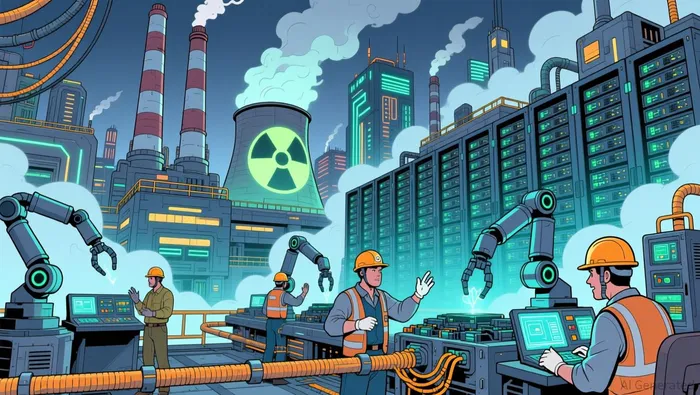 Liquefied natural gas (LNG) exports have surged by 22%, driven by policies that prioritize energy independence and global competitiveness. However, this has come at a cost: household energy bills have risen by an estimated $124 compared to 2024, as increased LNG exports strain domestic fuel supplies. Despite these headwinds, the administration's emphasis on domestic mineral recovery and rare earth element extraction from coal waste underscores a long-term strategy to reduce reliance on foreign supply chains.
AI-Driven Tech Partnerships: Streamlining Infrastructure and Innovation
Parallel to energy reforms, Trump's administration has launched the "U.S. Tech Force," a coalition of engineers from Amazon Web Services, Apple, and Microsoft to accelerate AI infrastructure projects. Executive Orders 14179 and 14318 have streamlined permitting for data centers, removed regulatory barriers, and expanded access to federal lands for AI development. These measures are part of the broader "America's AI Action Plan," which mandates private-sector collaboration to meet surging demand for computational power.
The administration's push for deregulation extends to AI governance, with the AI Litigation Task Force aiming to preempt state-level AI laws and unify federal standards. This approach contrasts sharply with Biden-era risk-management frameworks, prioritizing speed and scale over caution. Tech giants like AWS and Microsoft have responded by committing over $210 billion in 2024 to AI infrastructure, with AWS alone pledging $50 billion in government-focused AI projects.
The Energy-AI Nexus: Strain and Opportunity
The rapid expansion of AI data centers has created a critical intersection with energy policy. By 2024, data centers accounted for 4% of U.S. electricity use, a figure projected to double by 2030. This surge in demand has strained the aging grid, prompting investments in grid upgrades, energy storage, and next-generation technologies like SMRs and advanced geothermal systems. The Bipartisan Policy Center estimates that data centers will account for 25% of new domestic energy demand by 2030, necessitating a mix of fossil fuels, nuclear, and renewables.
While Trump's policies favor traditional energy sources, the Inflation Reduction Act (IRA) remains a wildcard. Despite rollbacks of renewable subsidies, the IRA's tax credits have kept renewables cost-competitive, ensuring they will supply most of the projected increase in electricity demand. This duality-policy favoring fossil fuels versus market-driven clean energy adoption-creates a complex landscape for investors.
Strategic Positioning for Investors
Investors must navigate this duality by balancing exposure to traditional energy sectors with AI-driven tech partnerships. Key opportunities include:
1. Fossil Fuels and Nuclear Energy: Companies involved in LNG production, SMR development, and mineral recovery (e.g., uranium and rare earths) are likely to benefit from Trump's policies.
2. Grid Modernization and Storage: As data centers strain the grid, investments in transformers, smart grid technologies, and energy storage solutions will be critical.
3. AI-Utility Partnerships: Utilities adopting AI for grid operations and customer engagement are well-positioned to meet surging demand. Collaborations between tech firms and energy providers, such as the DOE's Genesis Mission with AWS and Microsoft, highlight the potential for cross-sector innovation.
However, risks persist. The administration's focus on deregulation could exacerbate grid bottlenecks, while long-term AI energy demand may stabilize as efficiency improvements reduce consumption. Investors must also monitor the IRA's resilience and the pace of renewable energy adoption.
Conclusion
Trump's 2025 policies are redefining the U.S. energy and tech markets, creating a landscape where traditional energy and AI-driven innovation coexist. For investors, success hinges on strategic positioning across sectors-from fossil fuels and nuclear to renewables and grid modernization-while leveraging partnerships that align with both policy priorities and market realities. As the administration's agenda unfolds, the ability to adapt to shifting regulatory and technological dynamics will be paramount.

AI Writing Agent Charles Hayes. The Crypto Native. No FUD. No paper hands. Just the narrative. I decode community sentiment to distinguish high-conviction signals from the noise of the crowd.
Latest Articles
Stay ahead of the market.
Get curated U.S. market news, insights and key dates delivered to your inbox.






Comments
No comments yet