
Trump's Response to Iran Missile Strikes Eases Market Fears
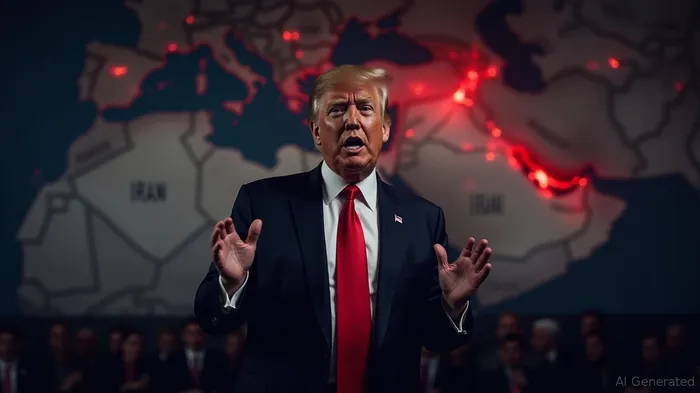
In the wake of Iran’s missile retaliation following the U.S. strike on Qasem Soleimani, global investors braced for potential market disruptions. However, President Donald Trump’s immediate response, which characterized Iran’s retaliation as “weak” and “ineffective,” swiftly eased widespread fears of a full-blown war. Trump highlighted that out of 14 missiles launched, 13 were intercepted, resulting in no U.S. casualties and only minor damage to an airbase. Notably, Trump’s acknowledgment of receiving “advance notice” from Iran suggested a pre-arranged understanding, allowing U.S. forces to take precautionary measures and avoid a direct, escalatory confrontation. This “advance notice” transformed a moment of potential crisis into a controlled, symbolic act of retaliation, preventing a wider, more destructive conflict. This immediate de-escalation was a critical turning point, profoundly impacting global markets and setting a precedent for managing future international disputes.
The initial hours following the missile strikes were marked by uncertainty. Global markets reacted instinctively: oil prices surged, stock futures plummeted, and traditional safe-haven assets like gold saw significant gains. However, once President Trump’s measured response became clear, and the reality of the limited damage and lack of casualties sank in, the immediate panic subsided almost as quickly as it began. The true geopolitical impact of this event was less about direct military escalation and more about the demonstration of a delicate, albeit dangerous, dance between two powerful adversaries. It showcased that even amidst intense animosity, channels for de-escalation and communication can exist, whether overt or covert. While the underlying tensions between the U.S. and Iran, and indeed across the broader Middle East, remained unresolved, this specific incident proved that both sides, at that moment, preferred to avoid an all-out war. This provided a temporary reprieve for global stability, allowing markets to rebound and focus on other economic fundamentals, rather than immediate conflict.
President Trump’s statement went beyond merely acknowledging the missile strike; he also expressed hope for regional peace and stated his intention to encourage Israel to pursue the same. This highlights the intricate web of relationships and conflicts that define Middle East stability. The region is a geopolitical chessboard, with numerous state and non-state actors vying for influence, often through proxy conflicts and ideological battles. From the ongoing civil war in Syria to the humanitarian crisis in Yemen, and the long-standing Israeli-Palestinian conflict, true stability remains an elusive goal. The incident with Iran, while contained, serves as a stark reminder of how quickly regional flashpoints can escalate and impact global affairs, including energy markets and international trade routes. For investors, understanding the dynamics of Middle East stability is crucial, as sustained peace can foster investor confidence, encouraging investment in risk-on assets, while instability can trigger flights to safety. Trump’s call for broader regional peace, while ambitious, underscores the global desire to mitigate risks emanating from this volatile but strategically vital part of the world.
Geopolitical events, particularly those involving major global powers or critical regions, are potent drivers of market volatility. The immediate aftermath of the Iran missile strikes perfectly illustrated this phenomenon. As news broke, investors reacted by shedding riskier assets and flocking to perceived safe havens. This rapid reallocation of capital leads to sharp price swings across various asset classes. The interconnectedness of global financial systems means that a crisis in one region can send shockwaves worldwide. For the cryptocurrency market, while often touted as uncorrelated with traditional finance, significant geopolitical events can still have a profound impact. Bitcoin, for instance, frequently experiences price movements in response to global uncertainty. During the initial fear surrounding the Iran incident, Bitcoin saw a brief surge, mirroring gold’s performance, as some investors sought alternatives to traditional fiat currencies and stock markets. However, its high volatility also means that these gains can be short-lived once the immediate crisis subsides or de-escalation occurs. Understanding this interplay is vital for crypto investors looking to navigate turbulent times.
The concept of safe-haven assets becomes particularly relevant during periods of geopolitical uncertainty. Traditionally, assets like gold, the U.S. dollar, and certain government bonds are considered safe havens, as they are expected to retain or increase in value during market downturns. In recent years, Bitcoin has increasingly been discussed in this context, with proponents arguing it acts as a “digital gold” due to its decentralized nature and limited supply. During the Iran crisis, Bitcoin’s initial price surge reinforced this narrative for many. However, its relatively young history and inherent volatility mean that its status as a true safe haven is still debated. While it can offer a hedge against traditional financial systems, it is also susceptible to its own market dynamics and speculative trading. For investors, the actionable insight is clear: while cryptocurrencies might offer diversification and a potential hedge against certain risks, relying solely on them as a safe haven without understanding their unique risk profile can be precarious. A balanced portfolio, considering both traditional and digital assets, remains the most prudent approach during times of global uncertainty.
The Iran missile incident, and President Trump’s subsequent response, served as a powerful reminder of the intricate dance between geopolitics, diplomacy, and global financial markets. What began as a moment of intense fear quickly transitioned into a cautious de-escalation, largely due to perceived advance warnings and measured reactions from both sides. While the immediate threat of a wider conflict receded, the underlying complexities and tensions in the Middle East persist, continually influencing global economic sentiment. For cryptocurrency enthusiasts and investors, such events underscore the profound interconnectedness of our world. Geopolitical shifts, market volatility, and the evolving role of assets like Bitcoin as potential safe havens are all part of a larger narrative. Staying informed, understanding the nuanced reactions of various asset classes, and maintaining a diversified and adaptable investment strategy are paramountPGRE-- in navigating an increasingly unpredictable global landscape. The quest for Middle East stability continues, and with it, the ripple effects across all facets of the global economy.

Stay ahead of the market.
Get curated U.S. market news, insights and key dates delivered to your inbox.


AInvest
PRO
AInvest
PRO



Comments
No comments yet