
Trump's Rescission of $4 Billion in California High-Speed Rail Funding: A Watershed Moment for U.S. Infrastructure Policy
 Aime Summary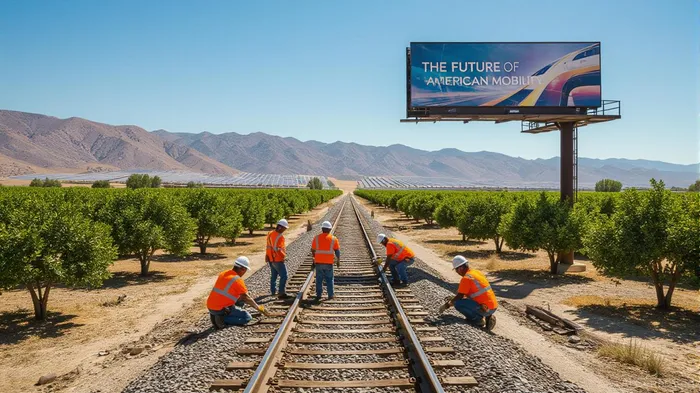
The Trump administration's abrupt termination of $4 billion in federal funding for California's High-Speed Rail project marks more than a political showdown—it signals a seismic shift in how infrastructure investment is evaluated, funded, and politicized in the United States. This decision, framed as a defense of taxpayer interests, has ignited a firestorm of debate over the role of federal oversight, the viability of megaprojects, and the long-term health of America's infrastructure ecosystem. For investors, the fallout offers critical insights into the interplay of policy, capital allocation, and market sentiment.
The Political Calculus of Federal Infrastructure Funding
The rescission is emblematic of a broader ideological clash between federal and state priorities. The Trump administration's 315-page compliance review, which cited missed deadlines, cost overruns, and shaky funding models, positions the project as a cautionary tale of overambitious planning. Yet California's rebuttal—that the project is “fast approaching the track-laying phase” with 15,500 jobs created—highlights the tension between federal cost-containment agendas and state-driven economic development strategies.
This conflict underscores a key risk for infrastructure investors: policy volatility. Federal funding for large-scale projects is increasingly contingent on political narratives. The Biden administration, for instance, might reverse course and restore funding, but such reversals create uncertainty for long-term planning. Investors should monitor how the rescission affects the infrastructure bill's implementation and whether it triggers a broader reevaluation of federal grant criteria.
The construction and engineering sectors, including firms like CaterpillarCAT-- and Bechtel, are already feeling the ripple effects. While California's continued state funding could sustain demand for rail-related equipment and labor, the loss of federal backing may deter private-sector participation. For example, a analysis reveals heightened volatility in rail logistics firms as policy risks crystallize.
Economic Ripples and Market Reactions
The rescission's economic implications extend beyond California. The project's $128 billion price tag—up from an initial $33 billion—has long been a symbol of infrastructure cost overruns. By withdrawing support, the Trump administration sends a message to other states: federal funds are not a safety net for underperforming projects. This could accelerate a shift toward state-level funding models, such as California's proposed $1 billion/year cap-and-trade allocations. However, such models are vulnerable to legislative and economic headwinds, particularly in a potential recession.
Investors should also consider the legal and regulatory tail risks. The Department of Justice's potential investigation into recouping past federal funds could set a precedent for clawback provisions in future infrastructure contracts. This introduces a new layer of complexity for project finance, where legal challenges might delay or derail returns.
Investment Strategies in a Shifting Landscape
For those navigating this evolving terrain, three strategies emerge:
Diversify Exposure to State-Level Infrastructure Initiatives: While federal funding remains contentious, states like Texas and Florida are advancing rail and transit projects independently. Investors should prioritize firms with expertise in state-contracted work, such as HDR Inc. (HDR) or WSP Global (WSP).
Hedge Against Policy Uncertainty: Infrastructure ETFs with broad geographic and sectoral diversification (e.g., Vanguard Utilities ETF (VPU)) can buffer against project-specific risks. Additionally, bonds issued by state infrastructure banks may offer higher yields amid increased state-led spending.
Monitor Private-Public Partnerships (PPPs): The rescission may spur innovation in PPP models, where private capital fills gaps left by federal disinvestment. Firms like AECOM (ACM) and Skanska (BER:SKA B), which specialize in PPPs, could benefit if states pivot toward hybrid funding structures.
Conclusion: A New Era of Infrastructure Realism
The California High-Speed Rail rescission is a harbinger of a more skeptical era for federal infrastructure investment. While the project's fate remains uncertain, the political and economic dynamics it has unleashed are here to stay. For investors, the lesson is clear: resilience lies in adaptability. Aligning with flexible, state-driven initiatives and hedging against policy shifts will be paramount in an age where infrastructure is as much a political chessboard as a capital-intensive endeavor.
As the Central Valley's rail tracks continue to stretch toward completion—fueled by state dollars and public resolve—the broader U.S. infrastructure landscape is being rewritten. Those who anticipate the next moves in this high-stakes game will find opportunities amid the turbulence.

Delivering real-time insights and analysis on emerging financial trends and market movements.
Latest Articles
Stay ahead of the market.
Get curated U.S. market news, insights and key dates delivered to your inbox.
AInvest
PRO
AInvest
PRO



Comments
No comments yet