
Trump Repositions Nuclear Submarines Amid Dmitry Medvedev's Threats on Ukraine Conflict
 Aime Summary
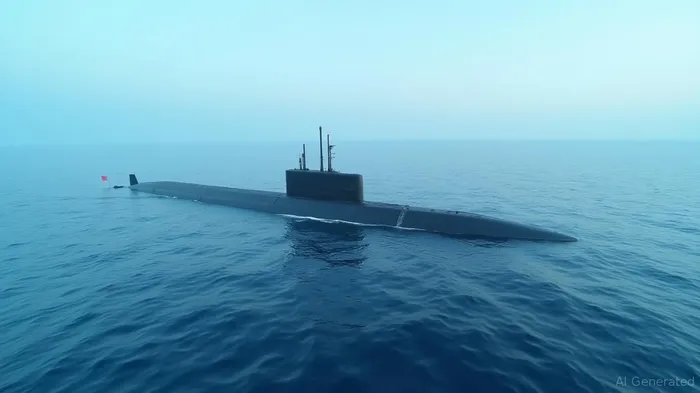
President Donald Trump has announced the repositioning of two nuclear submarines in response to provocative statements made by Dmitry Medvedev, Russia's and current deputy chairman of its Security Council. The decision follows a tense exchange between Trump and Medvedev, centered on Russia's nuclear capabilities and the ongoing war in Ukraine. Trump, through a post on Truth Social, emphasized the importance of being prepared given the nature of the threats posed by Medvedev, who made references to Russia’s Soviet-era automatic, retaliatory nuclear strike capabilities.
Medvedev, frequently involved in confrontational rhetoric, is perceived more as a voice of aggression rather than a significant decision-maker within the Kremlin. His recent comments, which suggested a threat in response to Trump’s ultimatum for Russia to hasten its efforts towards peace in Ukraine, were met with Trump’s firm repositioning of U.S. nuclear forces as a precautionary measure. Trump stressed the need for preparedness and underscored the implications of Medvedev's remarks.
The verbal exchanges between Trump and Medvedev have been marked by increasingly hostile rhetoric. Medvedev, who often utilizes social media to launch aggressive critiques, particularly challenged Trump’s deadline for Russia to progress towards peace in Ukraine. The former Russian president warned that ultimatum strategies would lead not to conflict between Russia and Ukraine, but with the United States itself.
Trump’s stance on the frontier of nuclear deterrence has escalated political tensions, particularly given the strategic implications of positioning nuclear-capable submarines. While the Pentagon typically retains a tight lid on the maneuvers of its nuclear forces, Trump’s public declarations have stirred a response that harkens back to Cold War-era brinkmanship.
In addressing the ongoing conflict in Ukraine, Trump attributed blame to President Joe Biden, framing the conflict as “Biden’s War” and positioning himself as a potential peacemaker. He articulated frustration with Russian President Vladimir Putin’s perceived inaction on peace negotiations, a scenario compounded by Russia’s continued military assaults on civilian areas.
Medvedev, who has previously been overshadowed since Vladimir Putin’s return to presidency, capitalizes on newer platforms to maintain a formidable presence with peculiar and inflammatory declarations against Western powers. Such exchanges highlight the fragile communications between high-profile political figures and underline the potential consequences of nuclear discourse.
Trump’s decisions feature prominently amidst broader foreign-policy pressures, with the move seen as a method to exert influence and potentially detract from unfavorable domestic narratives. Analysts caution against the potential repercussions if such statements are taken seriously by international adversaries, suggesting that they may affect diplomatic relations and strategic military calculations.
The repositioning of the submarines serves as both a tangible military maneuver and symbolic action amidst rhetorical sparring. As Trump navigates these diplomatic exchanges, the focus on nuclear capabilities underscores the gravity and sensitivity of such military decisions. The geopolitical landscape remains fraught, with strategic calculations dependent on both verbal and physical posturing by global leaders.
While Trump’s approach presents a bold stance against Medvedev's assertions, it continues to attract scrutiny regarding its impact on international relations and the potential for unintended consequences. As diplomatic efforts move forward, the significance of communication and preparedness in nuclear policy remains at the forefront of global strategic considerations.

Stay ahead of the market.
Get curated U.S. market news, insights and key dates delivered to your inbox.


AInvest
PRO
AInvest
PRO



Comments
No comments yet