
Trump Reportedly to Sign Order Allowing Private Assets in 401(k)s: Pros and Cons
ByAinvest
Thursday, Jul 17, 2025 10:37 am ET2min read
BLK--
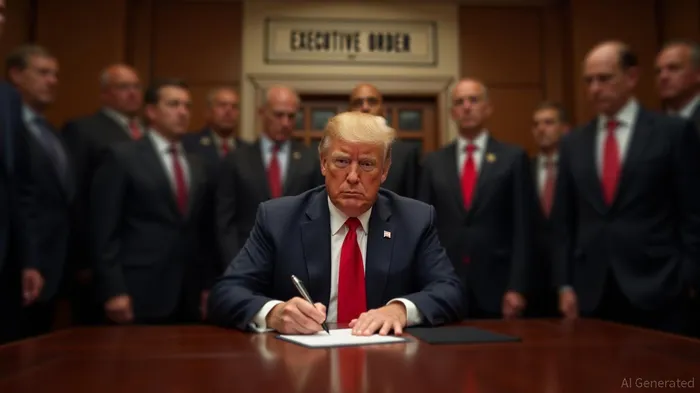
The executive order, expected to be signed in the coming days, would direct the Labor Department and the Securities and Exchange Commission to issue guidance for employers and plan administrators on incorporating investments such as private assets into 401(k) plans [1][2]. This directive is part of the Trump administration's broader effort to relax regulations on private-market investments.
Proponents of the move argue that expanding access to private-market investments will give retirement savers more diversification options, potentially leading to higher returns. Bryan Corbett, president and CEO of MFA, a trade association representing alternative asset management options, noted that this would provide more Americans with the diversification and investment options needed to build wealth and save for a successful retirement [1].
However, critics warn that the higher returns come with significant risks. Private-market investments, such as private equity, are typically characterized by higher risk and potentially higher returns compared to traditional investments like stocks and bonds that are traded on public markets [1]. The illiquid nature of these investments and the high management fees associated with them could make them less suitable for retail investors who require more liquidity and need to rely on their retirement savings for a long period.
Industry executives believe that additional steps, such as action by Congress, will be needed to make companies more comfortable with including private-asset funds in employees’ retirement plans [2]. Despite the criticism, several firms have already taken steps to prepare for this move. Apollo Global Management and State Street have released a target-date fund that includes a private-markets component, while Blue Owl Capital indicated this week it will collaborate with Voya on products that include private markets in 401(k) investments [1].
The push to include private equity in retirement plans is just the latest development in a long-running trend of combining public and private markets. The private equity industry experienced explosive growth during the pandemic as firms bought up portfolio companies with cheap debt. However, with higher rates stymieing private equity dealmaking, firms are now eyeing a liquidity opportunity: gaining access to the $12 trillion 401(k) market [3].
The move to open 401(k)s to private markets comes amid increasing interest in private-market investments. Reports have shown that the world’s super-rich have shown a growing affinity for private credit offerings. However, the decision to offer private equity as an investment option in workplace retirement plans has been met with criticism. Senator Elizabeth Warren (D-Mass) has challenged Empower, a major retirement plan provider, over its decision to include private equity investments for their employees [2].
Despite the criticism, Empower CEO Ed Murphy has defended the move, likening it to the introduction of 401(k) plans decades ago and emphasizing the importance of making private markets more accessible [2].
References:
[1] https://www.foxbusiness.com/economy/trump-reportedly-plans-order-open-401ks-private-markets-what-means-your-retirement
[2] https://www.aol.com/trump-set-sign-executive-order-133030846.html
[3] https://www.businessinsider.com/trump-private-equity-retirement-plan-risk-401k-retail-investor-warning-2025-7
OBDC--
STT--
VOYA--
President Trump is reportedly set to sign an executive order allowing employees to invest in private assets through their 401(k) retirement plans. Proponents argue this would give ordinary retirement savers access to higher returns in investments like private equity and debt funds, but financial experts caution that the potential of higher returns comes with steeper fees, greater risk, and less liquidity. The industry has been preparing for this move, with companies like Empower, Voya Financial, and BlackRock already developing private markets products for defined contribution plans.
President Donald Trump is reportedly set to sign an executive order that would expand access to private-market investments in 401(k) retirement plans. This move aims to provide ordinary retirement savers with the opportunity to invest in higher-returning assets like private equity and debt funds. However, financial experts caution that these investments come with steeper fees, greater risk, and less liquidity.The executive order, expected to be signed in the coming days, would direct the Labor Department and the Securities and Exchange Commission to issue guidance for employers and plan administrators on incorporating investments such as private assets into 401(k) plans [1][2]. This directive is part of the Trump administration's broader effort to relax regulations on private-market investments.
Proponents of the move argue that expanding access to private-market investments will give retirement savers more diversification options, potentially leading to higher returns. Bryan Corbett, president and CEO of MFA, a trade association representing alternative asset management options, noted that this would provide more Americans with the diversification and investment options needed to build wealth and save for a successful retirement [1].
However, critics warn that the higher returns come with significant risks. Private-market investments, such as private equity, are typically characterized by higher risk and potentially higher returns compared to traditional investments like stocks and bonds that are traded on public markets [1]. The illiquid nature of these investments and the high management fees associated with them could make them less suitable for retail investors who require more liquidity and need to rely on their retirement savings for a long period.
Industry executives believe that additional steps, such as action by Congress, will be needed to make companies more comfortable with including private-asset funds in employees’ retirement plans [2]. Despite the criticism, several firms have already taken steps to prepare for this move. Apollo Global Management and State Street have released a target-date fund that includes a private-markets component, while Blue Owl Capital indicated this week it will collaborate with Voya on products that include private markets in 401(k) investments [1].
The push to include private equity in retirement plans is just the latest development in a long-running trend of combining public and private markets. The private equity industry experienced explosive growth during the pandemic as firms bought up portfolio companies with cheap debt. However, with higher rates stymieing private equity dealmaking, firms are now eyeing a liquidity opportunity: gaining access to the $12 trillion 401(k) market [3].
The move to open 401(k)s to private markets comes amid increasing interest in private-market investments. Reports have shown that the world’s super-rich have shown a growing affinity for private credit offerings. However, the decision to offer private equity as an investment option in workplace retirement plans has been met with criticism. Senator Elizabeth Warren (D-Mass) has challenged Empower, a major retirement plan provider, over its decision to include private equity investments for their employees [2].
Despite the criticism, Empower CEO Ed Murphy has defended the move, likening it to the introduction of 401(k) plans decades ago and emphasizing the importance of making private markets more accessible [2].
References:
[1] https://www.foxbusiness.com/economy/trump-reportedly-plans-order-open-401ks-private-markets-what-means-your-retirement
[2] https://www.aol.com/trump-set-sign-executive-order-133030846.html
[3] https://www.businessinsider.com/trump-private-equity-retirement-plan-risk-401k-retail-investor-warning-2025-7
Stay ahead of the market.
Get curated U.S. market news, insights and key dates delivered to your inbox.
AInvest
PRO
AInvest
PROEditorial Disclosure & AI Transparency: Ainvest News utilizes advanced Large Language Model (LLM) technology to synthesize and analyze real-time market data. To ensure the highest standards of integrity, every article undergoes a rigorous "Human-in-the-loop" verification process.
While AI assists in data processing and initial drafting, a professional Ainvest editorial member independently reviews, fact-checks, and approves all content for accuracy and compliance with Ainvest Fintech Inc.’s editorial standards. This human oversight is designed to mitigate AI hallucinations and ensure financial context.
Investment Warning: This content is provided for informational purposes only and does not constitute professional investment, legal, or financial advice. Markets involve inherent risks. Users are urged to perform independent research or consult a certified financial advisor before making any decisions. Ainvest Fintech Inc. disclaims all liability for actions taken based on this information. Found an error?Report an Issue




Comments
No comments yet