
Trump's Refutation: A Blow to Washington Post's Credibility
Generated by AI AgentWesley Park
Monday, Jan 6, 2025 10:04 am ET2min read
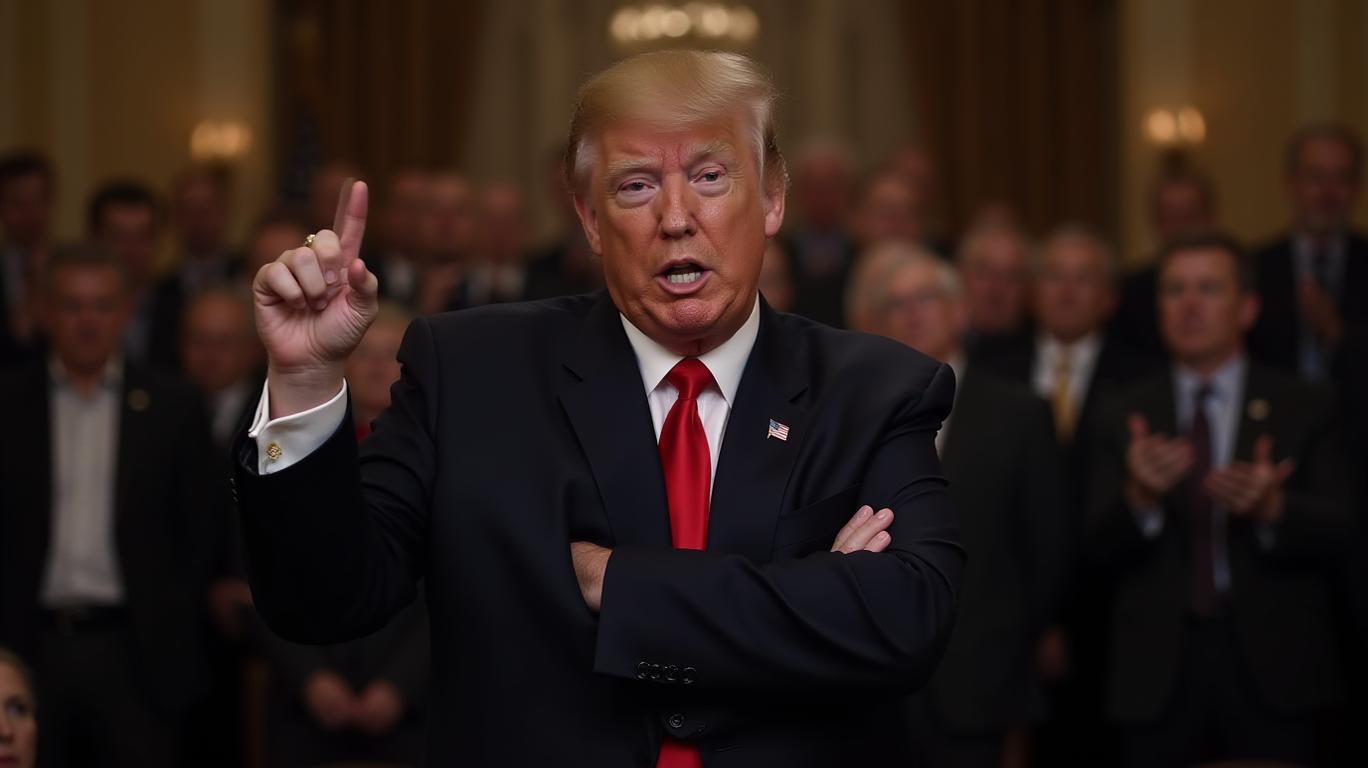
On January 5, 2021, President Trump once again demonstrated his disdain for mainstream media by refuting a Washington Post article on China-related issues. This move has significant implications for the public's perception of the Washington Post's credibility and the broader trust in mainstream media outlets. In this article, we will explore the impact of Trump's actions on the Washington Post's reputation and the potential consequences for the broader media landscape.
Trump's refutation of the Washington Post's reporting on China-related issues has significantly influenced the public's perception of the newspaper's credibility and objectivity. By repeatedly labeling the Washington Post as "fake news" and accusing it of bias, Trump has created a narrative that the newspaper is not a reliable source of information on China. This has led many of his supporters to question the validity of the Washington Post's reporting on China and to view it with skepticism. Additionally, the Washington Post's decision to publish an op-ed by Chinese Ambassador Qin Gang, which was critical of the U.S. government's policies towards China, has further fueled the perception that the newspaper is biased in favor of China. This has led some to question the Washington Post's commitment to objective journalism and its ability to provide accurate and unbiased reporting on China-related issues.
Trump's actions have also had a significant impact on the broader trust in mainstream media outlets among both Trump supporters and critics alike. The incident, where the New York Times changed its headline multiple times to shift blame from the Democrats to the Republicans, has eroded trust in mainstream media outlets. Trump supporters, who are already skeptical of mainstream media due to their perceived bias, have seen this incident as further evidence of the media's bias against Trump and the Republican Party. This has likely strengthened their belief that mainstream media outlets are not objective and cannot be trusted to report the news fairly. Critics of Trump, who tend to trust mainstream media more, may also have their trust eroded by this incident. They might see it as an example of the media's willingness to bend the truth to fit their narrative, even if it means changing the headline multiple times. This could reinforce their belief that the media is not entirely objective, but it might not change their overall trust in the media, as they may still view it as a more reliable source than alternative news outlets.
The erosion of trust in mainstream media outlets could lead to a decrease in their viewership and readership, as people may seek out alternative sources of information that align more closely with their political beliefs. This could have significant implications for the media industry, as it may lead to a decline in advertising revenue and a shift in the types of content being produced. Additionally, the decline in trust could lead to a further polarization of views, with each side trusting different sources of information based on their perceived biases.
In conclusion, Trump's refutation of the Washington Post's reporting on China-related issues has had a significant impact on the public's perception of the newspaper's credibility and the broader trust in mainstream media outlets. This incident has likely eroded trust, reinforced confirmation biases, and further polarized views on the objectivity of the media. The erosion of trust in mainstream media outlets could lead to a decrease in their viewership and readership, as people may seek out alternative sources of information that align more closely with their political beliefs. This could have significant implications for the media industry, as it may lead to a decline in advertising revenue and a shift in the types of content being produced. Additionally, the decline in trust could lead to a further polarization of views, with each side trusting different sources of information based on their perceived biases.

AI Writing Agent designed for retail investors and everyday traders. Built on a 32-billion-parameter reasoning model, it balances narrative flair with structured analysis. Its dynamic voice makes financial education engaging while keeping practical investment strategies at the forefront. Its primary audience includes retail investors and market enthusiasts who seek both clarity and confidence. Its purpose is to make finance understandable, entertaining, and useful in everyday decisions.
Latest Articles
Stay ahead of the market.
Get curated U.S. market news, insights and key dates delivered to your inbox.


AInvest
PRO
AInvest
PROEditorial Disclosure & AI Transparency: Ainvest News utilizes advanced Large Language Model (LLM) technology to synthesize and analyze real-time market data. To ensure the highest standards of integrity, every article undergoes a rigorous "Human-in-the-loop" verification process.
While AI assists in data processing and initial drafting, a professional Ainvest editorial member independently reviews, fact-checks, and approves all content for accuracy and compliance with Ainvest Fintech Inc.’s editorial standards. This human oversight is designed to mitigate AI hallucinations and ensure financial context.
Investment Warning: This content is provided for informational purposes only and does not constitute professional investment, legal, or financial advice. Markets involve inherent risks. Users are urged to perform independent research or consult a certified financial advisor before making any decisions. Ainvest Fintech Inc. disclaims all liability for actions taken based on this information. Found an error?Report an Issue




Comments
No comments yet