
Trump-Putin Summit Fails to Secure Ceasefire as Ukraine Conflict Persists into August 2025
 Aime Summary
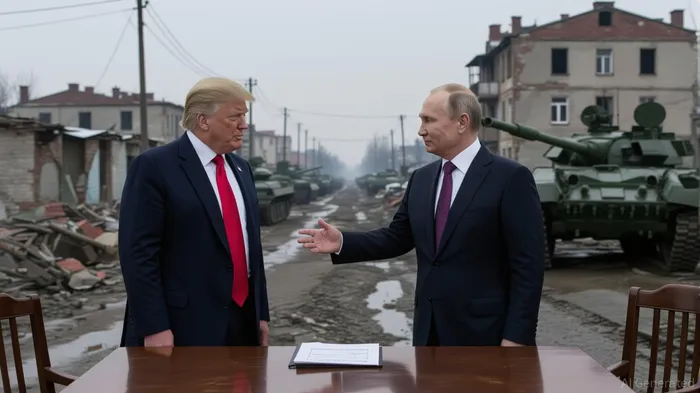
The high-stakes summit between former U.S. President Donald Trump and Russian President Vladimir Putin, held in the latter half of 2024, did not yield a ceasefire agreement in the ongoing conflict in Ukraine. As of August 2025, the war continues without signs of a near-term de-escalation, with both sides maintaining positions and preparing for further strategic moves.
No Breakthrough in Diplomatic Efforts
The meeting, widely anticipated as a potential turning point in the conflict, failed to produce a formal agreement. Despite discussions covering the humanitarian, political, and military aspects of the war, neither side committed to halting hostilities. Analysts have interpreted this outcome as a reflection of deep-seated disagreements over territorial integrity, governance, and the role of international institutions.
Ongoing Conflict and Strategic Projections
The failure to secure a ceasefire has not stopped the conflict from evolving. Military engagements remain active, with both sides demonstrating continued resolve. Strategic assessments now reflect a 25% probability of a territorial swap, suggesting that some localized exchanges may occur, though full-scale territorial reallocations are less likely.
More notably, there is a 40% likelihood of Russia following through with further military actions, potentially including intensified offensives or the consolidation of currently occupied regions. This assessment highlights the uncertainty in the conflict's trajectory and the possibility of prolonged fighting.
Market and Policy Implications
The continuation of the war into late 2025 has significant implications for global markets and policy frameworks. While the direct economic impact varies by sector, the persistence of the conflict signals a shift in expectations toward long-term strategic adjustments. Governments and institutions are recalibrating their policies to accommodate the evolving security landscape, with a focus on regional stability and resource allocation.
A Stalemate with No Clear End in Sight
As of August 2025, the absence of a ceasefire and the low probability of a resolution suggest that the war is in a phase of extended stalemate. Both sides appear prepared to endure the conflict, with military and political resources being redirected toward sustained operations. The lack of diplomatic progress underscores the complexity of the situation and the challenges in finding a mutually acceptable peace.
The war in Ukraine remains a focal point for global attention, with no indication that the current trajectory will change in the near future.

Stay ahead of the market.
Get curated U.S. market news, insights and key dates delivered to your inbox.


AInvest
PRO
AInvest
PRO



Comments
No comments yet