
Trump and Putin Discuss Ukraine Peace Plan Amid Territorial Swap Controversy
 Aime Summary
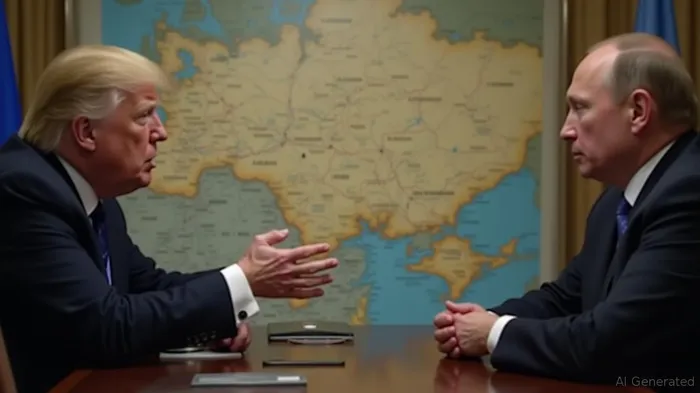
Former U.S. President Donald Trump announced plans to meet Russian President Vladimir Putin next Friday, August 15, 2025, in Alaska. The upcoming meeting has gained attention due to the implications it holds for the ongoing conflict in Ukraine. Trump disclosed details on his social media platform Truth Social, highlighting potential territorial exchanges as a part of an emerging peace deal. The arrangement, which proposes Ukraine to cede eastern regions like Donbas and Crimea to Russia, has been met with skepticism and concern among European leaders who suspect it may be Putin’s strategy to circumvent promised sanctions.
The high-profile meeting will mark the first occasion for Putin traveling to the U.S. since 2015 when he attended the UN General Assembly. This summit follows Trump’s ultimatum for Russia to achieve peace, or face economic penalties, underscoring the critical juncture in U.S.-Russia relations. Trump emphasized securing peace swiftly, suggesting a territorial swap as essential to concluding the hostilities as soon as possible.
Western officials have disclosed that Putin suggested the deal during a meeting with Trump’s foreign envoy in Moscow. The proposal to freeze current battle lines raises questions regarding its potential effectiveness in halting future aggression. Analysts voice apprehension that such a territorial sacrifice may inadvertently incentivize further Russian attacks, creating long-term instability.
Trump remains steadfast in approaching the prospect of a peace agreement with optimism, indicating a potential breakthrough is within reach. He attributed this positive outlook to aligning the desires for peace among European leaders and both Ukrainian and Russian presidents. The U.S. has been diligently working with allies to promote acceptance of Putin’s plan, despite uncertainties persisting over its final structure.
The detail surrounding additional territories such as Zaporizhzhia and Kherson in Ukraine remains indistinct, leaving doubts about Russia's commitment to halting offensives in these regions. The motivations behind Putin's proposal remain partially opaque, especially regarding demands forbidding Ukraine’s accession to NATO, a significant sticking point.
The meeting’s logistics are complicated by Putin's standing ICC arrest warrant for alleged war crimes, limiting his travel options in ICC member countries. Trump’s administration historically has not acknowledged the ICC’s jurisdiction and sanctioned its officials. Thus, hosting Putin in Alaska circumvents international liabilities and logistics since the U.S. is not an ICC member nor recognizes its authority.
Deepening this complexity is the consideration of potential trilateral talks involving Ukrainian President Volodymyr Zelenskyy. However, Russia's reluctance to facilitate direct interactions between Putin and Zelenskyy poses another hurdle.
As the deadline for Putin achieving peace, set by Trump, expired without resolutions, the U.S. administration resorts to strategizing unspecified steps potentially enforceable against Russia. Trump’s diplomatic maneuvers have prompted European concerns, potentially leading to a compromise favoring Russian interests, generating a diplomatic victory for Putin.
As Trump’s envoy, Steve Witkoff, conducts ongoing discussions in Moscow, the U.S.’s approach to negotiating propositions on territorial exchanges remains pertinent. Trump showcased confidence in these diplomatic engagements, reiterating progress while awaiting significant developments. His rhetoric describes a complicated negotiation landscape, with territorial concessions proposed by Russia, creating contentious discussions among Ukrainian and NATO allies.
Amid political fervor, Trump dismisses linking his endeavors in ending the conflict to aspirations for accolades like the Nobel Peace Prize, instead prioritizing saving lives and achieving a long-lasting resolution. His administration displays a determined posture in fostering peace, contending with Putin’s strategic maneuvers visible in ongoing missile attacks.
As tensions heighten with talks drawing near, Trump expressed ambitions to expedite a resolution, acknowledging complex arrangements intrinsic to hosting the meeting. U.S. officials aspire to facilitate communications while avoiding geopolitical faux pas in negotiating territorial swaps impacting both nations. Saliently, Ukrainian resistance to territorial forfeiture, compounded by the conflicting interests of major political players, further magnifies the stakes.
The conference, ultimately an opportunity to address strained U.S.-Russia relations, encapsulates broader geopolitical implications. It portrays a diplomatic fixture invigorating Russian constitutional dialogues, casting uncertainty on its potential to foster lasting peace absent concerted international collaboration.

Stay ahead of the market.
Get curated U.S. market news, insights and key dates delivered to your inbox.


AInvest
PRO
AInvest
PRO



Comments
No comments yet