
Trump-Putin Alaska Summit Sparks Debate Amid Shifting Tensions
 Aime Summary
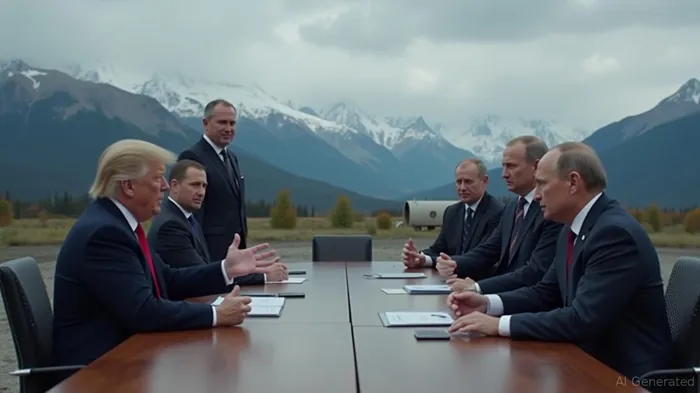
Donald Trump’s upcoming summit with Vladimir Putin in Alaska represents a pivotal moment in their long and complex relationship, which has oscillated between camaraderie and confrontation. The meeting, which has drawn both domestic and international attention, is seen as an opportunity for both leaders to recalibrate their ties and address the ongoing war in Ukraine. However, it has also sparked controversy, with critics warning that it may provide Putin with a platform to undermine Ukraine’s position and further isolate Kyiv from U.S. support [1].
Trump has long maintained a unique rapport with Putin, often praising him in ways that diverged from mainstream U.S. political norms. During the 2016 presidential campaign, Trump questioned U.S. intelligence assessments that Russian actors had interfered in the election, even suggesting in a public appearance that Russian authorities should look for missing emails linked to his opponent, Hillary Clinton. This marked the beginning of a pattern in which Trump often downplayed or dismissed investigations into Russian election interference, including those led by Special Counsel Robert Mueller [1].
During his first term, Trump met with Putin multiple times, most notably in the 2018 Helsinki summit. There, he famously stated that he believed Putin when the Russian leader denied any Russian involvement in election interference, despite overwhelming intelligence suggesting otherwise. The statement caused an uproar and remains one of the most scrutinized moments in Trump’s presidency. Putin himself has acknowledged his preference for Trump, saying in 2019 that he felt sympathy for a leader who spoke of normalizing relations with Russia [1].
Following the 2022 invasion of Ukraine, Trump continued to express admiration for Putin, calling the Russian leader “pretty smart” for taking over a country with minimal consequences. He also suggested that the war could have been avoided if he had remained in office, a claim that Putin appeared to endorse. Despite these statements, Trump later claimed he was being sarcastic when he said the war could have been settled in 24 hours. This evolving stance reflects the complexity of Trump’s approach to Russia, which has vacillated between optimism and frustration [1].
In recent months, Trump has grown more critical of Putin, especially as the war in Ukraine has continued to escalate. In May, Trump publicly admonished Putin, calling him “crazy” and urging him to “stop” the attacks. He also took a more aggressive tone by repositioning U.S. nuclear submarines in response to what he described as “provocative” statements from the Russian leader. Despite these criticisms, Trump has expressed cautious optimism about the upcoming summit, describing it as a “feel-out meeting” to assess Putin’s willingness to pursue a ceasefire [1].
For Putin, the summit represents a strategic opportunity to repair relations with the U.S. and counter the Western isolation that has followed the invasion of Ukraine. He has openly stated his desire to improve U.S.-Russia relations and has proposed joint economic projects as a way to move beyond the conflict in Ukraine. However, critics argue that inviting Putin to U.S. soil may benefit the Russian leader more than the U.S. or Ukraine, particularly since Ukraine’s president was not included in the summit agenda [1].
Ian Kelly, a former U.S. ambassador to Georgia, has called the meeting a “colossal mistake,” arguing that it gives Putin a platform to voice his demands without any leverage from the U.S. side. Republican Sen. Lindsey Graham, on the other hand, has expressed confidence in Trump’s ability to negotiate from a position of strength and to prioritize the needs of both Europe and Ukraine. The mixed reactions highlight the polarized views on how to handle the Trump-Putin dynamic [1].
The summit has also raised questions about the unpredictability of Trump’s foreign policy approach. While he has previously portrayed Putin as a strategic ally, his recent public rebukes suggest a more adversarial stance. Whether this will translate into concrete policy changes or remain rhetorical remains to be seen. For now, the meeting in Alaska stands as a symbolic and potentially consequential step in the ongoing evolution of U.S.-Russia relations [1].
Source:
[1] From friendly to frenemies: Retracing the Trump-Putin relationship as they meet in Alaska https://fortune.com/2025/08/14/trump-putin-relationship-russia-ukraine-cease-fire-alaska-meeting/

Stay ahead of the market.
Get curated U.S. market news, insights and key dates delivered to your inbox.


AInvest
PRO
AInvest
PRO



Comments
No comments yet