
Trump Pushes Executive Order to Curb Crypto De-Banking as Banks Intensify Restrictions
 Aime Summary
Banks across the United States continue to restrict or terminate financial services for cryptocurrency companies, despite efforts by President Donald TrumpTRUMP-- to curb such practices. These actions, often described as part of an ongoing “Operation Chokepoint,” have left firms like Unicoin facing account closures and service denials from major institutions including Citibank, ChaseJPM--, Wells FargoWFC--, City National Bank of Florida, and TD Bank. Unicoin CEO Alex Konanykhin noted that four banks severed ties with the company in 2025 alone, describing the trend as a “large-scale nationwide operation” against the crypto industry [1].
Industry observers warn that these banking restrictions have evolved into what Andreessen Horowitz partner Alex Rampell calls “Operation Chokepoint 3.0.” This includes higher fees for crypto-related transactions and stricter access to account data for platforms such as CoinbaseCOIN-- and RobinhoodHOOD--. Konanykhin emphasized the disruptive nature of these practices, which he argues are not only harmful to individual businesses but also threaten the United States' position in the global digital asset market [2].
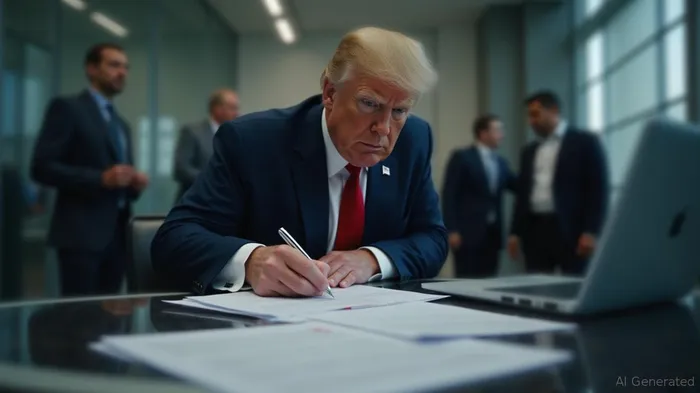
In response, the Trump administration is reportedly preparing an executive order to address the issue. The directive is expected to task federal regulators with identifying and penalizing banks engaged in de-banking. It will also require the Small Business Administration to reinstate clients who were unlawfully denied services and to review complaint data to assess patterns of exclusion [3]. Konanykhin believes the order could mark a turning point for the American crypto industry, potentially restoring its global influence akin to Hollywood and Silicon Valley [4].
Despite these political moves, legal experts remain cautious about the pace of change. Elizabeth Blickley of Fox Rothschild noted that while the administration has taken a pro-crypto stance, meaningful progress will depend on the language and enforceability of new regulations. She highlighted the recently enacted Genius Act, which mandates a 180-day review period for a potential stablecoin framework, as an example of the slow-moving nature of regulatory reform [5]. Blickley also warned that many proposed crypto bills fail to advance in Congress, and even those that pass may face legal challenges. Until there is greater clarity, she said, banks are unlikely to ease their risk-averse policies toward the sector [6].
The continued de-banking of crypto companies suggests that political rhetoric alone may not be sufficient to overcome institutional resistance. Without clear, enforceable rules and a shift in risk perception among financial institutionsFISI--, the industry may struggle to gain broader financial access. The effectiveness of Trump’s executive order will ultimately depend on its scope and the willingness of regulators to enforce it. Until then, the crypto sector remains under siege from banking institutions reluctant to engage with digital assets.
Sources:
[1] Cointelegraph, https://cointelegraph.com/news/crypto-debanking-persists-despite-trump-pro-crypto-push
[3] FastBull, https://m.fastbull.com/news-detail/xrp-stalls-but-holds-the-line-at-330-news_6100_0_2025_3_7084_3
[5] Global, https://www.globalplayer.com/podcasts/42L1UX/

Stay ahead of the market.
Get curated U.S. market news, insights and key dates delivered to your inbox.
AInvest
PRO
AInvest
PRO



Comments
No comments yet