
Trump Proposes Sweeping 100% Chip Tariffs: But Apple Gets a Pass, Pledges $100B U.S. Investment
 Aime Summary
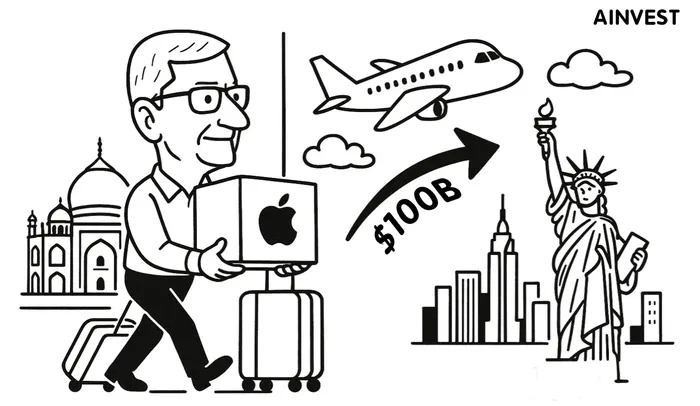
President Trump unveiled an aggressive trade maneuver: implementing a 100% tariff on chip imports, exempting companies that move production to the U.S. Apple Inc.AAPL-- was immediately protected under this carve-out, with CEO TimTIMB-- Cook announcing an additional $100 billion investment in U.S. operations, boosting the company’s total commitment to $600 billion. A bold statement from both sides reshapes the trade-technology-investment landscape.
Trump’s Chip Tariff & Apple’s Big Bet
At the White House, President Trump addressed the press: “We’re going to be putting a very large tariff on chips and semiconductors, but the good news for companies like AppleAAPL-- is, if you’re building in the United States... there will be no charge.”
He elaborated that this exemption applies even to firms that have committed to build in the U.S., enabling firms like Apple to avoid punitive levies entirely.
In follow-up remarks, Trump added: “In other words, we’ll be putting a tariff of approximately 100% on chips and semiconductors. But if you’re building in the United States of America, there’s no charge.”
Apple’s response was immediate. CEO Tim Cook unveiled a new American Manufacturing Program, backed by large contributions from suppliers including CorningGLW--, Applied MaterialsAMAT--, and Texas InstrumentsTXN--. Corning will dedicate a Kentucky plant exclusively to Apple’s glass production, expanding its workforce by 50%. The $100 billion injection adds to a previous $500 billion pledge, bringing Apple’s U.S. investment total to $600 billion.
Apple’s Stock Reaction and Financial Resilience
The market greeted the announcement positively. Apple shares jumped over 5%, closing at $213.25 and briefly dipping into $219 in after-hours trading.
The broad sentiment: Apple’s tariff exemption and massive domestic pledge offer near-term relief and improved policy visibility.
In parallel, Apple just reported robust Q3 earnings, with $94 billion in revenue—beating estimates—driven by a 13% uptick in iPhone sales to $44.6 billion and a record $27.4 billion in services revenue. Net income reached $23.4 billion, despite expecting $1.1 billion in tariff-related costs in the coming quarter.
Nonetheless, Apple shares remain down approximately 15% year-to-date, pressured by persistent geopolitical and AI-related uncertainties.
Broader Corporate Response
Apple isn’t alone in leveraging the exemption. Industry heavyweights such as TSMCTSM--, Samsung Electronics, Texas Instruments, MicronMU--, and GlobalFoundriesGFS-- have also publicly committed to expanding U.S. chip production—often in coordination with the White House. IntelINTC--, despite recent financial setbacks, retains multiple U.S. fabs and is well-positioned to benefit if its turnaround continues.
Industry-Wide Impact
The tariff carve-out incentivizes reshoring of chip manufacturing, reshaping supply chain dynamics. Firms with existing—or announced—U.S. chips and assembly operations now enjoy a structural cost advantage. Market players reliant solely on overseas foundries may see margins squeezed. It also accelerates U.S. investments in advanced semiconductor capacity.
Trump’s Tariff Strategy: A Recap
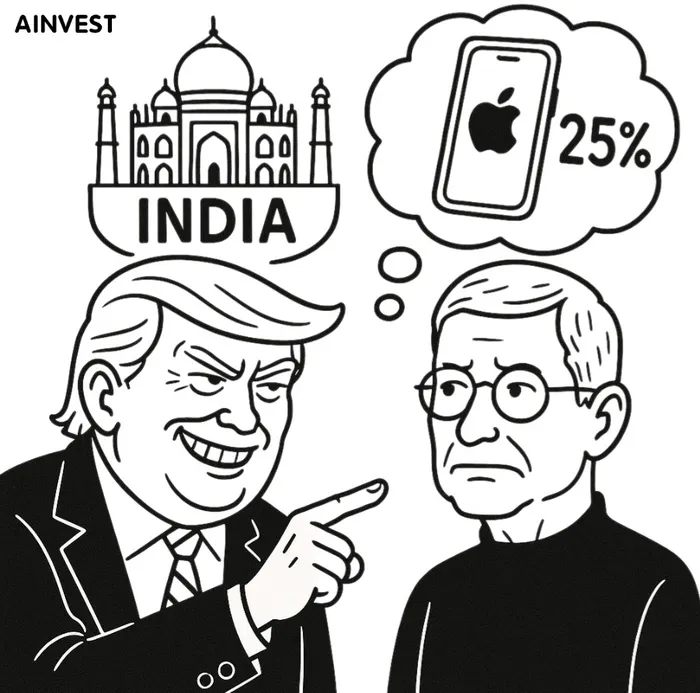
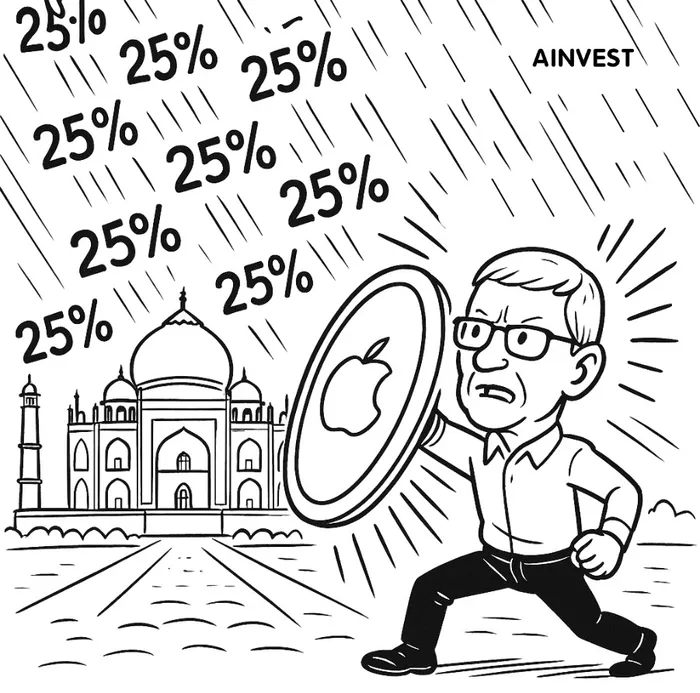
Tariffs have become a central feature of Trump’s second term. While smartphones, PCs, and monitors were previously exempted, chips now face the full force—unless U.S. production commitments are made. Earlier this year, Trump threatened a 25% tariff on Apple if it didn’t move iPhone assembly to the U.S.; Cook replied that some assembly would remain overseas for the near term. Today’s exemption signals that commitment, not completion, may suffice to dodge levies.
Analyst Views & What Investors Should Consider
Rosenblatt analyst Barton Crockett earlier warns that without exemptions, Apple could face up to $39.5 billion in tariff costs, eroding operating profits and EPS by roughly 32%. He maintains a Buy rating with a $263 target.
Tigress Financial (Ivan Feinseth) remains bullish—reaffirmed a Strong Buy, raising price target to $300—citing long-term growth in services and ecosystem opportunities through Apple Intelligence.
Wedbush’s Dan Ives slashed his target to $250 amid what he called "tariff economic Armageddon" for Apple.
Investor Takeaways & Call to Action
- Tap into domestic growth: Investor capital should weigh Apple’s U.S. manufacturing expansion as a hedge against tariff exposure.
- Monitor shifting analyst sentiment: Price targets range widely—from $200 (Morningstar fair value) to $300—reflecting diverging assumptions.
- Watch earnings momentum: Q3 strong results and forward revenue growth forecasts (mid- to high-single digits from analysts) support near-term stock stability.
- Consider risks: Repricing and competition, especially from Samsung, could swing margins if Apple fails to fully localize production.
Conclusion
Trump’s aggressive 100% chip tariff, paired with carve-outs for onshore investment, positions Apple as a model compliance story—leveraging the policy to justify a historic expansion in U.S. infrastructure. As other tech giants follow suit, the tariff scheme may rewrite semiconductor economics, accelerating the relentless race to bring chip manufacturing back home.

Stay ahead of the market.
Get curated U.S. market news, insights and key dates delivered to your inbox.
AInvest
PRO
AInvest
PRO



Comments
No comments yet