
Trump's Proposed Tariff Dividend and Its Market Implications


 Aime Summary
Fiscal Feasibility: Revenue vs. Economic Costs
The Trump administration claims that tariffs on imported goods will generate "trillions of dollars" over several years, , according to a People.com report. Treasury Secretary has suggested the dividend could take the form of tax cuts on tips, overtime pay, and auto loans, rather than direct checks, as explained in an NDTV article. However, economic analyses reveal a more nuanced picture.
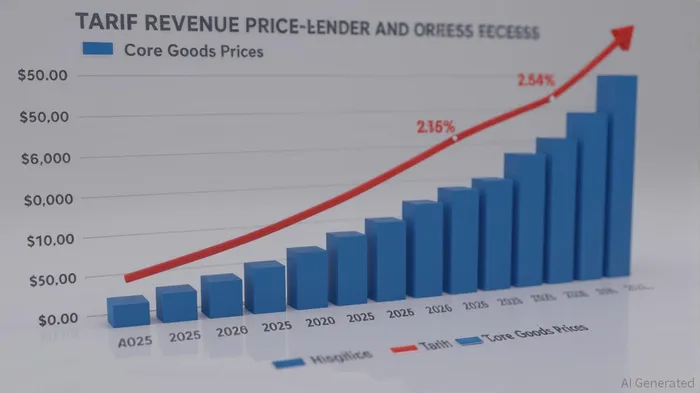
According to a report, , but this figure is lower than expected based on statutory rates. , , yet economists caution that such rates may not sustainably replace income taxes or drive reshoring, as noted in the same report. Meanwhile, , , according to the Yale Budget Lab.
Political Challenges: GOP Divisions and Legal Uncertainty
The dividend plan faces significant political hurdles. While Trump has positioned it as a populist win, many Republicans argue that tariff revenue should prioritize debt reduction. Former Speaker has been publicly criticized by Trump for supporting the 2023 debt ceiling suspension, which the president called "one of the dumbest political decisions made in years," as reported by Fox News. This tension underscores broader GOP disagreements over fiscal policy.
Legally, the 's upcoming ruling on the tariffs' constitutionality adds another layer of risk. The court has raised skeptical questions about the president's authority to impose such duties under the International Emergency Economic Powers Act, as noted in the People.com article. If invalidated, the administration may need to pivot to alternative trade strategies, complicating the dividend's implementation.
Market Implications: Winners, Losers, and Volatility
The tariff dividend could reshape market dynamics in several ways. For import-dependent industries-such as automotive, electronics, and retail-higher tariffs may lead to margin compression and supply chain disruptions. Nvidia and AMD, for instance, , as reported by GuruFocus. Conversely, domestic manufacturers and energy producers might benefit from reduced foreign competition.
Consumer behavior is another wildcard. , the inflationary pressures from tariffs may offset these gains. A recent poll indicates public skepticism about the long-term economic benefits of the policy, as noted in a Wall Street Journal piece. Additionally, the uncertainty surrounding the Supreme Court case has already introduced volatility into trade-sensitive sectors.
Conclusion: A High-Stakes Gamble
Trump's tariff dividend plan represents a bold fiscal experiment, blending populist economics with protectionist trade policies. While the administration touts its potential to enrich Americans and reduce debt, the plan's success hinges on three critical factors: the sustainability of tariff revenue, congressional cooperation, and the Supreme Court's verdict. For investors, the key takeaway is to monitor these variables closely, as the outcome could reshape both market sectors and the broader economic landscape.

Delivering real-time insights and analysis on emerging financial trends and market movements.
Latest Articles
Stay ahead of the market.
Get curated U.S. market news, insights and key dates delivered to your inbox.






Comments
No comments yet