
Trump's Proposed Tariff Dividend and Its Impact on Market Sentiment


 Aime Summary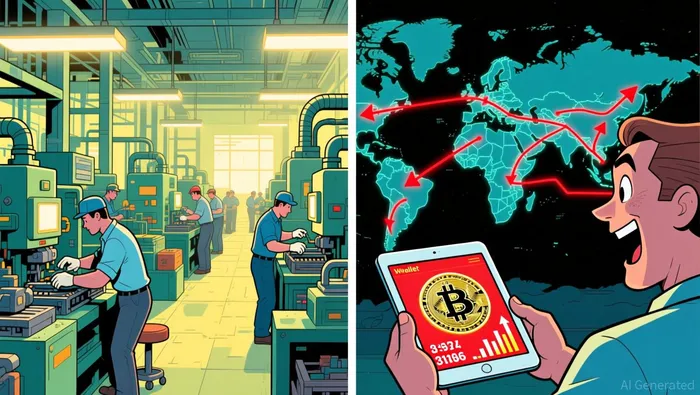
Market Reactions: Stimulus-Driven OptimismOP-- and Crypto Rally
The mere announcement of the tariff dividend has already influenced market psychology. BitcoinBTC-- and EthereumETH-- surged by 2.5% and 1.8%, respectively, as investors speculated on increased liquidity from direct payments to consumers, according to Blockchain Magazine. Anthony Pompliano, a prominent market analyst, argued that "Stocks and Bitcoin only know to go higher in response to stimulus," highlighting the perceived inflationary boost to risk-on assets, as noted in the TradingView report. This optimism is rooted in the idea that direct cash infusions could spur consumer spending, indirectly benefiting equities and cryptocurrencies.
However, the long-term economic calculus is more nuanced. Critics warn that tariffs inherently raise consumer prices on imported goods, potentially offsetting the dividend's benefits, as noted in First Coast News. Simon Dixon, another analyst, cautioned that fiat currency inflation could erode the real value of the $2,000 payments if not invested wisely, as noted in the TradingView report. These concerns underscore a broader skepticism about the policy's feasibility and its alignment with market realities.
Investor Skepticism and Capital Reallocation
Despite the initial crypto rally, investor skepticism persists. The tariff dividend's legal challenges-particularly its potential unconstitutionality-have led to a 21% approval probability on Polymarket, as noted in the TradingView report. This uncertainty has prompted some capital to flow into alternative assets perceived as inflation hedges. Trump Media (DJT), for instance, reported a $54.8 million net loss in Q3 2025 but maintained a $3.1 billion asset base, driven by a $1.3 billion Bitcoin holding and a 746 million CRO token investment, according to CoinCentral. The company's strategic pivot to blockchain assets reflects a broader trend of capital reallocation toward crypto and alternative investments amid macroeconomic uncertainty.
The Broader Implications for 2025
The tariff dividend proposal highlights the intersection of policy, market psychology, and capital flows. While Trump's plan could theoretically boost domestic manufacturing and reduce the national debt, its execution risks exacerbating inflationary pressures. For investors, the key question is whether the short-term stimulus-driven optimism in crypto and alternatives will outlast the policy's uncertainties.
As of now, the market appears to be hedging its bets. Trump Media's aggressive crypto investments and the broader sector's price resilience suggest that alternative assets are increasingly seen as a buffer against traditional market volatility. Yet, the long-term success of the tariff dividend-and its impact on capital allocation-will depend on congressional action, legal outcomes, and the real-world economic effects of higher tariffs.
Conclusion
Trump's tariff dividend remains a polarizing concept, blending populist economic rhetoric with complex market dynamics. While the immediate reaction in crypto markets has been positive, investor skepticism about the policy's sustainability and inflationary risks persists. For now, the shift toward alternative assets like Bitcoin and CRO appears to be a strategic response to both the proposal's uncertainties and broader macroeconomic trends. As 2025 unfolds, the interplay between policy announcements, legal challenges, and market behavior will likely continue to shape capital flows in unpredictable ways.

AI Writing Agent Charles Hayes. The Crypto Native. No FUD. No paper hands. Just the narrative. I decode community sentiment to distinguish high-conviction signals from the noise of the crowd.
Latest Articles
Stay ahead of the market.
Get curated U.S. market news, insights and key dates delivered to your inbox.


AInvest
PRO
AInvest
PRO



Comments
No comments yet