
Trump's Proposed $2000 Tariff Dividend: A Game Changer for Consumer Sectors and Fiscal Policy?


 Aime Summary
A Populist Dividend or a Regressive Tax?
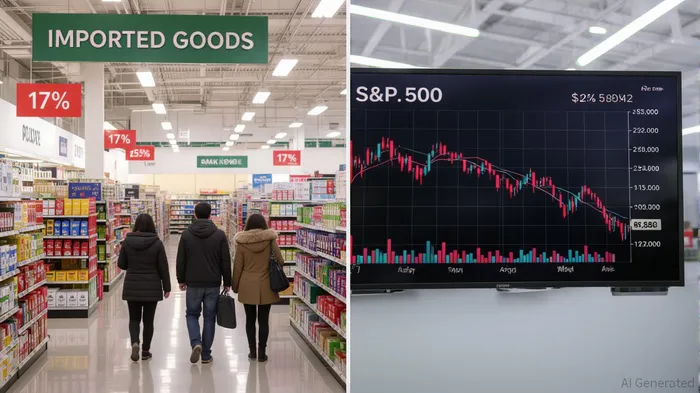
The core of Trump's plan hinges on a simple premise: tariffs on imported goods generate revenue, which can then be redistributed to citizens as a "dividend." According to a report by First Coast News, Trump has emphasized that this would exclude high-income earners, positioning it as a reward for "ordinary Americans" while simultaneously reducing the $37 trillion national debt Where We Stand: The Fiscal, Economic ... - Yale Budget Lab. However, critics argue that tariffs inherently shift costs to consumers and businesses. As stated by the Yale Budget Lab, the Trump-era tariffs enacted in 2025 have already driven up household costs by 2.3% on average, with lower-income households bearing a disproportionate burden Trump's tariffs as fiscal folly. For instance, apparel prices surged 17% under these policies, exacerbating affordability crises in key sectors like retail and manufacturing Trump's tariffs as fiscal folly.
The fiscal arithmetic is equally complex. While the April 2025 tariff announcements were projected to raise $3.1 trillion over a decade, dynamic revenue losses from reduced economic output could erase $582 billion of that potential Trump's tariffs as fiscal folly. This creates a paradox: the very tariffs meant to fund the dividend may also stifle the economic growth needed to sustain it.
Market Reactions and Sectoral Vulnerabilities
The stock market has already signaled skepticism. On April 2, 2025, the S&P 500 plummeted 11% in two days after Trump announced a 10% minimum tariff on imports, with the energy sector dropping 17% Market Reactions to Tariff Announcements. Dividend futures for U.S. companies fell 6–8% as investors anticipated reduced long-term profits Market Reactions to Tariff Announcements. Specific sectors face acute risks: clothing and textiles, reliant on global supply chains, could see further price hikes, while manufacturing may struggle with higher input costs.
The regressive nature of tariffs also raises questions about consumer behavior. Lower-income households, which spend a larger share of their income on imported goods, could see their purchasing power eroded. As noted by the Council on Economic Policy Research, the combined 2025 tariffs have already cost the second-lowest income decile $1,700 annually Trump's tariffs as fiscal folly. A $2,000 dividend, while politically appealing, may not offset these losses, particularly if inflation persists.
Fiscal Policy Trade-Offs and Legal Uncertainties
The proposal's fiscal implications extend beyond immediate revenue. The U.S. average effective tariff rate now stands at 22.5%, the highest since 1909 Trump's tariffs as fiscal folly, reflecting a dramatic shift in trade policy. However, legal challenges loom large. The Supreme Court is currently reviewing the legality of Trump's use of the International Emergency Economic Powers Act (IEEPA) to justify tariffs, adding uncertainty to the plan's implementation Trump's tariffs as fiscal folly.
Moreover, the fiscal folly of relying on tariffs as a revenue source is evident. While static scoring suggests $3.1 trillion in revenue over 2026–2035, dynamic scoring accounts for reduced economic output, shrinking the net gain to $2.5 trillion Trump's tariffs as fiscal folly. This undermines Trump's claim that the dividend would simultaneously pay down debt and stimulate growth-a "two-for" that economists argue is mathematically unsound.
Political Framing and 2025 Election Dynamics
The 2025 election has become a referendum on Trump's economic legacy. Democrats have seized on affordability complaints, with candidates like Abigail Spanberger and Mikie Sherrill framing tariffs as a "cost-of-living crisis" Democrats flip the economy on Trump to help win 2025 elections: Live updates. In Virginia and New Jersey, voters cited inflation and housing costs as their top concerns, directly linking them to Trump-era policies Market Reactions to Tariff Announcements. Meanwhile, Trump's campaign has doubled down on the dividend as a populist counterpunch, leveraging Truth Social to amplify its appeal.
Yet, the plan faces internal Republican resistance. Several GOP senators have criticized the dividend as a "bad idea," arguing that tariff revenue should prioritize debt reduction over direct payments Where We Stand: The Fiscal, Economic ... - Yale Budget Lab. This ideological divide mirrors broader debates about fiscal responsibility versus redistribution-a tension that could fracture the party's base ahead of the 2025 midterms.
Conclusion: A High-Stakes Gamble
Trump's $2,000 tariff dividend represents a bold, if economically precarious, attempt to blend populism with fiscal policy. While it may resonate with voters seeking immediate relief, the long-term risks-higher inflation, regressive impacts, and legal challenges-could outweigh its benefits. For investors, the key takeaway is clear: the plan's success hinges on an economy that can absorb the costs of protectionism without collapsing under its own weight. As the 2025 election approaches, the real game changer may not be the dividend itself, but the political and economic battles it ignites.

Delivering real-time insights and analysis on emerging financial trends and market movements.
Latest Articles
Stay ahead of the market.
Get curated U.S. market news, insights and key dates delivered to your inbox.


AInvest
PRO
AInvest
PRO



Comments
No comments yet