
Trump's Proposed $2,000 Tariff Dividend and Its Impact on Market Sentiment


 Aime Summary
Fiscal Feasibility: A Tenuous Balance Sheet
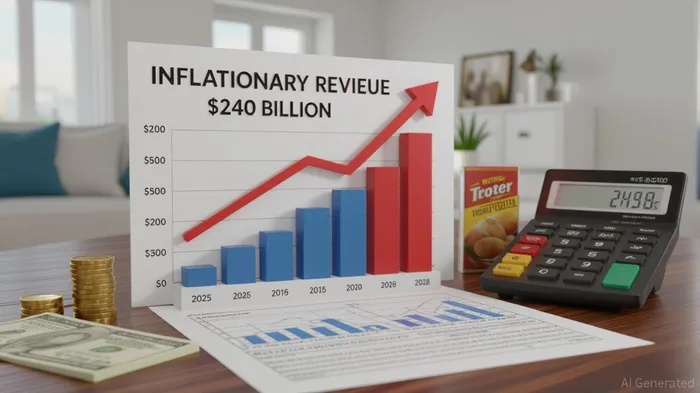
The Trump administration estimates that tariffs could generate trillions of dollars over several years, but the immediate fiscal math is far less optimistic. As of the first three quarters of 2025, the U.S. collected only $195 billion in tariff revenue, according to a Fox Business report, far below the projected $240 billion required to fund the $2,000 payout for approximately 120 million households, as the Economic Times article notes. Treasury Secretary Scott Bessent has clarified that the dividend may not arrive as direct checks but could manifest through tax cuts, such as eliminating levies on tips, overtime pay, or Social Security benefits, as noted in a KaoHoon International piece. However, this approach raises questions about the program's scalability and whether it can deliver the promised benefits without exacerbating inflation.
The administration's claim that the program will be "fully funded by the tariff surplus" overlooks a critical detail: tariffs inherently raise the cost of imports, which can ripple through supply chains and consumer prices. If the dividend is financed by higher tariffs, the net benefit to households may be offset by inflationary pressures, particularly for goods reliant on imported inputs. This dynamic mirrors the 2020 stimulus checks, where $1,200 payments lost 15–20% of their real value by 2025 due to cumulative inflation, as the Yahoo Finance article reports.
Market Implications: Inflationary Risks and Investor Uncertainty
The market's reaction to Trump's proposal hinges on two key factors: the likelihood of inflation and the political feasibility of implementation. Historically, large-scale direct cash payments have had mixed effects. The 2020 stimulus checks, for instance, spurred a 4.7% GDP boost in 2020 and 3.1% in 2021, as the U.S. Treasury notes, but also contributed to a surge in inflation as consumers redirected stimulus funds toward goods and services. A similar scenario could unfold with the $2,000 dividend, particularly if it is distributed as tax cuts rather than direct rebates, which might encourage spending on durable goods and imported products.
Critics warn that the dividend could strain federal finances and trigger a self-fulfilling inflationary spiral. As one analyst noted, "The one-time benefit may be offset by ongoing inflationary pressures and reduced purchasing power," according to a Business Standard article. This concern is amplified by the fact that the U.S. national debt now exceeds $38 trillion, as the Fox Business report notes, leaving little fiscal flexibility to absorb additional spending without hiking interest rates or issuing more debt.
Historical Precedents: Lessons from the 2020 Stimulus
The 2020 stimulus checks offer a cautionary tale. While they provided critical short-term relief, their long-term efficacy was undermined by inflation and uneven spending patterns. Approximately 40% of recipients spent the funds on goods and services, while 30% saved or paid down debt, according to the Yahoo Finance article. This fragmented response limited the checks' stimulative impact, a pattern that could repeat with the $2,000 dividend if households prioritize debt repayment or savings over consumption.
Moreover, the 2020 stimulus coincided with a 12% GDP contraction in Q2 2020 and a 14% unemployment peak, as the AP News article notes, creating a unique context that may not apply to 2025. With the labor market tighter and inflation still above pre-pandemic levels, the Federal Reserve faces a delicate balancing act: managing inflation while avoiding a policy tightening that could derail economic growth.
Challenges and the Path Forward
Beyond fiscal concerns, the proposal faces significant legal and legislative hurdles. The Supreme Court is currently reviewing the executive authority used to impose tariffs, as the Economic Times article notes, and a government shutdown complicates new spending initiatives. Even if the plan survives these challenges, its success will depend on congressional approval and the ability to navigate partisan divides.
For investors, the uncertainty surrounding the dividend's implementation creates a volatile backdrop. Markets may initially react positively to the promise of tax cuts and consumer spending boosts, but skepticism over inflation and fiscal sustainability could drive a correction. Sectors reliant on imported goods, such as retail and manufacturing, may face margin pressures, while Treasury yields could rise as investors demand higher returns for increased debt risk.
Conclusion: A High-Stakes Gamble
Trump's $2,000 tariff dividend is a bold experiment in fiscal policy, blending populist appeal with complex economic trade-offs. While it aims to reward working Americans, its feasibility hinges on a delicate balance between tariff revenue, inflationary risks, and political will. For markets, the proposal underscores the tension between short-term stimulus and long-term fiscal health-a tension that will shape investor sentiment in the months ahead.

Delivering real-time insights and analysis on emerging financial trends and market movements.
Latest Articles
Stay ahead of the market.
Get curated U.S. market news, insights and key dates delivered to your inbox.


AInvest
PRO
AInvest
PRO



Comments
No comments yet