
Trump's Proposed $2,000 Tariff Dividend and Its Fiscal Impact


 Aime Summary
Tariffs, Revenue, and the $2,000 Dividend: A Fiscal Tightrope
Trump's tariffs, . merchandise imports-the highest since 1938-have generated significant revenue but also raised consumer prices and disrupted supply chains, according to an OECD analysis. Treasury Secretary Scott Bessent has framed the $2,000 dividend as a tool to offset these costs while revitalizing domestic manufacturing, as noted in a Coinotag analysis. However, the plan's feasibility hinges on a critical question: Can tariff-funded cash transfers stimulate economic growth without exacerbating inflation or trade wars?
Historical precedents offer mixed insights. The 2020 pandemic stimulus checks, for instance, , according to a NBER digest. Whereas later packages were increasingly used for debt repayment. If Trump's dividend follows a similar pattern, it could temporarily boost consumer spending but may not address deeper structural issues like stagnant wage growth or corporate pricing power.
Equity Market Volatility: Winners and Losers in a Tariff-Driven World
The proposed dividend's impact on equity markets is already evident in sectoral performance. Companies reliant on global supply chains-particularly in manufacturing, technology, and retail-have faced headwinds as tariffs raise input costs and create uncertainty. For example, Block (SQ) reported a 17% decline in 2025 compared to the S&P 500's 14.5% growth, reflecting consumer spending shifts, according to a Channel News Asia report. Conversely, firms like Corpay and Slate Grocery have thrived, , according to a Reuters report, underscoring the resilience of essential goods.
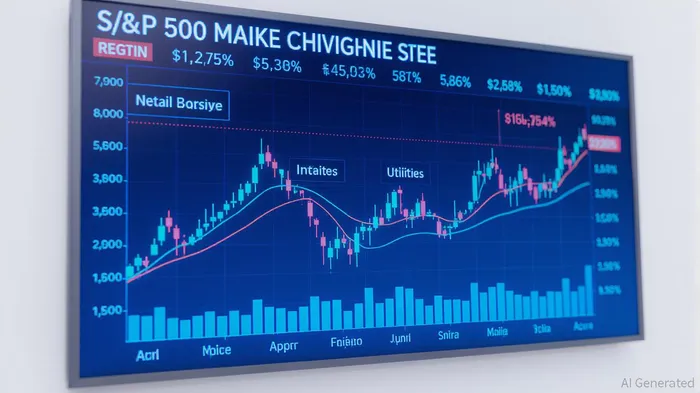
Investor behavior has also shifted. The OECD notes that equity prices of foreign firms exposed to U.S. , according to an OECD analysis. Chinese and Canadian companies, facing steep U.S. tariffs, have seen particularly pronounced declines. Meanwhile, U.S. firms with localized supply chains or pricing power-such as those in the energy and defense sectors-are gaining favor as investors hedge against trade policy risks, according to a Tidewater Financial analysis.
Consumer Spending: A Double-Edged Sword
. adults qualify), according to a Coinotag analysis, potentially boosting demand for goods and services. However, this stimulus is contingent on the Supreme Court's pending review of the tariffs' legality. , according to a Coinotag analysis, creating a cloud of uncertainty that could dampen consumer confidence.
If implemented, the dividend might disproportionately benefit lower-income households, who are more likely to spend the cash rather than save it. , according to a NBER digest, whereas higher-income households used later packages for debt repayment. Such a dynamic could temporarily boost sectors like retail and automotive but may also drive inflation if demand outpaces supply.
Macroeconomic Feedback Loops and Investor Strategies
The long-term fiscal impact of the tariff dividend hinges on its funding mechanism. Tariffs, while generating revenue, also raise consumer prices and reduce economic output. J.P. Morgan estimates that Trump's tariffs could lower U.S. , according to a JPMorgan Global Research report. These effects could strain the Federal Reserve's inflation-fighting efforts, potentially delaying interest rate cuts in 2026, according to a Yale Budget Lab report.
Investors are adapting to this environment by prioritizing diversification and risk management. Strategies favoring companies with localized supply chains, pricing power, or diversified geographic revenue streams are gaining traction, according to a Tidewater Financial analysis. Meanwhile, alternative assets like cryptocurrencies are attracting attention as hedges against inflation and currency devaluation. Analysts suggest that a favorable Supreme Court ruling on the tariffs could stabilize markets, while rejection might trigger volatility, according to a Coinotag analysis.
Conclusion: A Policy in Peril
Trump's $2,000 tariff dividend represents a bold but precarious experiment in fiscal policy. While it could provide short-term relief to consumers and stimulate certain sectors, its long-term viability depends on resolving legal challenges, managing inflationary pressures, and navigating retaliatory trade measures. For investors, the key takeaway is clear: Diversification and agility will be critical in a landscape where policy-driven uncertainty remains the new normal.


Delivering real-time insights and analysis on emerging financial trends and market movements.
Latest Articles
Stay ahead of the market.
Get curated U.S. market news, insights and key dates delivered to your inbox.


AInvest
PRO
AInvest
PRO



Comments
No comments yet