
Trump Probes Meatpackers' Price Hikes Amid Drought, 80% Market Control


 Aime Summary
President Donald Trump has directed the Justice Department to investigate major meatpacking companies for alleged collusion, price fixing, and manipulation in the beef market, escalating scrutiny of an industry already under fire for its dominance over U.S. food supply chains. The move, announced via a Truth Social post on Nov. 7, follows record-high beef prices driven by drought-related supply constraints and years of consolidation among processors, according to India Today.
The president accused "majority foreign-owned" meatpackers of artificially inflating prices at the expense of ranchers and consumers, citing a disconnect between falling cattle prices and surging boxed beef costs as evidence of "something fishy," according to a Fortune report. The Justice Department, led by Attorney General Pam Bondi, confirmed the probe is underway in collaboration with the Department of Agriculture. Agriculture Secretary Brooke Rollins, a key Trump ally, emphasized the need for "transparency and accountability" in a X post, echoing longstanding complaints from ranchers about corporate middlemen exploiting market power, India Today reported.
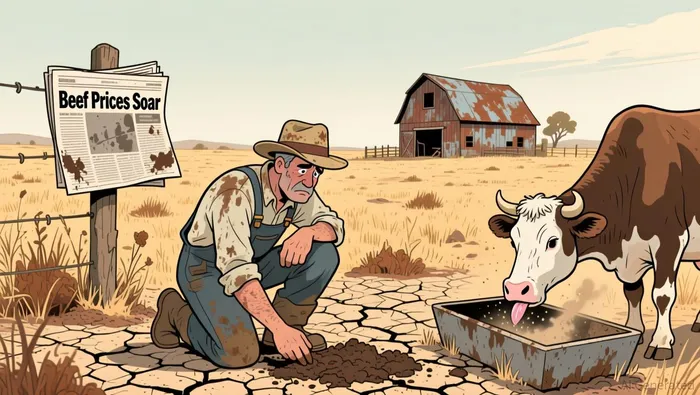
Beef prices hit record highs in 2025 amid a prolonged drought that decimated pasturelands and forced ranchers to reduce the U.S. cattle herd to its smallest level in nearly 75 years. This supply crunch, combined with strong consumer demand, has left consumers grappling with a 16% year-to-date surge in wholesale beef prices, according to USDA data cited in the Fortune report. The industry's four largest processors—Tyson Foods, Cargill, JBSJBS--, and National Beef Packing—control roughly 80% of the market, a concentration critics argue stifles competition. All four have faced prior lawsuits alleging anticompetitive behavior, though they have denied wrongdoing in past settlements totaling tens of millions of dollars, India Today reported.
 The probe has already rattled markets, with JBS NV shares plunging 6.2% in after-hours trading and Tyson FoodsTSN-- dropping 2%. The investigation adds to a broader political firestorm as Trump faces backlash from farm-state Republicans over a controversial plan to quadruple tariff-free beef imports from Argentina. Critics warn the policy could flood the market, undercut U.S. ranchers, and exacerbate trade imbalances. Nebraska Sen. Deb Fischer, a vocal opponent, argued that boosting domestic production—not imports—would better address price pressures, according to USA Today.
The administration's focus on beef prices comes after Democrats seized on affordability issues in recent off-year elections, with Trump's economic stewardship drawing low public approval. While the Biden administration previously targeted agricultural monopolies, Trump's approach has drawn rare GOP pushback, particularly over his support for Argentina's embattled President Javier Milei. The U.S. has already provided $20 billion in financial aid to Argentina, a move critics label as politically motivated, USA Today reported.
Industry stakeholders remain divided. While ranchers and lawmakers in beef-producing states demand regulatory relief, the DOJ's antitrust division and USDA have pledged to prioritize enforcement actions. Assistant Attorney General Abigail Slater, leading the probe, has signaled a commitment to "expedite" the investigation, though experts caution that rebuilding the U.S. cattle herd could take years, prolonging price pressures, according to Newsmax.

Stay ahead of the market.
Get curated U.S. market news, insights and key dates delivered to your inbox.
AInvest
PRO
AInvest
PRO



Comments
No comments yet