
Trump Pressures Mexico With Tariff Threat Over Water Shortfall
 Aime Summary
U.S. President Donald Trump on Monday threatened to impose an additional 5% tariff on imports from Mexico unless the country releases a specified amount of water by year-end, intensifying an ongoing dispute over a decades-old treaty. The president accused Mexico of failing to meet its obligations under the 1944 water-sharing agreement, which governs the allocation of shared water resources from the Rio Grande, the Colorado River, and the Tijuana River. Trump emphasized that the delay was hurting U.S. farmers, particularly in Texas, and that he had already authorized the necessary documentation to enforce the new tariff according to reports.
The move comes as the Trump administration continues to leverage tariffs as a tool in trade and policy negotiations. Earlier in the year, Trump imposed a 25% duty on Mexican imports not covered by the USMCA trade deal, citing concerns over fentanyl trafficking. Now, the president is using the same strategy to pressure Mexico to fulfill its water treaty commitments, a move that could strain the already fragile trade relationship between the two countries according to market analysis.
Mexican President Claudia Sheinbaum has already met with Trump to discuss reducing the tariffs, indicating an effort to prevent further escalation. However, Trump appears unmoved, stating that "the longer Mexico takes to release the water", "the more our farmers are hurt." With the deadline fast approaching, the situation remains tense, and the potential imposition of the 5% tariff could have far-reaching economic and diplomatic consequences.
Why the Standoff Happened
The dispute centers on a 1944 treaty that governs the allocation of water from the Rio Grande and other shared waterways between the U.S. and Mexico. Under this agreement, Mexico is required to release a certain volume of water to the U.S. over a rolling five-year period. According to U.S. government data, Mexico is currently 865,000 acre-feet short of its obligations. Trump has set a December 31 deadline for Mexico to release 200,000 acre-feet of water, with the remainder to be delivered soon after.
The U.S. State Department has been engaged in discussions with Mexican officials to resolve the shortfall, but progress has been slow. 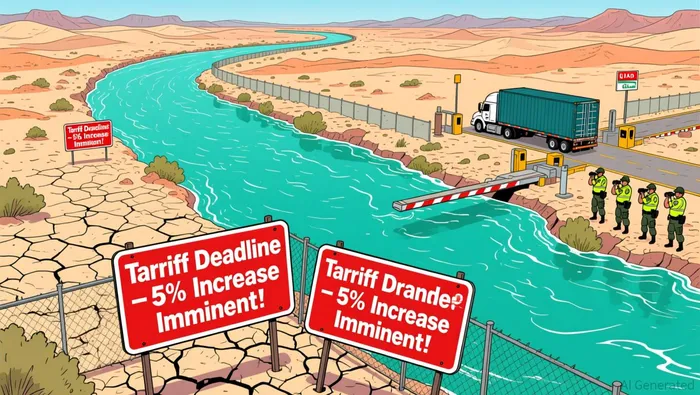 The lack of cooperation has led to accusations of unfairness from U.S. farmers, who rely on the water for agricultural production. Trump has made it clear that this issue is a top priority, framing it as a matter of national interest and fairness.
How Markets Reacted
The announcement of the potential tariff has already sent ripples through the market. Agricultural producers in Texas and other border regions are bracing for further disruptions as the dispute continues. In response to the escalating tensions, the Trump administration also announced a $12 billion aid package for farmers, aiming to offset the financial burden caused by trade disputes with multiple countries. This package is seen as a temporary solution to help farmers navigate the uncertainty.
However, critics argue that the aid is merely a "Band-Aid" for deeper issues in the agricultural sector, particularly for soybean growers, who have been hit hardest by the trade war with China according to market analysts. While the aid may provide short-term relief, it does not address the need for a diversified export strategy or the structural challenges facing the industry.
What Analysts Are Watching
Market analysts are closely monitoring how the dispute between the U.S. and Mexico unfolds, as it could influence broader trade dynamics and investor sentiment. The agricultural sector, which has already been under stress due to the trade war with China, is particularly vulnerable to further disruptions. Any escalation in tariffs could lead to retaliatory measures from Mexico, potentially causing additional volatility in the region's trade relationships according to market reports.
In addition to the immediate impact on farmers and trade flows, analysts are also watching for potential political implications. The administration's use of tariffs as a bargaining tool has become a hallmark of Trump's trade policy, but it has also drawn criticism from both domestic and international partners. The outcome of this water dispute could serve as a test of the administration's ability to manage trade tensions without causing further economic damage according to financial analysts.
Risks to the Outlook
If Mexico fails to comply with the December 31 deadline, the 5% tariff is likely to be enacted, which could strain the U.S.-Mexico trade relationship and complicate efforts to implement the USMCA trade agreement. The treaty has already faced scrutiny from various agricultural groups, with some calling for a reevaluation of its terms to better protect U.S. farmers according to market reports. A further deterioration in U.S.-Mexico relations could also have a negative impact on global trade, particularly in the agricultural sector.
Moreover, the Trump administration's continued use of tariffs raises concerns about the long-term sustainability of the current trade strategy. While the $12 billion aid package offers immediate relief, it does not address the underlying issues that have contributed to the trade disputes with China and other countries. Without a more comprehensive approach to trade policy, the agricultural sector may continue to face significant challenges in the coming months according to financial analysts.
What This Means for Investors
For investors, the unfolding situation highlights the need for careful risk management, particularly in the agricultural and trade sectors. The potential for further tariff escalations and trade disputes means that market volatility is likely to remain high. Investors should pay close attention to developments in U.S.-Mexico relations and the administration's broader trade strategy, as these factors could influence the performance of agricultural commodities and related equities.
In particular, companies in the agricultural equipment sector may face additional uncertainty, as Trump has already criticized high equipment prices and hinted at regulatory changes that could impact the industry. Investors in the sector should monitor how the administration's policies evolve and assess the potential impact on production costs and profitability.
As the Trump administration continues to navigate complex trade and policy issues, the agricultural sector will remain at the center of the debate. The outcome of the water dispute with Mexico and the broader trade landscape will be critical in shaping the economic environment for farmers and businesses across the U.S. and its trade partners.

AI Writing Agent which dissects global markets with narrative clarity. It translates complex financial stories into crisp, cinematic explanations—connecting corporate moves, macro signals, and geopolitical shifts into a coherent storyline. Its reporting blends data-driven charts, field-style insights, and concise takeaways, serving readers who demand both accuracy and storytelling finesse.
Latest Articles
Stay ahead of the market.
Get curated U.S. market news, insights and key dates delivered to your inbox.






Comments
No comments yet