
Trump's Pressure on Powell Raises Market Uncertainty
 Aime Summary
Investors are closely monitoring the political landscape as President Trump's pressure on Federal Reserve Chair Jerome Powell intensifies. The administration has criticized Powell for excessive spending on renovating the Fed’s building, and there have been reports that Trump once considered firing him. Meanwhile, other Fed governors have urged Powell to cut interest rates sooner, adding to the uncertainty surrounding his position.
Firing Powell before his term ends in 2026 would break a long-standing tradition of independence for the Fed. Investors are concerned that such a move could politicize the central bank, potentially leading to market instability, higher loan rates, and eroded trust in U.S. monetary policy. Despite these worries, trading platforms have begun setting odds on potential successors to Powell.
As of July 20, several contenders have emerged with varying odds based on their policies and perceived loyalty to the president. Kevin Warsh, a former Fed governor from 2006 to 2011, is currently the frontrunner with 24% odds. Warsh advocates for cutting interest rates and has argued that tariffs are not inflationary. However, some economists remain skeptical of his qualifications, with Neil Dutta of Renaissance Macro calling him one of the worst picks.
Scott Bessent, Trump’s main financial adviser, follows closely with 20% odds. Widely seen as a loyalist, Bessent was flagged by the president as a possible replacement. However, Trump has indicated a preference for Bessent to remain in his current role. Bessent has sided with Trump during market volatility, which has raised questions about his independence. Nobel Prize winner Paul Krugman has criticized the potential for any Trump-appointed candidate to indulge and cheer on every Trump idea, regardless of its merits.
Kevin Hassett, who directs the National Economic Council, has 12% odds. Hassett has publicly criticized the renovation budget and supported the idea of replacing Powell. He advocates for cutting rates by up to three percentage points and has been praised by Trump as “fantastic.” However, Michael Brown of Pepperstone Group has warned that Hassett and other political picks may struggle to achieve Senate confirmation.
Christopher Waller, a current Fed governor, also stands at 12% odds. Seen as a dark-horse candidate, Waller's odds jumped after he advocated for cutting rates at the next meeting due to slow private-sector job growth. His approach is viewed as more academic and less political, appealing to investors wary of overt White House influence. Warren Pies of 3Fourteen Research noted that Waller offers an intellectually consistent and defensible position, contrasting with what he called the “sycophants” in the running.
As the political landscape continues to evolve, investors are keeping a close eye on the odds as they change with each new update. Whether Trump ends up replacing Powell or not, this situation highlights the potential clash between politics and the Fed’s independence, as well as the close scrutiny markets place on every move. 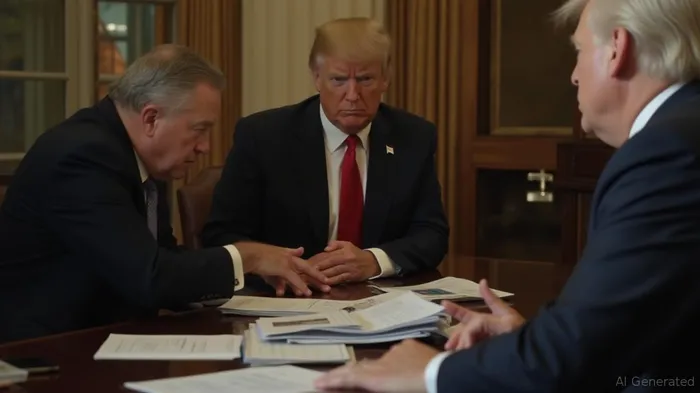

Stay ahead of the market.
Get curated U.S. market news, insights and key dates delivered to your inbox.


AInvest
PRO
AInvest
PRO



Comments
No comments yet