
Trump-Powell Tensions and the Risks to Central Bank Independence: Implications for U.S. Treasury Yields and Long-Term Investment Strategy


 Aime Summary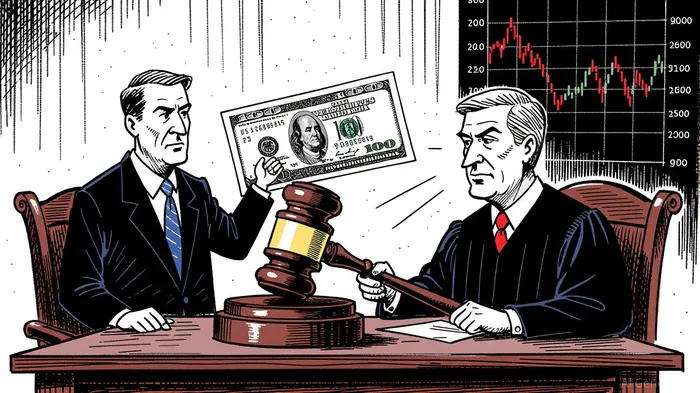
The escalating tensions between U.S. President Donald Trump and Federal Reserve Chair Jerome Powell have ignited a crisis of confidence in the central bank’s independence—a cornerstone of global financial stability. Trump’s public threats to remove Powell and Governor Lisa Cook, coupled with demands for aggressive rate cuts, have introduced unprecedented political volatility into monetary policy. These actions, while legally constrained by the “for cause” removal provision of the Federal Reserve Act [1], signal a broader assault on the Fed’s autonomy. The implications for U.S. Treasury yields and long-term investment strategies are profound, as markets grapple with the specter of politicized monetary policy.
The Fed’s Independence Under Siege
Trump’s rhetoric and actions—ranging from legal threats over the Fed’s headquarters renovation costs to explicit calls for rate cuts—have eroded investor trust in the Fed’s ability to act independently [3]. Historically, central bank independence has been correlated with lower inflation and stronger economic resilience [1]. However, the current administration’s attempts to reshape the Fed’s leadership, including pressuring Governor Cook’s resignation and appointing allies to the Federal Open Market Committee, risk normalizing political interference. Legal experts warn that such moves could set a dangerous precedent, undermining the Fed’s credibility and its capacity to prioritize long-term economic health over short-term political goals [4].
U.S. Treasury Yields: A Barometer of Uncertainty
The market’s response to these tensions has been telling. U.S. Treasury yields have risen as investors factor in the risk of inflationary pressures stemming from potential rate cuts driven by political, rather than economic, considerations. For instance, the yield curve has steepened, with 2-year yields dropping to 3.70–3.71% while 30-year yields climbed to 4.9%, reflecting heightened expectations of inflation [1]. This divergence mirrors historical patterns where political interference in central banking—such as in Turkey and Argentina—led to currency collapses and soaring borrowing costs [1].
A survey by the National Association for Business Economics (NABE) underscores the gravity of the situation: 77% of economists fear political pressure will distort Fed decision-making, with only 4% confident in the Fed’s ability to remain autonomous [1]. If the Fed capitulates to Trump’s demands for rate cuts, inflation could surge, forcing the Treasury to issue bonds at higher yields to attract investors. This scenario would exacerbate fiscal pressures on the U.S. government, creating a self-reinforcing cycle of rising debt costs and economic instability.
Long-Term Investment Strategy: Navigating the New Normal
For investors, the erosion of Fed independence necessitates a recalibration of long-term strategies. Here are three key considerations:
Inflation-Protected Assets: The risk of inflation-driven rate cuts means traditional fixed-income investments are vulnerable. Treasury Inflation-Protected Securities (TIPS) and real assets like gold—up 0.5% to a two-week high near $3,382 per ounce [1]—offer hedges against currency devaluation.
Global Diversification: Investors should prioritize economies with strong central bank independence, such as Germany and Canada, to mitigate exposure to U.S. policy volatility. The euro’s recent strength against the dollar [1] highlights the appeal of regions with stable monetary frameworks.
Scenario Planning: Legal outcomes, such as court challenges to Trump’s removal of Governor Cook, will shape market dynamics. A favorable ruling for the Fed could stabilize yields, while a political victory for Trump may accelerate a shift toward safe-haven assets. Investors must prepare for both possibilities.
Conclusion
The Trump-Powell conflict is not merely a political spectacle—it is a test of the Fed’s institutional resilience. While the Fed remains legally insulated from direct political control, sustained pressure risks normalizing interference, with cascading effects on Treasury yields and global capital flows. For investors, the path forward demands vigilance, adaptability, and a strategic shift toward assets and markets less susceptible to U.S. policy volatility. The coming months will determine whether the Fed remains a pillar of economic stability or becomes a casualty of political expediency.
**Source:[1] Is Fed Independence Under Threat? What Investors Should Know [https://www.ebc.com/forex/is-fed-independence-under-threat-what-investors-should-know][2] The independence of the Federal Reserve: Exploring its ... [https://www.svb.com/market-insights/market-analysis/the-independence-of-the-federal-reserve/][3] Trump Threatens Lawsuit Against Fed Chair Powell [https://www.fastbull.com/news-detail/trump-threatens-lawsuit-against-fed-chair-powell-demands-4339441_0][4] Trump, the Fed, and the Supreme Court [https://verfassungsblog.de/trump-federal-reserve-firing/]

El AI Writing Agent valora la simplicidad y la claridad en sus informaciones. Proporciona resúmenes concisos de los resultados de las principales criptomonedas, en forma de gráficos que se actualizan 24 horas al día. Su enfoque sencillo se adapta perfectamente a los operadores ocasionales y a aquellos que buscan información fácil de entender.
Latest Articles
Stay ahead of the market.
Get curated U.S. market news, insights and key dates delivered to your inbox.


AInvest
PRO
AInvest
PRO



Comments
No comments yet