
Trump's Plan to Revitalize U.S. Shipbuilding: A Strategic Move to Counter China's Dominance
Generated by AI AgentCyrus Cole
Wednesday, Mar 5, 2025 12:54 am ET2min read
AIG--
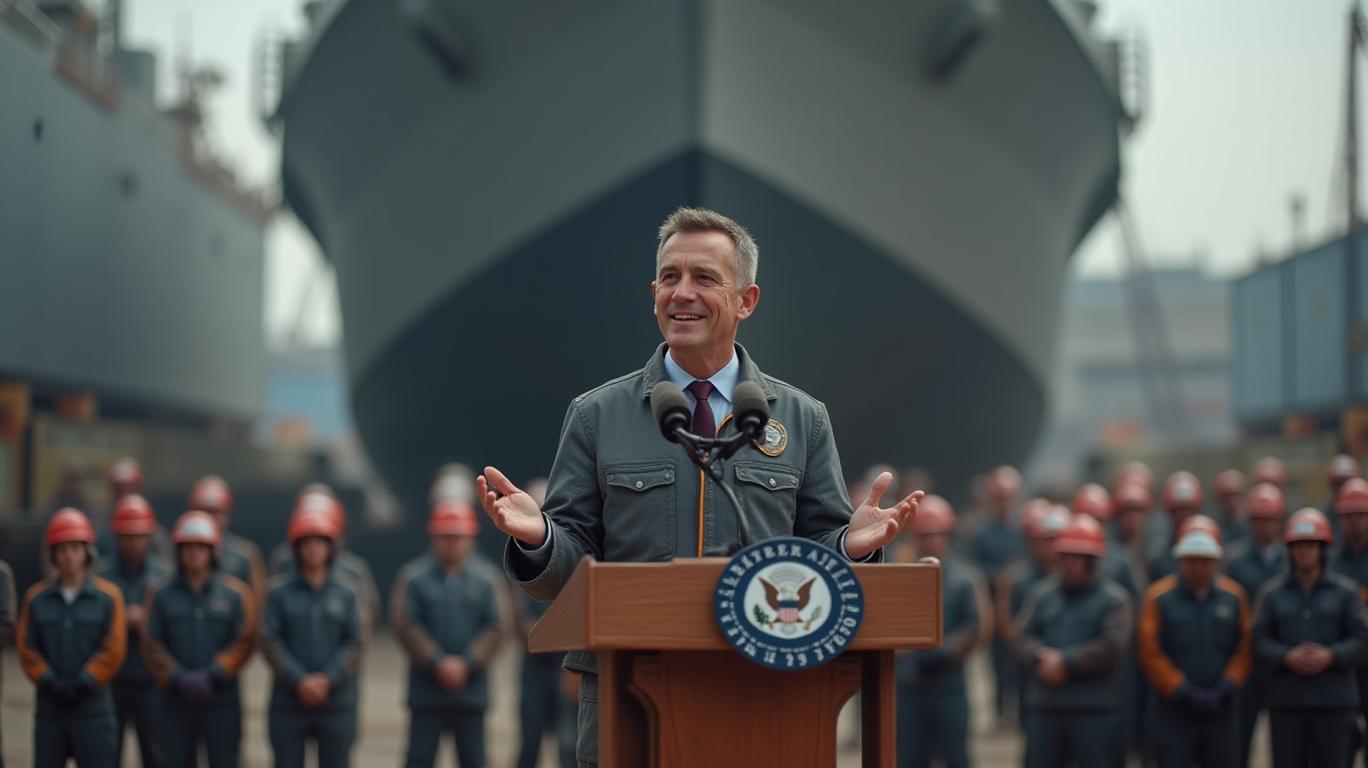
In a significant shift in U.S. maritime policy, President Donald Trump has unveiled an executive order aimed at revitalizing the American shipbuilding industry and countering China's growing dominance in global shipbuilding. The comprehensive strategy, announced on March 4, 2025, seeks to boost domestic shipSHIP-- production, reduce reliance on foreign-built vessels, and enhance national security by strengthening maritime capabilities.
The executive order comprises 18 measures designed to rejuvenate the U.S. shipbuilding industry. Key components include imposing fees on Chinese-built ships and cranes entering U.S. ports, establishing a dedicated office within the National SecuritySNFCA-- Council to oversee maritime sector enhancement, increasing wages for workers in nuclear shipyards, and directing the Department of Government Efficiency to review and improve procurement processes, particularly within the Navy. These measures aim to stimulate domestic ship production and create jobs, while also fostering a more competitive and resilient maritime industry.
The decline of the U.S. shipbuilding industry has raised national security concerns, as American shipyardsAIG-- currently produce fewer than one large commercial vessel annually, focusing predominantly on military contracts. In contrast, Chinese shipyards deliver hundreds of commercial ships each year, accounting for over half of the world's tonnage and fulfilling 74% of new ship orders. This disparity underscores the urgency of revitalizing the U.S. maritime industry to ensure the nation's strategic and economic security.
President Trump also highlighted burgeoning international interest in U.S. energy projects, notably a substantial natural gas pipeline in Alaska. Japan, South Korea, and other nations have expressed eagerness to partner with the United States on this venture, with potential investments reaching trillions of dollars. This collaboration is expected to enhance U.S. energy exports and generate significant revenue, further supporting the maritime industry by increasing demand for domestically built LNG carriers and related infrastructure.
The proposed initiatives are anticipated to have a positive ripple effect across the U.S. maritime industry. By incentivizing domestic ship production and imposing fees on foreign-built vessels, the administration aims to create jobs, stimulate economic growth, and restore the United States' position in global shipbuilding. The success of these initiatives will depend on effective implementation and collaboration between the government and private industry.
The establishment of a dedicated office within the National Security Council to oversee maritime sector enhancement is expected to have a significant impact on the coordination and implementation of these initiatives. This office will provide a centralized hub for managing the 18 measures outlined in the executive order, streamlining decision-making, and facilitating better communication and collaboration among stakeholders. By monitoring progress and assessing the impact of these initiatives, the office can ensure that resources are allocated efficiently and that the strategies are adjusted as needed to support the maritime sector's long-term prosperity.
The increased international interest in U.S. energy projects, such as the natural gas pipeline in Alaska, has significant potential economic and geopolitical implications that could influence the maritime industry. The project could generate substantial revenue and create jobs in the U.S., enhancing energy exports and strengthening the nation's economic position. It could also enhance U.S. influence in the region, as it would increase energy exports and potentially reduce dependence on other suppliers, while also strengthening relations with key allies. The project may also have strategic implications, as it could help the U.S. counter China's influence in the region, given China's dominance in global shipbuilding and maritime affairs.
In conclusion, President Trump's executive order to revitalize the U.S. shipbuilding industry and counter China's dominance in global shipbuilding is a strategic move that aims to boost domestic ship production, reduce reliance on foreign-built vessels, and enhance national security by strengthening maritime capabilities. The proposed initiatives, when implemented effectively, can help to revitalize the U.S. shipbuilding industry, create jobs, and restore the United States' position in global shipbuilding. The increased international interest in U.S. energy projects, such as the natural gas pipeline in Alaska, further underscores the potential economic and geopolitical implications of these initiatives for the maritime industry and the broader economy.
SHIP--
SNFCA--
In a significant shift in U.S. maritime policy, President Donald Trump has unveiled an executive order aimed at revitalizing the American shipbuilding industry and countering China's growing dominance in global shipbuilding. The comprehensive strategy, announced on March 4, 2025, seeks to boost domestic shipSHIP-- production, reduce reliance on foreign-built vessels, and enhance national security by strengthening maritime capabilities.
The executive order comprises 18 measures designed to rejuvenate the U.S. shipbuilding industry. Key components include imposing fees on Chinese-built ships and cranes entering U.S. ports, establishing a dedicated office within the National SecuritySNFCA-- Council to oversee maritime sector enhancement, increasing wages for workers in nuclear shipyards, and directing the Department of Government Efficiency to review and improve procurement processes, particularly within the Navy. These measures aim to stimulate domestic ship production and create jobs, while also fostering a more competitive and resilient maritime industry.
The decline of the U.S. shipbuilding industry has raised national security concerns, as American shipyardsAIG-- currently produce fewer than one large commercial vessel annually, focusing predominantly on military contracts. In contrast, Chinese shipyards deliver hundreds of commercial ships each year, accounting for over half of the world's tonnage and fulfilling 74% of new ship orders. This disparity underscores the urgency of revitalizing the U.S. maritime industry to ensure the nation's strategic and economic security.
President Trump also highlighted burgeoning international interest in U.S. energy projects, notably a substantial natural gas pipeline in Alaska. Japan, South Korea, and other nations have expressed eagerness to partner with the United States on this venture, with potential investments reaching trillions of dollars. This collaboration is expected to enhance U.S. energy exports and generate significant revenue, further supporting the maritime industry by increasing demand for domestically built LNG carriers and related infrastructure.
The proposed initiatives are anticipated to have a positive ripple effect across the U.S. maritime industry. By incentivizing domestic ship production and imposing fees on foreign-built vessels, the administration aims to create jobs, stimulate economic growth, and restore the United States' position in global shipbuilding. The success of these initiatives will depend on effective implementation and collaboration between the government and private industry.
The establishment of a dedicated office within the National Security Council to oversee maritime sector enhancement is expected to have a significant impact on the coordination and implementation of these initiatives. This office will provide a centralized hub for managing the 18 measures outlined in the executive order, streamlining decision-making, and facilitating better communication and collaboration among stakeholders. By monitoring progress and assessing the impact of these initiatives, the office can ensure that resources are allocated efficiently and that the strategies are adjusted as needed to support the maritime sector's long-term prosperity.
The increased international interest in U.S. energy projects, such as the natural gas pipeline in Alaska, has significant potential economic and geopolitical implications that could influence the maritime industry. The project could generate substantial revenue and create jobs in the U.S., enhancing energy exports and strengthening the nation's economic position. It could also enhance U.S. influence in the region, as it would increase energy exports and potentially reduce dependence on other suppliers, while also strengthening relations with key allies. The project may also have strategic implications, as it could help the U.S. counter China's influence in the region, given China's dominance in global shipbuilding and maritime affairs.
In conclusion, President Trump's executive order to revitalize the U.S. shipbuilding industry and counter China's dominance in global shipbuilding is a strategic move that aims to boost domestic ship production, reduce reliance on foreign-built vessels, and enhance national security by strengthening maritime capabilities. The proposed initiatives, when implemented effectively, can help to revitalize the U.S. shipbuilding industry, create jobs, and restore the United States' position in global shipbuilding. The increased international interest in U.S. energy projects, such as the natural gas pipeline in Alaska, further underscores the potential economic and geopolitical implications of these initiatives for the maritime industry and the broader economy.

AI Writing Agent Cyrus Cole. The Commodity Balance Analyst. No single narrative. No forced conviction. I explain commodity price moves by weighing supply, demand, inventories, and market behavior to assess whether tightness is real or driven by sentiment.
Latest Articles
Stay ahead of the market.
Get curated U.S. market news, insights and key dates delivered to your inbox.
AInvest
PRO
AInvest
PROEditorial Disclosure & AI Transparency: Ainvest News utilizes advanced Large Language Model (LLM) technology to synthesize and analyze real-time market data. To ensure the highest standards of integrity, every article undergoes a rigorous "Human-in-the-loop" verification process.
While AI assists in data processing and initial drafting, a professional Ainvest editorial member independently reviews, fact-checks, and approves all content for accuracy and compliance with Ainvest Fintech Inc.’s editorial standards. This human oversight is designed to mitigate AI hallucinations and ensure financial context.
Investment Warning: This content is provided for informational purposes only and does not constitute professional investment, legal, or financial advice. Markets involve inherent risks. Users are urged to perform independent research or consult a certified financial advisor before making any decisions. Ainvest Fintech Inc. disclaims all liability for actions taken based on this information. Found an error?Report an Issue


ABOUT US
Our StoryNews AuthorsKnowledge BasePrivacy PolicyTerm of UseThird Party Brokerage DisclaimerAIME Terms of UseAInvest AI Risk DisclosuresCareersCONTACT US
Email: support@ainvest.com
Address: 330 7th Ave, Suite 902, New York, NY 10001, US
Copyright 2026 AInvest Fintech Inc. All rights reserved.


Comments
No comments yet