
Trump's Plan to Exit the War: : Why He's Quitting Iran Even with the Strait of Hormuz Still Closed
 Aime Summary
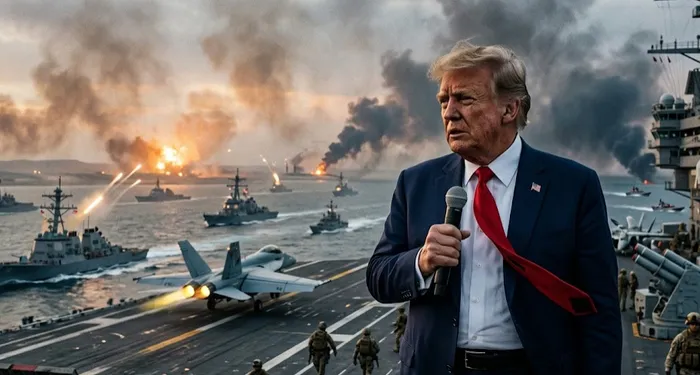
According to the Wall Street Journal, Trump Tells Aides He's Willing to End War Without Reopening Hormuz. This breaks decades of U.S. policy. To Trump, this war was never about being a "global cop"; it was a targeted demolition. Since the main goal of crippling Iran's navy and missiles is nearly done, he sees no reason to keep paying for the slow, expensive job of clearing the waterway.
Bad Math: Why stop the fight now?
The main reason is Trump wants to end Iran war within a publicly announced 4-6 week deadline. Military experts say fully clearing mines in the Strait could take months, To a "businessman" like Trump, the math doesn't add up. Every day the military stays, the U.S. spends millions on precision missiles and risks American lives. If he gets sucked into a long-term "clearance operation," it drains the budget and hurts his political momentum. His logic is blunt: he has pulled the enemy's teeth, so the primary job is done. Staying on as a "free janitor" for the world's shipping lanes is, in his view, a losing trade that serves everyone else's interests but his own.
This move is essentially a form of strategic extortion directed at America's own allies. While a closed Strait will inevitably spike energy prices, the U.S. remains insulated by its energy independence and Strategic Petroleum Reserve. The U.S. has plenty of its own oil now, so while a closed Strait hurts, it won't kill the American economy. In contrast, energy-dependent allies in Europe and East Asia (like Japan and South Korea) face an existential crisis. If the allies want their oil back, they have to pay up, send their own ships, or put their own people in the water to clear those mines. He is forcing the world to take over the burden of global security that the U.S. used to handle for free.
Domestic Politics: Hedging Inflation and the Ballot Box
You might wonder: if gas prices go up at home, won't Americans be mad at him? The conclusion is YES. His current situation is so tough that he is in a hurry to withdraw his troops. According to the latest comprehensive polling data (Polling Averages), Trump's current approval rating is low, and voters' trust in his handling of inflation and the situation in the Middle East is waning. He is well aware that if oil prices remain high for a long time or if there are major casualties among the US military, his term might come to an early end. Trump has a plan for that. He's going to blame the high prices entirely on Iran being stubborn or the allies being too "lazy" to help out. Plus, he has the U.S. emergency oil reserves that he can dump into the market to keep prices steady for a bit, and by declaring "mission accomplished," he creates a stable environment for U.S. shale companies to ramp up production. He thinks voters would rather deal with expensive gas for a few weeks than see the U.S. get stuck in another "forever war" like Iraq. To him, being the guy who "wins the war and brings the boys home" is the best way to win an election, regardless of what's happening in the Strait.
The Next Move: Turning Protection into a "Paid Service"
Trump's final plan is not a full retreat, but a new "Pay-for-Protection" model. His next steps involve using the global oil panic to renegotiate defense pacts with Gulf monarchies and allies. He will likely demand that affected nations shoulder the costs of future U.S. deployments or spearhead a multinational escort fleet—funded by allies but led by Washington. By turning the physical chokepoint of Hormuz into a virtual "toll booth," Trump aims to recoup war expenses through long-term geopolitical rents well after the kinetic combat ends. He wants to ensure the U.S. gets paid one way or another.
Conclusion: Exiting to Get a Better Deal
Trump's decision reveals a brutal truth: the U.S. will no longer bleed for "global order" for free. By exiting while the Strait is still closed, he has transformed a vital waterway from a post the U.S. must defend into a leverage point for which the world must beg. This isn't because he's weak or can't fight anymore; it's because he thinks it's time to raise the price. He is telling the world that American protection is no longer a free lunch. If you want the gates open and the oil flowing, everyone has to sit down and pay the bill Trump is putting on the table. He turned a geographical bottleneck into a negotiation room, and if you want to pass through, you have to pay up.

Tianhao Xu is currently a financial content editor, focusing on fintech and market analysis. Previously, he worked as a full-time forex trader for several years, specializing in global currency trading and risk management. He holds a master’s degree in Financial Analysis.
Latest Articles
Stay ahead of the market.
Get curated U.S. market news, insights and key dates delivered to your inbox.


AInvest
PRO
AInvest
PRO



Comments
No comments yet