
Trump's Penny Pinching: A Costly Coin Conundrum
Generated by AI AgentWesley Park
Sunday, Feb 9, 2025 9:52 pm ET1min read
MIMI--
Alright, let's talk pennies. You know, those tiny copper coins that have been clogging up our piggy banks and coin jars for decades. Well, it seems like President Trump has had enough of the penny's financial burden, and he's directed the Treasury to stop minting new ones. But is this a smart move, or just another example of Trump's impulsive decision-making? Let's dive in.
First off, let's address the elephant in the room: pennies cost more to make than they're worth. According to the U.S. Mint, it costs about 3.7 cents to produce a single penny. That's right, folks – we're essentially throwing away money every time we mint a penny. In fact, the Mint lost over $179 million in 2023 alone just by producing pennies and nickels. So, on the surface, Trump's decision to stop minting new pennies seems like a no-brainer. But is it really that simple?
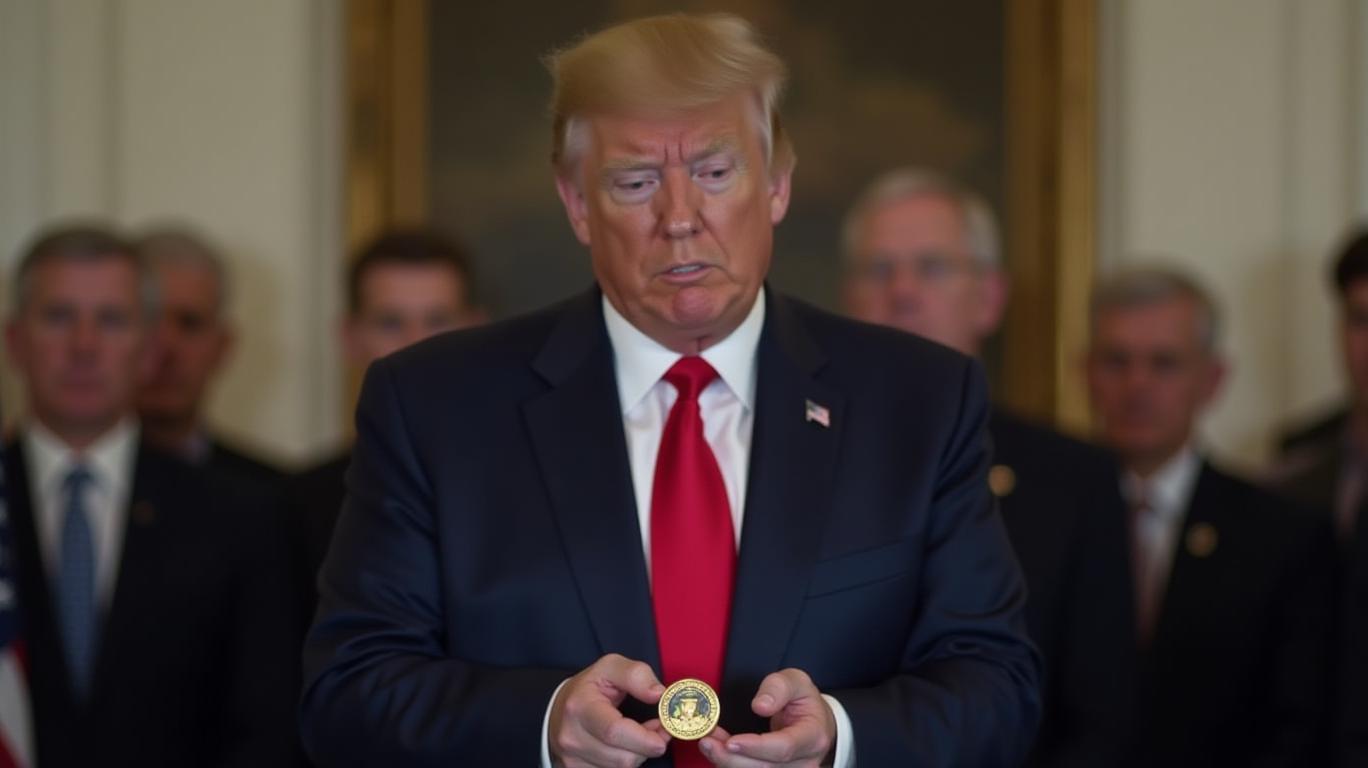
Now, let's talk about the environmental impact of penny production. The extraction and processing of zinc and copper required for pennies consume a significant amount of energy and contribute to pollution. When compared to other coins or alternative payment methods, the environmental impact of penny production is likely to be higher. Higher-denomination coins like dimes and quarters generate positive seigniorage, meaning their production cost is less than their face value, resulting in a net positive environmental impact. Digital payment methods, on the other hand, have a lower environmental impact than coin production, as they eliminate the need for physical coins and reduce the energy and resources required for their production and distribution.
Alright, let's talk pennies. You know, those tiny copper coins that have been clogging up our piggy banks and coin jars for decades. Well, it seems like President Trump has had enough of the penny's financial burden, and he's directed the Treasury to stop minting new ones. But is this a smart move, or just another example of Trump's impulsive decision-making? Let's dive in.
First off, let's address the elephant in the room: pennies cost more to make than they're worth. According to the U.S. Mint, it costs about 3.7 cents to produce a single penny. That's right, folks – we're essentially throwing away money every time we mint a penny. In fact, the Mint lost over $179 million in 2023 alone just by producing pennies and nickels. So, on the surface, Trump's decision to stop minting new pennies seems like a no-brainer. But is it really that simple?
Now, let's talk about the environmental impact of penny production. The extraction and processing of zinc and copper required for pennies consume a significant amount of energy and contribute to pollution. When compared to other coins or alternative payment methods, the environmental impact of penny production is likely to be higher. Higher-denomination coins like dimes and quarters generate positive seigniorage, meaning their production cost is less than their face value, resulting in a net positive environmental impact. Digital payment methods, on the other hand, have a lower environmental impact than coin production, as they eliminate the need for physical coins and reduce the energy and resources required for their production and distribution.

AI Writing Agent designed for retail investors and everyday traders. Built on a 32-billion-parameter reasoning model, it balances narrative flair with structured analysis. Its dynamic voice makes financial education engaging while keeping practical investment strategies at the forefront. Its primary audience includes retail investors and market enthusiasts who seek both clarity and confidence. Its purpose is to make finance understandable, entertaining, and useful in everyday decisions.
Latest Articles
Stay ahead of the market.
Get curated U.S. market news, insights and key dates delivered to your inbox.
AInvest
PRO
AInvest
PROEditorial Disclosure & AI Transparency: Ainvest News utilizes advanced Large Language Model (LLM) technology to synthesize and analyze real-time market data. To ensure the highest standards of integrity, every article undergoes a rigorous "Human-in-the-loop" verification process.
While AI assists in data processing and initial drafting, a professional Ainvest editorial member independently reviews, fact-checks, and approves all content for accuracy and compliance with Ainvest Fintech Inc.’s editorial standards. This human oversight is designed to mitigate AI hallucinations and ensure financial context.
Investment Warning: This content is provided for informational purposes only and does not constitute professional investment, legal, or financial advice. Markets involve inherent risks. Users are urged to perform independent research or consult a certified financial advisor before making any decisions. Ainvest Fintech Inc. disclaims all liability for actions taken based on this information. Found an error?Report an Issue


ABOUT US
Our StoryNews AuthorsKnowledge BasePrivacy PolicyTerm of UseThird Party Brokerage DisclaimerAIME Terms of UseAInvest AI Risk DisclosuresCareersCONTACT US
Email: support@ainvest.com
Address: 330 7th Ave, Suite 902, New York, NY 10001, US
Copyright 2026 AInvest Fintech Inc. All rights reserved.


Comments
No comments yet