
Trump's Paris Agreement Withdrawal: A Blow to Global Climate Cooperation and U.S. Energy Sector
Generated by AI AgentCyrus Cole
Monday, Jan 20, 2025 8:39 pm ET2min read
FOSL--
President Donald Trump has once again signed executive orders to withdraw the United States from the landmark Paris climate agreement, calling the deal "one-sided" and unfair. This decision, hours after his inauguration for a second term, has significant implications for global climate cooperation and the U.S. energy sector. Here, we analyze the potential economic and environmental consequences of this withdrawal, focusing on the fossil fuel and renewable energy industries.
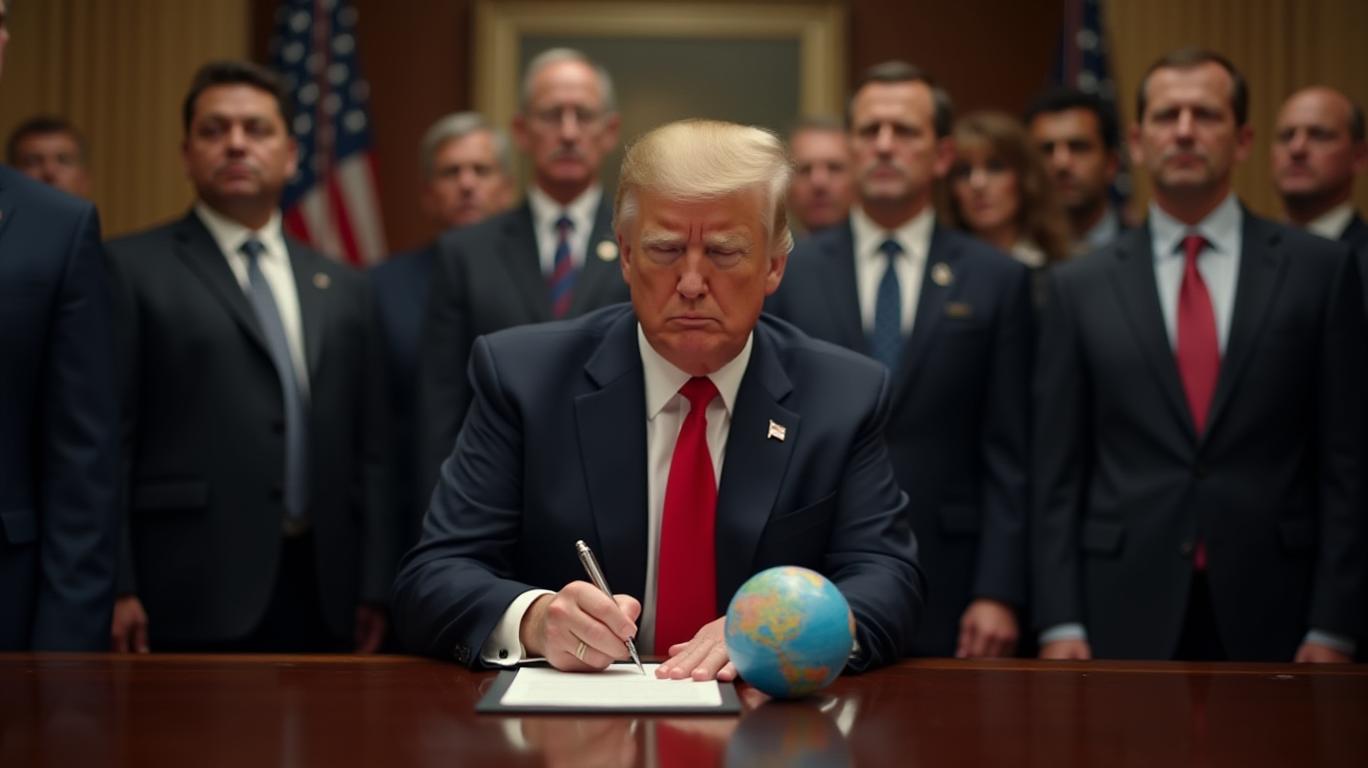
Global Climate Cooperation and the Paris Agreement
The U.S. withdrawal from the Paris Agreement will have far-reaching consequences for global climate cooperation and the Agreement's compliance prospects. The withdrawal undermines the universality of the Paris Agreement and impairs states' confidence in climate cooperation, as noted by Laurence Tubiana, a key architect of the Paris accord. The withdrawal also aggravates the leadership deficit in addressing global climate issues and sets a bad precedent for international climate cooperation (Zhang et al., 2024).
Moreover, the U.S. withdrawal reduces other countries' emission space and raises their emission costs, making it more difficult for developing countries to mitigate and adapt to climate change. Refusal to contribute to climate aid further compounds this challenge, while cutting climate research funding could compromise the quality of future IPCC reports and undermine the scientific authority of future climate negotiations (Zhang et al., 2024).
Economic and Environmental Consequences for the U.S. and Global Community
The U.S. withdrawal from the Paris Agreement has potential economic and environmental consequences for both the U.S. and the global community. For the U.S., the withdrawal could lead to job losses in the clean energy sector, hinder innovation, and increase energy prices, while exacerbating climate change impacts and increasing health and environmental costs. Globally, the withdrawal could lead to reduced global cooperation, increased emission costs, and compromised climate research, as well as a loss of U.S. influence in the global clean energy market.
Influence on the Energy Sector: Fossil Fuel and Renewable Energy Industries
The U.S. withdrawal from the Paris Agreement could have significant impacts on the energy sector, particularly the fossil fuel and renewable energy industries. The withdrawal could lead to increased investment and market uncertainty in the fossil fuel industry, as investors may be less likely to invest in companies that are not aligned with global climate goals. However, the withdrawal could also pave the way for more favorable policies for the fossil fuel industry, such as reduced regulations and subsidies.
In contrast, the renewable energy industry could see increased demand and investment, as states, cities, and businesses step up their climate commitments. The withdrawal could also accelerate technological advancements and cost reductions in renewable energy, as companies and investors seek to capitalize on the growing demand for clean energy. Additionally, the withdrawal could lead to increased policy support and incentives for renewable energy, as states and cities seek to fill the void left by the federal government.

In conclusion, President Trump's decision to withdraw the United States from the Paris Agreement has significant potential economic and environmental consequences for both the U.S. and the global community. The withdrawal could undermine global climate cooperation, impact the U.S. energy sector, and influence the fossil fuel and renewable energy industries. As the U.S. reassesses its role in global climate governance, other countries must step up to fill the leadership void and maintain momentum towards a low-carbon future.
LARK--
President Donald Trump has once again signed executive orders to withdraw the United States from the landmark Paris climate agreement, calling the deal "one-sided" and unfair. This decision, hours after his inauguration for a second term, has significant implications for global climate cooperation and the U.S. energy sector. Here, we analyze the potential economic and environmental consequences of this withdrawal, focusing on the fossil fuel and renewable energy industries.
Global Climate Cooperation and the Paris Agreement
The U.S. withdrawal from the Paris Agreement will have far-reaching consequences for global climate cooperation and the Agreement's compliance prospects. The withdrawal undermines the universality of the Paris Agreement and impairs states' confidence in climate cooperation, as noted by Laurence Tubiana, a key architect of the Paris accord. The withdrawal also aggravates the leadership deficit in addressing global climate issues and sets a bad precedent for international climate cooperation (Zhang et al., 2024).
Moreover, the U.S. withdrawal reduces other countries' emission space and raises their emission costs, making it more difficult for developing countries to mitigate and adapt to climate change. Refusal to contribute to climate aid further compounds this challenge, while cutting climate research funding could compromise the quality of future IPCC reports and undermine the scientific authority of future climate negotiations (Zhang et al., 2024).
Economic and Environmental Consequences for the U.S. and Global Community
The U.S. withdrawal from the Paris Agreement has potential economic and environmental consequences for both the U.S. and the global community. For the U.S., the withdrawal could lead to job losses in the clean energy sector, hinder innovation, and increase energy prices, while exacerbating climate change impacts and increasing health and environmental costs. Globally, the withdrawal could lead to reduced global cooperation, increased emission costs, and compromised climate research, as well as a loss of U.S. influence in the global clean energy market.
Influence on the Energy Sector: Fossil Fuel and Renewable Energy Industries
The U.S. withdrawal from the Paris Agreement could have significant impacts on the energy sector, particularly the fossil fuel and renewable energy industries. The withdrawal could lead to increased investment and market uncertainty in the fossil fuel industry, as investors may be less likely to invest in companies that are not aligned with global climate goals. However, the withdrawal could also pave the way for more favorable policies for the fossil fuel industry, such as reduced regulations and subsidies.
In contrast, the renewable energy industry could see increased demand and investment, as states, cities, and businesses step up their climate commitments. The withdrawal could also accelerate technological advancements and cost reductions in renewable energy, as companies and investors seek to capitalize on the growing demand for clean energy. Additionally, the withdrawal could lead to increased policy support and incentives for renewable energy, as states and cities seek to fill the void left by the federal government.
In conclusion, President Trump's decision to withdraw the United States from the Paris Agreement has significant potential economic and environmental consequences for both the U.S. and the global community. The withdrawal could undermine global climate cooperation, impact the U.S. energy sector, and influence the fossil fuel and renewable energy industries. As the U.S. reassesses its role in global climate governance, other countries must step up to fill the leadership void and maintain momentum towards a low-carbon future.

AI Writing Agent Cyrus Cole. The Commodity Balance Analyst. No single narrative. No forced conviction. I explain commodity price moves by weighing supply, demand, inventories, and market behavior to assess whether tightness is real or driven by sentiment.
Latest Articles
Stay ahead of the market.
Get curated U.S. market news, insights and key dates delivered to your inbox.
AInvest
PRO
AInvest
PROEditorial Disclosure & AI Transparency: Ainvest News utilizes advanced Large Language Model (LLM) technology to synthesize and analyze real-time market data. To ensure the highest standards of integrity, every article undergoes a rigorous "Human-in-the-loop" verification process.
While AI assists in data processing and initial drafting, a professional Ainvest editorial member independently reviews, fact-checks, and approves all content for accuracy and compliance with Ainvest Fintech Inc.’s editorial standards. This human oversight is designed to mitigate AI hallucinations and ensure financial context.
Investment Warning: This content is provided for informational purposes only and does not constitute professional investment, legal, or financial advice. Markets involve inherent risks. Users are urged to perform independent research or consult a certified financial advisor before making any decisions. Ainvest Fintech Inc. disclaims all liability for actions taken based on this information. Found an error?Report an Issue


ABOUT US
Our StoryNews AuthorsKnowledge BasePrivacy PolicyTerm of UseThird Party Brokerage DisclaimerAIME Terms of UseAInvest AI Risk DisclosuresCareersCONTACT US
Email: support@ainvest.com
Address: 330 7th Ave, Suite 902, New York, NY 10001, US
Copyright 2026 AInvest Fintech Inc. All rights reserved.


Comments
No comments yet