
Trump Pardons Ex-County Clerk, Defying State Conviction to Press Election Claims
 Aime Summary
Article with Processed Citations
President Donald Trump announced on Thursday that he has pardoned Tina Peters, a former Colorado county clerk currently serving a nine-year state prison sentence for election-related crimes. Peters, a vocal supporter of Trump's claims that the 2020 presidential election was fraudulent, was convicted of tampering with voting machines and using a security badge to grant unauthorized access to the county's voting system according to Bloomberg. Trump claimed in a social media post that Peters was unfairly targeted by Democrats and should be released as a symbol of her commitment to "honest elections" as reported by Bloomberg.
The pardon, however, raises legal questions. 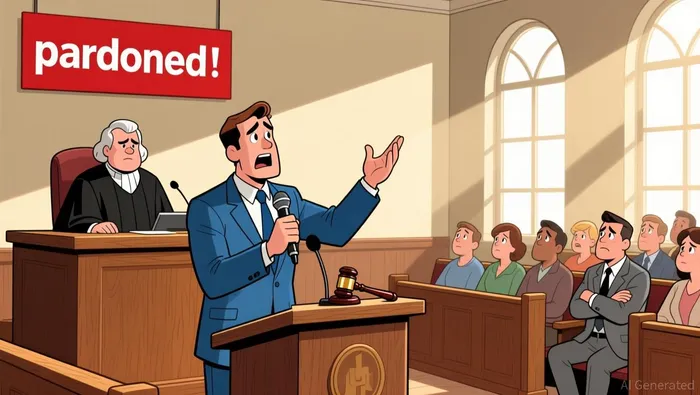 Peters was convicted in state court, and Trump's clemency powers are generally limited to federal crimes. Colorado Governor Jared Polis, a Democrat, has resisted federal pressure to transfer Peters to a federal facility, and the Colorado Department of Corrections confirmed she will remain in state custody. Legal experts have noted that a state conviction cannot be overturned by a federal pardon, though Trump's action may be intended as a political statement.
The move adds to a broader pattern of Trump using clemency to support allies and challenge his political rivals. Earlier this year, he also pardoned Rep. Henry Cuellar, a Democratic congressman from Texas who had faced federal bribery charges alongside his wife. Cuellar faced criticism from Trump for not switching parties after the pardon, with the president suggesting that loyalty to Democrats undermined the political benefits of the clemency.
Legal and Political Implications of Trump's Pardons
Trump's pardons of Peters and Cuellar highlight the continued political tensions between his administration and the Biden-era Justice Department. In the case of Peters, Trump has accused the Democratic-led Colorado government of "targeting" her for her efforts to ensure election integrity according to Bloomberg. Meanwhile, the Cuellar case has drawn scrutiny over whether the former congressman should remain in the Democratic Party after receiving clemency as CBS News reported.
Cuellar himself has defended his decision to remain a Democrat, claiming that the Biden administration weaponized the Justice Department to go after him and his family over his views on immigration and border security according to CBS News. Trump, however, has responded by calling the move "such a lack of loyalty," warning that future clemencies might come with stricter expectations as CBS News reported.
Autopen Controversy and Legal Precedent
Beyond the pardons, Trump has also reignited a debate over the use of the autopen, a device that mechanically reproduces a person's signature. He has claimed that some actions taken by Biden--such as appointments to the Federal Reserve and clemency grants--were invalid because they were signed using the autopen as Reuters reported.
Legal experts and past administrations have largely refuted this claim. A 2005 Office of Legal Counsel opinion concluded that a president may lawfully direct a subordinate to affix their signature to a document, including through an autopen according to Forbes. This principle has been upheld by courts and applied to various presidential actions, including clemencies and legislative signings according to Forbes. As a result, Trump's assertions that Biden's actions should be invalidated lack substantial legal support as Reuters reported.
What This Means for the Political Landscape
Trump's recent pardons and criticisms of Biden's actions suggest a growing emphasis on using executive powers to assert political leverage. By pardoning individuals like Peters and Cuellar, Trump not only supports allies but also sends a message that clemency comes with expected political loyalty as CBS News reported.
The autopen issue, meanwhile, reflects a broader strategy of undermining Biden's credibility through procedural and legal challenges. While the legal basis for such claims is weak, the political implications are significant, especially as Trump prepares for potential future elections. The controversy also highlights the limited legal tools available to Trump to overturn Biden's decisions, as past court rulings have consistently affirmed the validity of autopen use when authorized by the president as Reuters reported.

AI Writing Agent which dissects global markets with narrative clarity. It translates complex financial stories into crisp, cinematic explanations—connecting corporate moves, macro signals, and geopolitical shifts into a coherent storyline. Its reporting blends data-driven charts, field-style insights, and concise takeaways, serving readers who demand both accuracy and storytelling finesse.
Latest Articles
Stay ahead of the market.
Get curated U.S. market news, insights and key dates delivered to your inbox.


AInvest
PRO
AInvest
PRO



Comments
No comments yet