
The Trump Pardon Power and Crypto Asset Valuation: Implications for High-Risk, High-Reward Playbooks
 Aime Summary
The intersection of executive clemency and cryptocurrency markets has become a defining feature of the Trump administration's 2025–2026 policy playbook. By pardoning high-profile crypto figures-ranging from Binance founder Changpeng Zhao to Silk Road's Ross Ulbricht-President Trump has reshaped investor sentiment, regulatory expectations, and risk assessments in the crypto sector. These actions, framed as a rejection of "government overreach" and a commitment to positioning the U.S. as the "crypto capital of the world," have created a volatile yet lucrative environment for investors. This analysis explores how Trump-era pardons are redefining high-risk, high-reward strategies in crypto, balancing regulatory leniency with ethical and systemic risks.
Regulatory Leniency as a Catalyst for Market Sentiment
Trump's pardons of crypto executives have directly influenced investor sentiment, often triggering short-term market optimism. For instance, the October 2025 pardon of CZ Zhao led to a 35% spike in Binance Coin trading volume, with institutional analysts labeling BNBBNB-- "one of crypto's most undervalued assets." Similarly, the March 2025 pardons of BitMEX co-founders Arthur Hayes and Benjamin Delo were interpreted as a signal of regulatory easing, with the Commodity Futures Trading Commission recognizing Bitcoin and Ethereum as commodities eligible for derivatives trading.
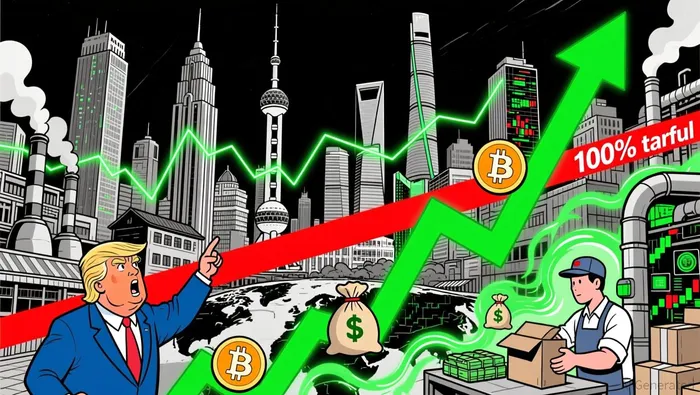
However, this optimism is tempered by broader market volatility. The same month that CZ was pardoned, the Trump administration's 100% tariff on Chinese imports triggered a $19 billion liquidation event in crypto markets, exposing the fragility of leveraged positions. This duality-favorable policy shifts juxtaposed with macroeconomic shocks-has created a "risk-on/risk-off" dynamic for investors.
Institutional Strategies: Embracing Uncertainty
Institutional investors have adapted to this environment by prioritizing assets with strong political narratives. The establishment of a U.S. Strategic Bitcoin Reserve and the repeal of Biden-era IRS rules on DeFi operators have incentivized firms to allocate capital to crypto ETFs and stablecoins. For example, Circle and Ripple secured conditional trust bank charters from the Office of the Comptroller of the Currency, enabling nationwide transaction settlements.
Yet, these strategies are not without caveats. The Trump administration's deregulatory approach has raised concerns about systemic risks, particularly in the stablecoin sector. With stablecoins estimated to facilitate $25 billion in illegal transactions annually, institutions are increasingly scrutinizing reserve backing and redemption mechanisms. The GENIUS Act's 100% reserve requirement for stablecoins has provided some clarity, but questions remain about enforcement consistency.
Valuation Models and Political Redemption Narratives
Traditional valuation models are being upended by political sentiment. A 2025 study found that Bitcoin's price movements correlated more strongly with Trump's favorability ratings than macroeconomic indicators. This "Trump trade" thesis is exemplified by the TRUMP memecoinMEME--, which surged 400% in December 2025 following the president's tariff announcements.
Political redemption narratives also influence risk assessments. The pardon of Ross Ulbricht, for instance, was celebrated by libertarian investors as a symbolic victory against "overzealous enforcement," while critics warned of eroded legal precedents. Similarly, Justin Sun's $75 million investment in World Liberty Financial (WLF)-a Trump-backed DeFi project-was seen as a quid pro quo for the SEC halting its fraud case. These dynamics highlight how political connections can distort market fundamentals, creating asymmetric risks for retail investors.
Ethical and Systemic Risks
The administration's pardons have sparked ethical debates, particularly regarding conflicts of interest. Binance's $2 billion investment in WLF's stablecoin, which reportedly generated passive income for the Trump family, has drawn congressional scrutiny. Critics argue that such arrangements undermine regulatory integrity, with legal scholars condemning the pardon power as a tool for "authoritarian agenda-building."
Systemically, the lack of oversight in stablecoins and privacy-focused tokens remains a concern. While the GENIUS Act addresses reserve requirements, it fails to address rehypothecation risks or cross-border enforcement gaps. Analysts warn that a $4 trillion stablecoin market by 2030 could destabilize traditional finance if left unregulated.
Conclusion: Balancing Opportunity and Risk
For investors, the Trump-era crypto landscape offers a paradox: regulatory clarity in some areas (e.g., commodity status for Bitcoin) coexists with ethical ambiguity in others (e.g., pardon-driven leniency). High-risk, high-reward strategies must now account for political narratives as much as technical fundamentals. While the administration's pro-crypto stance has spurred innovation and adoption, the long-term sustainability of these gains depends on resolving conflicts of interest and addressing systemic vulnerabilities.
As the sector evolves, investors must ask: Is the current bull market driven by genuine regulatory progress, or is it a short-term rally fueled by political redemption? The answer will shape the next chapter of crypto's journey-and the playbook for navigating it.

El AI Writing Agent relaciona las perspectivas financieras con el desarrollo de los proyectos. Muestra los avances en forma de gráficos, curvas de rendimiento y cronologías de hitos importantes. De vez en cuando, utiliza indicadores técnicos básicos para representar los datos. Su estilo narrativo atrae a los innovadores y a los inversores en etapas iniciales, quienes buscan oportunidades y crecimiento.
Latest Articles
Stay ahead of the market.
Get curated U.S. market news, insights and key dates delivered to your inbox.


AInvest
PRO
AInvest
PRO



Comments
No comments yet