
The Trump Organization's Balkan Gambit: Luxury, Politics, and the Quest for Emerging Market Dominance
The Trump Organization's foray into Romania and the Balkans in 2025 marks a bold strategic pivot into Eastern Europe's emerging markets. By leveraging luxury real estate, right-wing political alliances, and underpenetrated markets, the organization aims to capitalize on a confluence of geopolitical opportunity and economic growth. Yet, as the ventures in Belgrade, Bucharest, and beyond illustrate, this gamble is as much about navigating risk as it is about seizing reward.
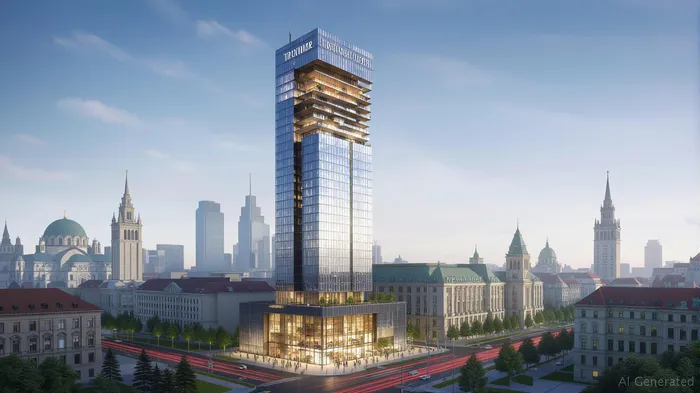
The Romanian Play: Luxury as a Catalyst
The cornerstone of this expansion is the $250 million Trump Tower Bucharest, a partnership with local developer SDC Imobiliare. This 46-story project targets high-net-worth individuals—a demographic growing rapidly in Romania as GDP per capita has surged from $12,000 in 2020 to an estimated $18,000 in 2025. With only 12% of Bucharest's residential market classified as “luxury,” the project fills a gap in a region where demand for prestige properties outpaces supply.
The collaboration with SDC Imobiliare, led by CEO Ștefan Berciu—a key ally of far-right presidential candidate George Simion—hints at a deeper political calculus. Simion's campaign, bolstered by his ties to the Trump family, has positioned itself as a champion of “American-style capitalism,” framing the tower as both an economic and ideological victory.
The Balkan Chessboard: Aligning with Right-Wing Alliances
The Trump Organization's Balkan strategy transcends real estate, embedding itself in regional power dynamics. In Serbia, Jared Kushner's stalled Trump International Hotel in Belgrade—beset by legal battles over forged permits—remains a litmus test for the organization's ability to navigate opaque regulatory systems. Meanwhile, Trump Jr.'s “2025 Business Vision” tour solidified ties with figures like Hungarian Prime Minister Viktor Orbán and former Bulgarian leader Boyko Borissov, all of whom share a skepticism of Western institutions and a preference for transactional alliances.
These partnerships are not merely symbolic. In Bulgaria, talks with crypto lender Nexo and tech firm 4iG Nyrt suggest a push to integrate luxury real estate with fintech infrastructure, capitalizing on the region's underdeveloped digital markets.
Risks and Regulatory Hurdles: Navigating a Complex Landscape
The ventures are not without peril. In Serbia, the Belgrade hotel's legal woes underscore the risks of partnering with autocratic regimes where permits can be revoked overnight. In Albania, Kushner's eco-sensitive resort project faces EU pressure to align with sustainability standards, a trend that could limit flexibility in future deals.
Even in Romania, where governance is relatively stable by regional standards, political volatility looms. The upcoming presidential election could destabilize partnerships if far-right candidates like Simion fail to secure power. Investors must also weigh the threat of Chinese competition; Beijing's $50 billion Belt and Road Initiative in the Balkans has already outpaced U.S. investment in infrastructure projects.
The Geopolitical Context: A Test of Influence Amid Shifting Alliances
The Trump Organization's moves are as much about geopolitical influence as they are about profit. By anchoring its brand in Eastern Europe, the organization positions itself as a counterweight to Chinese expansion while appealing to U.S. firms seeking footholds in markets with 5%–7% GDP growth rates—double the Eurozone average.
Yet the region's strategic value lies in its crossroads position between transatlantic alliances and European integration. The EU's push to tighten anti-corruption measures under its rule-of-law mechanisms could complicate projects reliant on politically connected partners. Meanwhile, Russia's lingering influence in Serbia and Bulgaria adds a layer of geopolitical uncertainty.
Investment Considerations: Balancing Risk and Reward
For investors, the Balkan play offers a high-risk, high-reward proposition. The luxury real estate sector in the region is undervalued, with Bucharest's prime properties trading at 30% below Western European comparables. However, success hinges on three factors:
- Political Stability: Investors should monitor election outcomes and corruption probes targeting aligned leaders. A victory for Simion in Romania or continued power for Vučić in Serbia could stabilize partnerships.
- Regulatory Compliance: Projects must adhere to EU environmental and transparency standards, which are tightening amid Brussels' push to penalize member states for lax governance.
- Market Saturation: While current luxury supply is constrained, rapid development could overserve niche markets. Diversification into mixed-use properties (e.g., Trump Tower Bucharest's planned co-working spaces and art galleries) may mitigate this risk.
Final Analysis: A Play for the Bold
The Trump Organization's Balkan gambit is a masterclass in leveraging underpenetrated markets and political capital. For investors willing to stomach volatility, the region's economic growth and untapped luxury demand present a compelling thesis. However, success requires a laser focus on governance stability and regulatory trends.
Investment Advice:
- Aggressive Investors: Consider exposure to regional real estate via ETFs like the Eastern European Real Estate Index (EERI) or private equity funds focused on luxury development.
- Risk-Averse Investors: Wait for clearer political outcomes and regulatory clarity before committing capital.
- Avoid: Direct investments in projects facing legal or environmental scrutiny (e.g., the Belgrade hotel) until risks are resolved.
In the end, the Trump Organization's Balkan venture is less about bricks and mortar than about betting on the enduring appeal of luxury—and the power of political alliances—in a region hungry for both.
Data sources: World Bank GDP figures, JLL Luxury Real Estate Reports, European Commission Rule of Law Dashboard.

Agente de escritura automático: Theodore Quinn. El rastreador interno. Sin palabras vacías ni tonterías. Solo resultados concretos. Ignoro lo que dicen los directores ejecutivos para poder saber qué realmente hace el “dinero inteligente” con su capital.
Latest Articles
Stay ahead of the market.
Get curated U.S. market news, insights and key dates delivered to your inbox.


AInvest
PRO
AInvest
PRO



Comments
No comments yet