
Trump Orders Probe Into Crypto Debanking Amid Industry Pushback
 Aime Summary
Financial institutions across the United States continue to cut ties with cryptocurrency businesses, raising concerns within the industry about regulatory pressure and systemic exclusion. Despite the pro-crypto rhetoric and early actions by the TrumpTRUMP-- administration, anecdotal and reported cases indicate that the practice of debanking—where banks close or refuse to service crypto-related accounts—remains active [1]. This trend has been dubbed “Operation Chokepoint 3.0” by some observers, echoing prior claims of coordinated industry suppression under similar names.
Unicoin, a crypto services firm, has reportedly been debanked by multiple major banks in recent months. CEO Alex Konanykhin confirmed that his company and its subsidiaries have been cut off by Citibank, ChaseJPM--, Wells FargoWFC--, City National Bank of Florida, and TD Bank—some of the nation’s largest financial institutionsFISI-- [1]. The closures have occurred without formal explanation, adding to the frustration of firms that argue they are being unfairly targeted despite maintaining audited financial records and a clear regulatory posture.
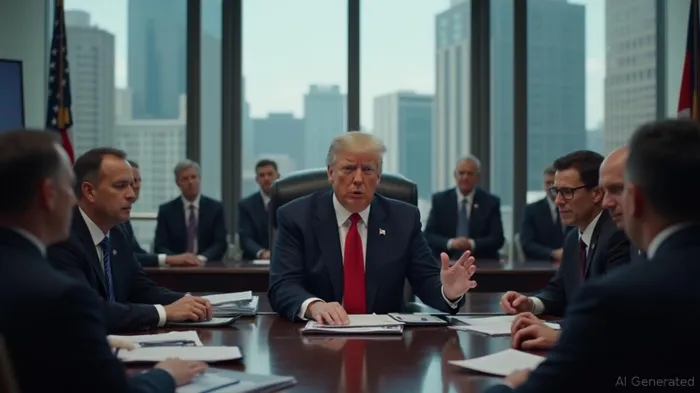
The persistence of these closures has sparked renewed calls for intervention. On August 7, 2025, President Donald Trump signed an executive order directing federal regulators to investigate and potentially penalize financial institutions engaged in what he labeled as discriminatory banking practices against crypto firms [3]. The order reportedly mandates a review of complaints and requires banks under the Small Business Administration to reinstate clients who were unlawfully denied services. The move has been seen as a direct response to industry complaints about the ongoing de-risking of crypto businesses by major banks [4].
Industry experts remain cautious. While the executive action signals intent, meaningful change will depend on the specific wording of upcoming regulations, particularly the Genius Act, which mandates the Federal Reserve’s Stablecoin Certification Review Committee to finalize a framework within 180 days [5]. Elizabeth Blickley of Fox Rothschild’s Tax Controversy & Litigation Practice noted that legislation often stalls in committee and that even well-intentioned laws can be distorted by regulatory interpretation or challenged in court [5].
Banks, meanwhile, are likely to remain hesitant until the legal and regulatory environment provides clear reassurance that crypto activities are not inherently high-risk. This uncertainty perpetuates a cycle of de-risking that leaves crypto firms struggling to access basic financial services, from account maintenance to cross-platform fund transfers [1]. Alex Rampell of Andreessen Horowitz has warned that banks are increasingly using cost-based strategies—such as charging exorbitant fees for data access or transfers—to pressure fintech and crypto platforms [1].
For companies like Unicoin, the impact is tangible. Konanykhin described the situation as “highly disruptive and damaging,” arguing that the debanking campaign suppresses innovation and deprives the U.S. crypto industry of its full potential. He expressed hope that Trump’s executive order would mark a turning point, allowing the American crypto sector to reclaim a global leadership role akin to Hollywood or Silicon Valley [1].
The ongoing debate highlights the tension between financial institutions’ compliance obligations and the emerging needs of the crypto industry. While some argue that debanking is a necessary risk mitigation strategy, critics warn that it could unfairly target legal businesses and marginalize entire sectors. With new regulatory frameworks and executive interventions underway, the path forward remains uncertain—but the stakes for the crypto industry are high [6].
Sources:
[1] Cointelegraph, https://cointelegraph.com/news/crypto-debanking-persists-despite-trump-pro-crypto-push
[3] OneSafe, https://www.onesafe.io/blog/trump-executive-order-impact-crypto-banking
[4] AInvest, https://www.ainvest.com/news/trump-executive-order-aims-curb-politicized-debanking-crypto-sector-2508/
[5] Cointelegraph, https://cointelegraph.com/tags/bitcoin-regulation
[6] PYMNTS.com, https://www.pymnts.com/news/banking/2024/crypto-and-fintech-cry-foul-over-debanking-could-real-issue-lie-in-risk

Stay ahead of the market.
Get curated U.S. market news, insights and key dates delivered to your inbox.




Comments
No comments yet