
Trump Optimistic on Iran-Israel Ceasefire Progress
Donald Trump, the former U.S. President, has recently made significant statements regarding the ongoing ceasefire between Iran and Israel, expressing optimism about its progress. According to his posts, the ceasefire is "going well," and he suggested that the U.S. might eventually foster "somewhat of a relationship" with Iran. This declaration has sparked considerable discussion and speculation about the broader implications for global stability and the cryptocurrency market.
The idea of a smoothly proceeding ceasefire between Iran and Israel is noteworthy. It suggests a de-escalation of tensions that have long simmered, occasionally boiling over into direct confrontation or proxy conflicts. Such a development, if sustained, could pave the way for reduced regional instability, potentially unlocking new economic opportunities and fostering greater security. For the cryptocurrency market, often sensitive to global uncertainties, a perceived reduction in geopolitical risk can contribute to a more bullish sentiment, encouraging investment and adoption.
Central to Trump’s recent statements is his assertion that Iran’s nuclear program has been “set back by decades.” He attributed this significant setback to a “recent U.S. strike on three of Iran’s nuclear facilities,” which he claimed “ended the war.” These are bold claims that warrant closer examination. Iran’s nuclear ambitions have been a source of international concern for years, leading to sanctions, diplomatic efforts, and periods of heightened tension. The precise nature and extent of any U.S. strike, as well as its long-term impact on Iran’s nuclear capabilities, are subjects of intense scrutiny and debate among intelligence agencies and geopolitical analysts. If these claims hold true, a substantial setback to Iran’s nuclear program could be seen as a major win for non-proliferation efforts and regional security, potentially reducing one of the most significant flashpoints in the Middle East stability equation.
Key aspects to consider regarding these claims include verification, long-term impact, and strategic implications. Independent verification of the extent of damage and setback to Iran’s nuclear infrastructure is crucial for international credibility. Even if a setback occurred, the long-term trajectory of Iran’s nuclear ambitions and its response to such actions remain critical unknowns. A successful deterrence or incapacitation of a nuclear program could reshape regional power dynamics, influencing alliances and security postures.
The prospect of enduring Middle East stability, particularly concerning the Iran-Israel dynamic, is a topic of immense global interest. The region has historically been a crucible of conflict, influencing global energy markets, trade routes, and international diplomacy. Trump’s optimistic assessment of the ceasefire suggests a potential shift, but what does true stability entail? Achieving lasting stability requires more than just a temporary cessation of hostilities. It involves addressing underlying grievances, fostering economic interdependence, and establishing robust diplomatic channels. The challenges are numerous, including deep-seated mistrust, internal dynamics, regional actors, and nuclear ambitions. Despite these challenges, any indication of a functioning ceasefire is a positive step. Reduced conflict risk in the Middle East can lead to greater investor confidence globally, which often translates into more capital flowing into various asset classes, including digital currencies.
The ripple effects of major geopolitical developments are undeniable, influencing everything from oil prices to investor sentiment in emerging markets. The perceived de-escalation of tensions between Iran and Israel, coupled with claims of a significant setback to Iran’s nuclear program, carries substantial geopolitical impact for global markets. Historically, conflict or heightened tension in the Middle East has often led to spikes in oil prices, as the region is a major energy producer. Conversely, stability can lead to more predictable energy markets. Beyond oil, broader market sentiment is affected. Reduced geopolitical risk typically increases investor appetite for riskier assets, which can include equities and, increasingly, cryptocurrencies. During periods of instability, investors often flock to traditional safe havens like gold or the U.S. dollar. Conversely, perceived stability can reduce demand for these assets. A more stable Middle East could foster greater trade and investment, contributing to a more optimistic global economic outlook, which generally benefits all markets.
For the crypto market, this means that while direct causation is rare, a general environment of global stability and reduced systemic risk tends to create a more favorable backdrop for growth. As institutional adoption of cryptocurrencies continues to grow, these macro-geopolitical factors will likely play an even larger role in price discovery and market trends.
Trump’s suggestion of a future “somewhat of a relationship” with Iran introduces another layer of complexity and potential transformation. The history of Iran-US relations is fraught with periods of intense animosity, mistrust, and sanctions. Any move towards a more diplomatic or cooperative stance would mark a significant departure from recent decades. A renewed dialogue could potentially lead to diplomatic engagement, economic opportunities, and a shift in regional influence. However, forging such a relationship would require overcoming significant hurdles, including domestic political opposition in both countries, the legacy of past grievances, and ongoing regional conflicts. The potential benefits of a more stable and predictable relationship between the U.S. and Iran are immense, not just for the two nations but for global security and economic prosperity. This overarching sense of reduced global tension can often provide a tailwind for innovative sectors like cryptocurrency, as capital becomes less risk-averse.
Donald Trump’s recent statements regarding the smooth progression of the Iran-Israel ceasefire and the significant setback to Iran’s nuclear program paint a picture of potential de-escalation and a pathway towards greater Middle East stability. While such claims from a political figure warrant careful scrutiny and independent verification, they highlight the enduring pursuit of peace in a region long plagued by conflict. The potential for a fundamental shift in U.S.-Iran relations, as hinted by Trump, could reshape the geopolitical landscape, offering a glimmer of hope for a more predictable and prosperous future. For global markets, including the burgeoning cryptocurrency space, reduced geopolitical uncertainty generally fosters an environment conducive to growth and innovation. As the world watches for further developments, these pronouncements serve as a powerful reminder of how interconnected global politics, economics, and emerging technologies truly are. The journey towards lasting peace and stability is complex, but even the smallest steps forward can have profound and far-reaching implications. 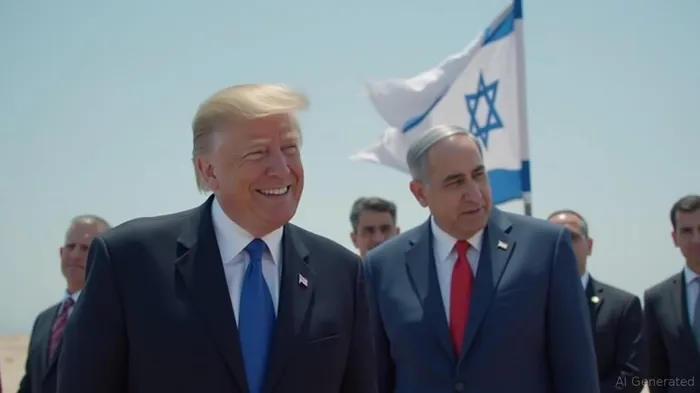

Stay ahead of the market.
Get curated U.S. market news, insights and key dates delivered to your inbox.






Comments
No comments yet