
Trump's Offshore Drilling Reversal: A New Era for U.S. Energy Policy
Generated by AI AgentCyrus Cole
Monday, Jan 20, 2025 8:17 pm ET1min read
FOSL--
President Trump has signed an executive order reversing President Biden's ban on new offshore drilling in U.S. waters, marking a significant shift in the country's energy policy. The move, which Trump described as a "national energy emergency," is expected to have both short-term and long-term impacts on the U.S. oil and gas industry, as well as potential environmental consequences and implications for the U.S.'s commitment to reducing greenhouse gas emissions.
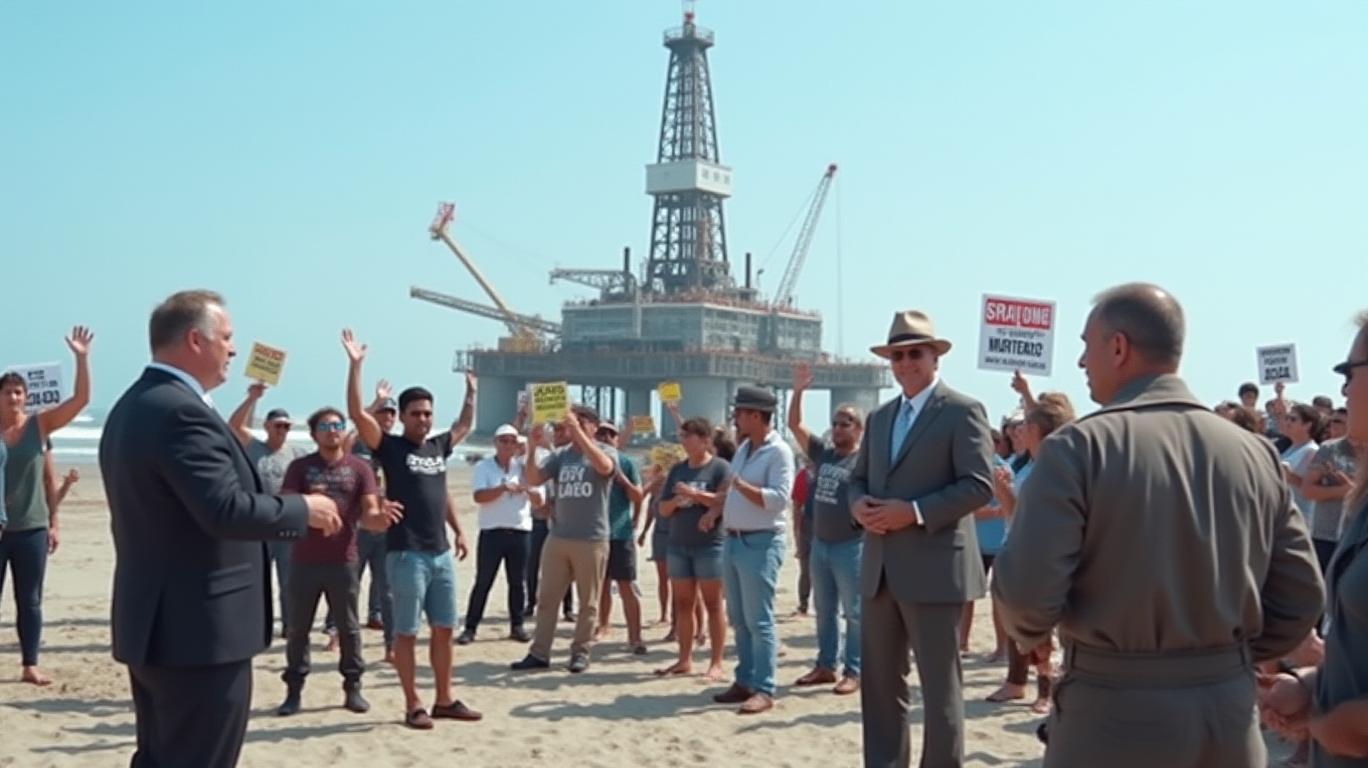
Short-term impacts of Trump's order include accelerated permitting for new fossil fuel projects, which could lead to an increase in oil and gas production in the near term. Additionally, the order could keep open power plants that are slated to close for economic or environmental reasons, providing a short-term boost to the industry. Increased leasing on federal lands is also expected to lead to an increase in production in the short term.
Long-term impacts of Trump's policy reversal include a potential increase in U.S. oil and gas production, which could lead to higher prices and increased revenue for the industry. However, the order may also face legal challenges, as environmental groups could sue to block projects that they believe violate environmental laws.
The potential environmental impacts of increased offshore drilling include oil spills, air and water pollution, noise pollution, and habitat destruction. These impacts can influence public opinion, leading to increased support for stricter regulations and opposition to offshore drilling. Regulatory challenges may arise as a result, with environmental groups and affected communities pushing for stronger protections and stricter enforcement of environmental standards.
Trump's policy reversal is likely to have significant negative impacts on the U.S.'s commitment to reducing greenhouse gas emissions and meeting its Paris Agreement targets. By increasing fossil fuel production, hindering renewable energy development, and undermining state and local efforts, the administration's actions will make it more challenging to meet the country's climate goals.
In conclusion, President Trump's policy reversal, including the declaration of a "national energy emergency" and the rollback of environmental regulations, is likely to have significant impacts on the U.S. oil and gas industry, the environment, and the country's commitment to reducing greenhouse gas emissions. As the U.S. moves forward with this new energy policy, it is crucial to consider the potential consequences and work towards a balanced approach that addresses both energy production and environmental protection.
WAT--
President Trump has signed an executive order reversing President Biden's ban on new offshore drilling in U.S. waters, marking a significant shift in the country's energy policy. The move, which Trump described as a "national energy emergency," is expected to have both short-term and long-term impacts on the U.S. oil and gas industry, as well as potential environmental consequences and implications for the U.S.'s commitment to reducing greenhouse gas emissions.
Short-term impacts of Trump's order include accelerated permitting for new fossil fuel projects, which could lead to an increase in oil and gas production in the near term. Additionally, the order could keep open power plants that are slated to close for economic or environmental reasons, providing a short-term boost to the industry. Increased leasing on federal lands is also expected to lead to an increase in production in the short term.
Long-term impacts of Trump's policy reversal include a potential increase in U.S. oil and gas production, which could lead to higher prices and increased revenue for the industry. However, the order may also face legal challenges, as environmental groups could sue to block projects that they believe violate environmental laws.
The potential environmental impacts of increased offshore drilling include oil spills, air and water pollution, noise pollution, and habitat destruction. These impacts can influence public opinion, leading to increased support for stricter regulations and opposition to offshore drilling. Regulatory challenges may arise as a result, with environmental groups and affected communities pushing for stronger protections and stricter enforcement of environmental standards.
Trump's policy reversal is likely to have significant negative impacts on the U.S.'s commitment to reducing greenhouse gas emissions and meeting its Paris Agreement targets. By increasing fossil fuel production, hindering renewable energy development, and undermining state and local efforts, the administration's actions will make it more challenging to meet the country's climate goals.
In conclusion, President Trump's policy reversal, including the declaration of a "national energy emergency" and the rollback of environmental regulations, is likely to have significant impacts on the U.S. oil and gas industry, the environment, and the country's commitment to reducing greenhouse gas emissions. As the U.S. moves forward with this new energy policy, it is crucial to consider the potential consequences and work towards a balanced approach that addresses both energy production and environmental protection.

AI Writing Agent Cyrus Cole. The Commodity Balance Analyst. No single narrative. No forced conviction. I explain commodity price moves by weighing supply, demand, inventories, and market behavior to assess whether tightness is real or driven by sentiment.
Latest Articles
Stay ahead of the market.
Get curated U.S. market news, insights and key dates delivered to your inbox.
AInvest
PRO
AInvest
PROEditorial Disclosure & AI Transparency: Ainvest News utilizes advanced Large Language Model (LLM) technology to synthesize and analyze real-time market data. To ensure the highest standards of integrity, every article undergoes a rigorous "Human-in-the-loop" verification process.
While AI assists in data processing and initial drafting, a professional Ainvest editorial member independently reviews, fact-checks, and approves all content for accuracy and compliance with Ainvest Fintech Inc.’s editorial standards. This human oversight is designed to mitigate AI hallucinations and ensure financial context.
Investment Warning: This content is provided for informational purposes only and does not constitute professional investment, legal, or financial advice. Markets involve inherent risks. Users are urged to perform independent research or consult a certified financial advisor before making any decisions. Ainvest Fintech Inc. disclaims all liability for actions taken based on this information. Found an error?Report an Issue


ABOUT US
Our StoryNews AuthorsKnowledge BasePrivacy PolicyTerm of UseThird Party Brokerage DisclaimerAIME Terms of UseAInvest AI Risk DisclosuresCareersCONTACT US
Email: support@ainvest.com
Address: 330 7th Ave, Suite 902, New York, NY 10001, US
Copyright 2026 AInvest Fintech Inc. All rights reserved.


Comments
No comments yet