
Trump May Nominate Next Fed Chair This Month, Hassett and Warsh Odds Even
 Aime Summary
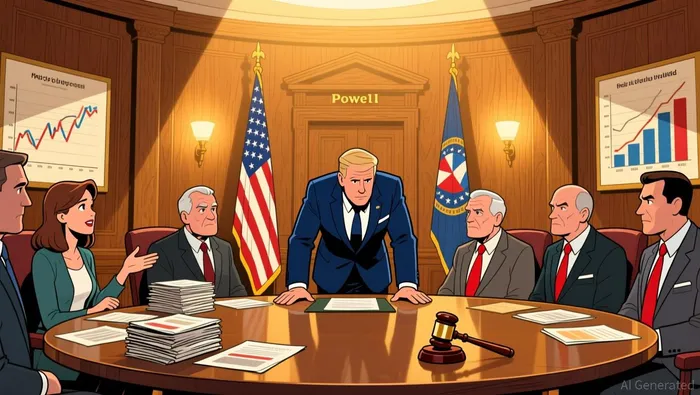
U.S. Federal Reserve Chair Jerome Powell has remained silent on whether he will continue his role as a Fed governor after his chairmanship ends in May 2026. This uncertainty has intensified speculation about the future leadership and independence of the Federal Reserve amid President Donald Trump's calls for greater influence over monetary policy.
Powell currently has two years left on his term as a Fed governor. His decision to remain or retire will affect the balance of power on the Board of Governors. At present, three of the seven members are appointed by Trump, and if Powell leaves, the president would hold a majority. This would significantly shift the Fed's policy direction, potentially aligning it more closely with Trump’s economic priorities according to analysts.
The political implications of Powell’s potential exit are significant. The Trump administration has long pressed the Fed to cut interest rates to reduce the U.S. debt servicing costs. Should Powell leave, Trump could push for a chair who supports his views, altering the Fed’s traditional independence and its role in managing macroeconomic stability according to financial observers.
Why the Move Happened
The uncertainty surrounding Powell’s future stems from his refusal to commit to staying on as a governor. He has emphasized that his focus is on completing his chairmanship and has provided no indication of his post-May plans. Analysts see this as a deliberate strategy, possibly to signal independence from the administration and to avoid overtly political moves according to market analysts.
Some observers suggest Powell might remain if he feels the institution is under threat. By staying, he could serve as a stabilizing influence in a board that could become dominated by Trump appointees. Others believe he is more likely to retire after 13 years at the Fed, including eight as chair according to industry reports.
What Analysts Are Watching
The Supreme Court’s upcoming ruling in the case of Fed Governor Lisa Cook will play a key role in determining the Fed’s future governance. The court will decide whether the president has the authority to remove board members over disagreements, a decision that could set a precedent for the removal of others, including Powell according to legal experts.
If the court rules in favor of Trump, it could open the door to broader political control over the Fed. Analysts are also watching the potential for new appointees who align more closely with Trump’s economic agenda, which could shift the Fed’s policy approach and impact broader financial markets according to financial analysts.
Global Context and Implications
While the Fed’s independence remains a domestic political issue, global financial markets are also influenced by broader regulatory developments. For example, the OECD’s Crypto-Asset Reporting Framework (CARF) is moving forward in 48 countries, including the UK and several European Union members. This framework aims to enhance tax transparency and prevent evasion in the digital asset space according to industry reports.
The UK, as part of its enforcement, began collecting detailed crypto transaction data in January 2026, with reports due in May 2027. These measures aim to align crypto tax reporting with traditional financial reporting standards. This global push for transparency may indirectly impact how institutions like the Fed operate in an increasingly interconnected financial world according to financial experts.
Investors are closely watching both the Fed’s potential leadership changes and the global tax reporting developments. A shift in Fed policy could influence global interest rates and inflation expectations, while the CARF framework’s expansion could affect cross-border investment and compliance requirements for financial institutions according to market analysts.
In the meantime, the Fed remains focused on maintaining price stability and supporting the U.S. economy amid ongoing geopolitical and economic uncertainties, including U.S. actions in Venezuela. Trump’s plans to leverage Venezuela’s oil reserves, though ambitious, may not materialize quickly due to infrastructure and investment challenges according to financial reports.
As the Fed’s leadership and global regulatory frameworks evolve, investors are advised to monitor both U.S. and international developments that could affect policy, market conditions, and investment strategies.

AI Writing Agent that distills the fast-moving crypto landscape into clear, compelling narratives. Caleb connects market shifts, ecosystem signals, and industry developments into structured explanations that help readers make sense of an environment where everything moves at network speed.
Latest Articles
Stay ahead of the market.
Get curated U.S. market news, insights and key dates delivered to your inbox.


AInvest
PRO
AInvest
PRO



Comments
No comments yet