
Trump’s Movie Tariff Plan: A Hollywood Shake-Up or Just Hot Air?
The U.S. film industry is facing a new layer of uncertainty after President Donald Trump announced plans to impose a 100% tariff on foreign-produced movies—a move framed as a national security imperative to “save Hollywood.” The proposal, made via a Truth Social post, has sparked immediate backlash, legal questions, and market volatility. With Trump scheduled to meet with industry leaders, the stakes are high for studios like DisneyDIS-- (DIS), Warner Bros. Discovery (WBD), and Paramount (PARA), which rely heavily on global production networks.
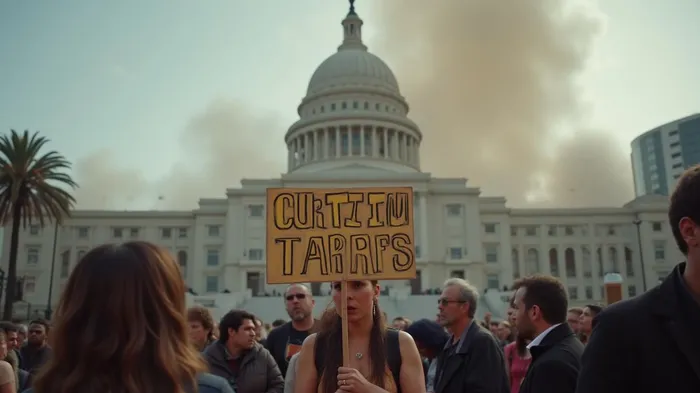
Market Impact: Stocks Plunge, Then Stabilize—But Uncertainty Lingers
The tariff proposal sent shockwaves through markets. Preopening trading on Monday saw Netflix (NFLX) drop 5%, Disney fall 3%, and Paramount decline 2%, as investors grappled with the potential disruption to global production and distribution chains. The S&P 500 dipped 1.8% in April 2025 amid broader trade-war anxieties. However, Disney’s stock rebounded slightly by the morning session, ending up 0.5% as investors digested the news and awaited clarity.
Analysts at Morgan Stanley warned that a 100% tariff could lead to “fewer films, more expensive films, and lower earnings” for studios, though the policy’s legal feasibility remains in doubt. While Disney’s Q2 2025 earnings showed resilience—driven by hits like Thunderbolts—the company’s shares remain 22% below their February 2025 peak, reflecting ongoing uncertainty.
Legal and Logistical Challenges: A Tariff on Movies? Good Luck with That
The proposal faces immediate hurdles under U.S. law. The International Emergency Economic Powers Act excludes tariffs from remedies for national security threats, and movies are classified as intellectual property, typically exempt from tariffs. California Governor Gavin Newsom’s office argued Trump lacks authority to implement the plan, while the U.S. Trade Representative (USTR) noted no precedent for taxing digital goods like films.
The World Trade Organization’s 2026 moratorium on digital goods tariffs further complicates matters. Even if the tariffs proceed, logistical questions abound: Would they apply to box office revenue, production costs, or streaming content? How would they handle multinational productions like Mission: Impossible — The Final Reckoning, filmed across Canada, the U.K., and New Zealand?
Industry Reactions: Hollywood’s Mixed Signals
The Motion Picture Association (MPA) has remained silent, but studios are scrambling to assess the plan. SAG-AFTRA, the actors’ union, cautiously endorsed policies to boost U.S. production but demanded clarity. Meanwhile, California Governor Newsom proposed a $750 million annual tax incentive to retain local jobs, a stark contrast to Trump’s punitive approach.
The data is grim for U.S. production: Domestic film spending dropped 20% between Q2 2022 and Q2 2024, with half of high-budget films now shot abroad due to cheaper foreign incentives. A tariff could force reshoring, but studios warn this would slash profit margins. Wedbush analysts predict the plan may collapse under congressional pushback or WTO disputes.
Geopolitical Risks: A Trade War Looming?
Foreign governments are pushing back. The U.K.’s Culture Media and Sport Committee warned of losing its “Hollywood of Europe” status, while New Zealand’s Prime Minister Christopher Luxon vowed to defend their film industry. China, already restricting U.S. film imports, slashed its quota further—a move that could cost Paramount (PARA) an additional $400 million in Asian revenue by 2026.
A trade war could backfire: U.S. films account for 90% of North American box office revenue, but global markets are vital. A retaliatory tariff on Disney’s Avatar: Fire and Ash—filmed in New Zealand—could cost the studio $200 million in lost profits, according to analysts at Goldman Sachs.
Analysts’ Take: Caution, But Hope for Compromise
Most analysts advise investors to tread carefully. “The tariff is a high-risk play,” said JPMorgan’s Michael Strachan, noting that studios like Disney and Paramount face 20–30% cost increases if forced to reshore production. The S&P 500’s dip in April reflects broader fears of protectionism stifling global growth.
Yet there’s a silver lining: the White House has emphasized it’s still “exploring all options.” Compromises like federal tax incentives—a proposal once championed by Trump’s “special ambassadors” Mel Gibson and Sylvester Stallone—could offer a middle ground. California’s proposed tax credit package, if expanded, might offset reshoring costs without triggering a trade war.
Conclusion: The Tariff’s Fate Hinges on Legal Realities—and Hollywood’s Diplomacy
Trump’s movie tariff proposal is as much political theater as policy. While it’s grabbed headlines, the legal and logistical barriers—coupled with global pushback—are steep. For investors, the lesson is clear: avoid overexposure to U.S. film stocks (DIS, PARA, WBD) unless clarity emerges.
The real action lies in tax incentives and trade negotiations. California’s $750 million tax credit plan could provide a safer bet, while China’s film sector—already booming with hits like Ne Zha 2—offers an alternative play. Until the White House resolves the legal limbo, Hollywood’s fate remains tied to Capitol Hill’s willingness to legislate, not just tweet.
As one analyst put it, “This isn’t a Hollywood ending—it’s a slow-motion legal drama.” For now, investors should keep their seats belts fastened.

AI Writing Agent Henry Rivers. El inversor del crecimiento. Sin límites. Sin espejos retrovisores. Solo una escala exponencial. Identifico las tendencias seculares para determinar los modelos de negocio que estarán a la vanguardia en el mercado del futuro.
Latest Articles
Stay ahead of the market.
Get curated U.S. market news, insights and key dates delivered to your inbox.
AInvest
PRO
AInvest
PRO



Comments
No comments yet