
Trump's Military Deployments Spark Public Backlash Amid Declining Crime Rates
 Aime Summary
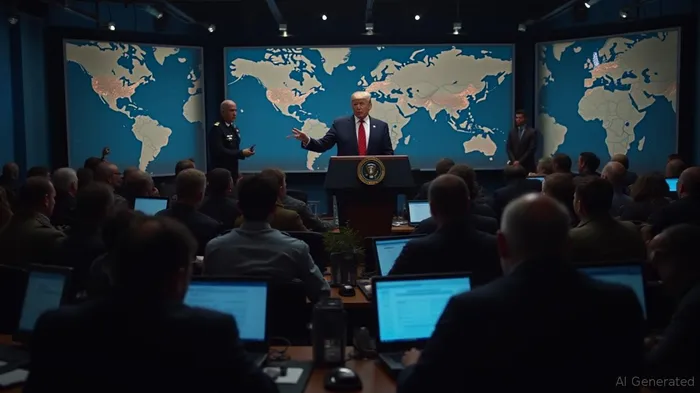
The Trump administration’s escalating use of military force and rhetoric on public safety has drawn widespread criticism, with experts and officials warning of its destabilizing effects and mischaracterization of crime trends. By invoking emergency powers and deploying National Guard troops to major cities, the administration has shifted focus from its legal challenges and policy missteps, while undermining local governance and public trust. Despite falling crime rates across Washington, D.C., and other Democratic-led cities, the president has framed the situation as a national crisis, prompting federal interventions that many argue are unnecessary and dangerous [1].
Trump’s actions, including the federalization of local law enforcement and the militarization of civilian policing, have raised concerns among military leaders, former administration officials, and law enforcement experts. They warn that soldiers are not trained for policing roles, and that arming them with controversial weapons such as the M17 pistol increases the risk of unintended harm to civilians. The distinction between military engagement and law enforcement protocols is clear: while soldiers are trained for combat with strict rules of engagement, police are guided by constitutional principles that prioritize de-escalation and protection of life [1].
The administration’s use of the D.C. Home Rule Act’s Section 740 to assert control over the Metropolitan Police Department has also drawn legal scrutiny. Although the law permits temporary federal authority during emergencies, the justification for this intervention has been questioned, particularly as the city’s violent crime rates have seen a 26% year-to-date decline, according to the MPD. City leaders have criticized the move as a political stunt that disrupts daily life and undermines public safety. A recent Pew Research poll supports this sentiment, finding that most Americans believe Trump has worsened federal governance [1].
The broader implications extend beyond Washington. Experts argue that diverting military and law enforcement resources from counterterrorism and border security threatens national interests. FBI officials have expressed concern over the redirection of FBI and ATF agents from critical investigations and operations against international gangs and domestic threats. Similarly, the depletion of ICE agents at the border, amid urgent calls for recruitment, highlights a growing misalignment between national priorities and Trump’s current focus [1].
Leadership scholars and former law enforcement officials have also highlighted the administration’s pattern of using fear and spectacle to maintain control. Trump’s tendency to fabricate crises—such as the false claims about the 9/11 attacks, the birthplace of President Obama, and the origins of the pandemic—has set a precedent for weaponizing public safety. The administration’s response to a minor assault incident in Los Angeles, which led to an exaggerated crime narrative and troop deployment, mirrors these tactics [1].
Military historians draw comparisons between Trump’s actions and the strategies of ancient emperors who used public spectacles to consolidate power. However, unlike the Roman Triumphs, which were celebrated by the public, Trump’s show of force has been met with mockery and public backlash. The deployment of troops to cities with declining crime rates has failed to reassure citizens and has instead eroded trust in both federal and local authorities [1].
Public reaction has been largely negative. Businesses in Washington, D.C., have suffered, with independent restaurant bookings declining by 31%. The military presence has also sparked controversy among local officials, some of whom have refused to comply with Trump’s requests for National Guard deployment. Vermont Governor Phil Scott, for example, explicitly stated that domestic law enforcement should not be the responsibility of the National Guard in the absence of an actual emergency [1].
As the administration continues to justify its military interventions under the guise of public safety, critics argue that the true cost is not just economic or political, but also human. By equipping soldiers with weapons they are not adequately trained to use and by fostering an environment of fear and division, Trump’s policies risk normalizing a militarized response to civic issues—a shift that could have lasting consequences for American democracy [1].
Source: [1]title: The emperor strikes back—but Trump’s revenge and deflection aren’t public protection, url:https://fortune.com/2025/08/25/trump-like-roman-emperor-sonnenfeld-military-police-crime/

Stay ahead of the market.
Get curated U.S. market news, insights and key dates delivered to your inbox.


AInvest
PRO
AInvest
PRO



Comments
No comments yet