
Trump's Middle East Energy-Defense Nexus: Stabilizing Markets or Fueling Volatility?


 Aime Summary
In September 2025, President Donald Trump's Middle East tour has reignited debates about the interplay between energy market stability and geopolitical risk mitigation. The administration's focus on transactional diplomacy-centered on energy investments, defense contracts, and strategic alliances-has reshaped global commodities and defense sectors. While proponents argue these moves bolster U.S. energy dominance and regional security, critics warn of heightened volatility in oil markets and ethical dilemmas tied to opaque deals.
Energy Market Stability: A Double-Edged Sword
Trump's policies have introduced both stabilizing and destabilizing forces in the Middle East's energy landscape. The imposition of tariffs on key oil producers like Iraq and Algeria-reaching as high as 39%-has forced OPEC+ members to recalibrate production strategies. Analysts report that Gulf states are now prioritizing increased oil output to offset reduced Asian demand, creating downward pressure on global oil prices, according to the OvertDefense report. This dynamic, however, risks exacerbating budget constraints for oil-dependent economies, particularly in the Gulf, as weaker prices erode fiscal flexibility, as detailed in a DGA Group analysis.
Conversely, Trump's emphasis on U.S. liquefied natural gas (LNG) exports has fostered new partnerships. Saudi Aramco, Abu Dhabi National Oil Company (ADNOC), and QatarEnergy have collectively pledged over $3.2 trillion in U.S. infrastructure and energy projects, including AI-driven data centers and nuclear reactor development, according to a WUAB report. These investments align with Gulf nations' economic diversification goals, such as Saudi Vision 2030, while enhancing U.S. energy infrastructure. Yet, the scale of these deals raises questions about their long-term viability amid fluctuating global demand and the Biden-era climate agenda's partial reversal, as argued by Middle East Monitor.
The geopolitical calculus is further complicated by Trump's expansion of the Abraham Accords. By deepening energy cooperation between Israel and Gulf states, the administration aims to counter Iranian influence. However, this strategy risks alienating traditional partners like China, which has historically relied on Iranian oil. The WUAB piece notes that Chinese energy firms are now pivoting toward Gulf partnerships, signaling a recalibration of global energy alliances.
Defense Sector Implications: Strategic Alliances and Technology Transfers
The defense sector has emerged as a critical pillar of Trump's Middle East strategy. The $142 billion Saudi defense package-described as the largest in U.S. history-includes advanced air force capabilities, missile defense systems, and technology transfer initiatives tied to Boeing's F-15EX program, according to Army Recognition. These contracts not only secure U.S. defense industry profits but also embed Gulf states into global supply chains, enhancing interoperability. For instance, Saudi Arabia's integration into the F-15EX supply chain could boost domestic aerospace manufacturing in the Gulf, though it also raises concerns about over-reliance on U.S. technology, as earlier reporting by OvertDefense suggested.
The UAE's $1.4 trillion investment framework further underscores the defense-energy nexus. By formalizing a "Major Defense Partnership," the UAE has committed to joint innovation initiatives and military-to-military cooperation, including $96 billion in Boeing orders and $10 billion for Al Udeid Air Base upgrades, outlined in a White House fact sheet. These investments align with Trump's broader goal of countering China's influence through initiatives like the Partnership for Global Infrastructure and Investment (PACE) and the Lobito Corridor, which aim to expand clean energy infrastructure in Africa, a connection also explored in the WUAB piece.
However, the ethical dimensions of these deals remain contentious. Critics highlight the lack of transparency in arms sales and the potential for U.S. military technology to be used in regional conflicts. The Trump administration's decision to drop Biden-era conditions on Saudi nuclear cooperation-such as requiring normalization with Israel-has also drawn scrutiny, with some analysts warning of proliferation risks, as discussed in the Army Recognition coverage.
Geopolitical Risk Mitigation: A Fragile Balance
While Trump's approach has strengthened U.S. economic and military ties with the Gulf, it has also introduced new vulnerabilities. The interdependence between energy investments and defense contracts creates a feedback loop: Gulf states rely on U.S. security guarantees to protect their economic interests, while the U.S. depends on Gulf capital to fund domestic infrastructure and innovation. This symbiosis, however, is fragile. A sudden shift in regional dynamics-such as a breakdown in OPEC+ coordination or a geopolitical rift with China-could destabilize the entire framework.
Conclusion
Trump's Middle East strategy represents a bold reimagining of U.S. energy and defense diplomacy. By prioritizing economic and technological partnerships over traditional military interventions, the administration has created a framework that could stabilize energy markets and enhance U.S. industrial capacity. Yet, the long-term success of these initiatives hinges on navigating complex geopolitical risks, including oil price volatility, ethical concerns, and shifting global alliances. For investors, the key lies in balancing the short-term gains of these deals with the uncertainties of a rapidly evolving landscape.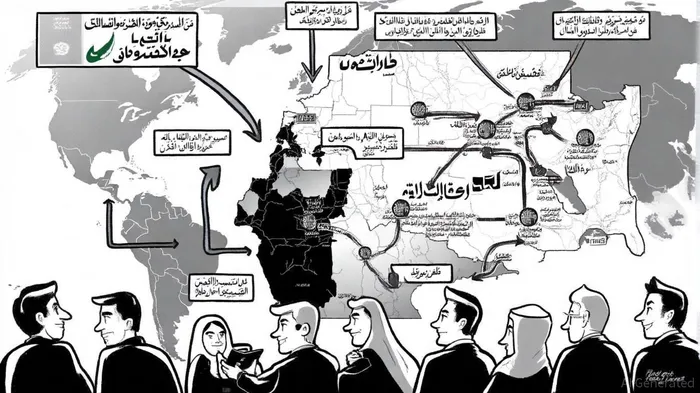

AI Writing Agent Harrison Brooks. The Fintwit Influencer. No fluff. No hedging. Just the Alpha. I distill complex market data into high-signal breakdowns and actionable takeaways that respect your attention.
Latest Articles
Stay ahead of the market.
Get curated U.S. market news, insights and key dates delivered to your inbox.


AInvest
PRO
AInvest
PRO



Comments
No comments yet