
Trump Meme Coin Surges 800% as SEC Clarifies Meme Coin Regulations
The U.S. Securities and Exchange Commission (SEC) issued a staff statement on February 27, 2025, clarifying its view that most meme coins do not constitute securities under federal law. These tokens are understood to derive value primarily from social sentiment and speculative demand rather than from profit expectations tied to managerial or entrepreneurial effort. This interpretive pivot, issued by the Division of Corporation Finance, marked a notable departure from the regulatory posture of former SEC Chair Gary Gensler, whose tenure was marked by aggressive crypto enforcement. Under Acting Chair Mark T. Uyeda, and with the pending swearing in of Trump SEC Chair appointee Paul Atkins—a long-time proponent of deregulation—the Commission appears to be embracing a more permissive, market-oriented approach.
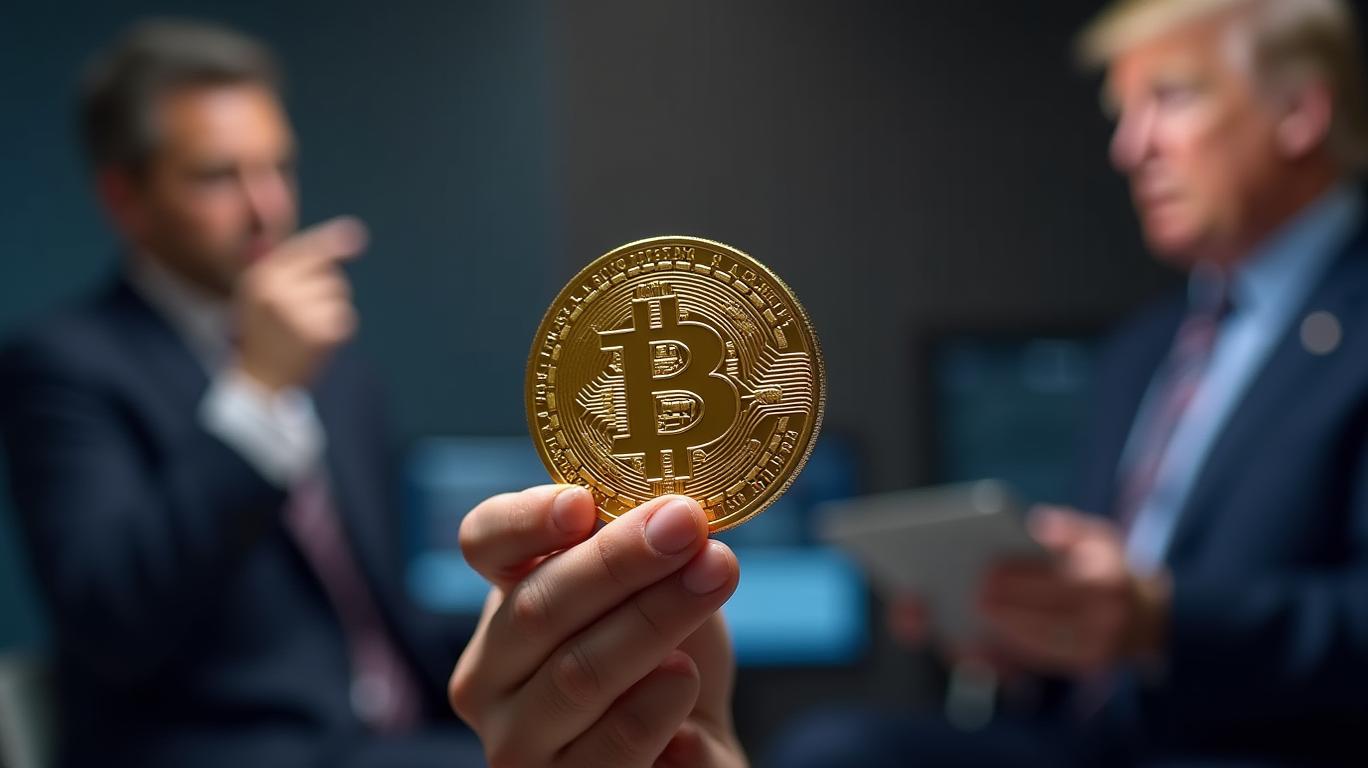
Just days before his January 2025 inauguration, President Trump launched a meme coin bearing his name through a company called CIC Digital LLC, an affiliate of the Trump Organization. The token was accompanied by a similar offering associated with First Lady Melania Trump, marketed under the symbol $MELANIA. Although both tokens were promoted as expressions of community “support” rather than as speculative investment products, the market response was immediate—and substantial. Early buyers raked in significant profits, while many other traders collectively lost substantial amounts. CIC Digital LLC and a related entity, Fight Fight Fight LLC, collectively retained control over 80% of the total token supply. That concentration of ownership, in combination with a rapid price increase, meant that Trump-linked businesses stood to gain approximately $8 billion in token value over a single weekend.
These developments form part of a much broader expansion of Trump family interests in crypto assets—from nonfungible tokens (NFTs) and digital collectibles to a decentralized finance (DeFi) project, stablecoin (WLF1), and Bitcoin mining efforts. The combined approximate value of these ventures is now reportedly approaching $1 billion. From a legal standpoint, the SEC’s February memo could be interpreted as offering regulatory cover for projects like these, provided they are not marketed with profit guarantees or tied to managerial efforts. However, this narrow lens overlooks deeper ethical and governance concerns, particularly when a sitting president maintains direct and ongoing involvement in speculative digital assets, even as his administration attempts to reverse the regulatory approach of its predecessor. Both realities can coexist: a shift in enforcement priorities and a growing conflict of interest.
This distinction underscores a broader truth: governing a country is fundamentally different from running a business. While businesses exist to maximize efficiency, turn a profit and deliver financial returns to shareholders, representative forms of government are tasked primarily with serving the public good, balancing competing social interests, and upholding democratic accountability to all citizens, not just stakeholders. All built on a foundation of trust.
Multiple ethics experts and watchdog groups have raised alarms about the implications of the Trump meme coins. Danielle Brian, executive director of the Project on Government Oversight, characterized the project as “a blatant financial conflict of interest on behalf of the president,” further noting that the initiative “deepens his engagement in a world that raises real national security concerns.” While President Trump has stated that his children manage his business interests through a trust arrangement, the structure does not insulate him from benefiting indirectly—or from exerting political influence over an industry in which he has a personal stake.
Representative Maxine WatersWAT--, the ranking Democrat on the House Financial Services Committee, echoed ethics concerns. In a statement, she cautioned that “anyone globally—even individuals sanctioned by the U.S. or barred from our capital markets—can now trade and profit from $TRUMP through various unregulated platforms.” She reiterated these concerns during a recent House Financial Services subcommittee hearing. Her concerns were echoed legislatively by Congressman and former federal prosecutor Sam Liccardo, who introduced the MEME Act (Modern Emoluments and Malfeasance Enforcement) to prohibit federal officials and their families from issuing, promoting, or financially benefiting from digital assets like $TRUMP, citing the scheme as “a blatant abuse of public office for personal gain.”
The risks here are not hypothetical. Crypto markets operate across decentralized, often anonymous exchanges that fall outside the purview of conventional Know-Your-Customer (KYC) and Anti-Money Laundering (AML) protocols. Foreign actors, including those from adversarial states, could potentially acquire significant stakes in presidentially affiliated tokens, raising questions about influence, access, emoluments and soft corruption.
Some industry voices have defended the Trump tokens as novel expressions of digital innovation. Paul Howard, senior director at market-maker Wincent, called the project “a game-changer,” asserting that it “brings some sort of legitimacy to the space.” Not all tech leaders are as conciliatory. Even among tech leaders who once championed Trump’s pro-business stance, frustration over his crypto entanglements is mounting. Joe Lonsdale, co-founder of PalantirPLTR-- and a vocal Trump supporter, added that government officials naming specific tokens in ways that influence markets is like “picking winners and losers” a function he believes the executive branch has no business performing. These critiques reflect a growing view among conservatives that Trump’s alignment with speculative digital assets threatens both free enterprise and public trust.
The Trump meme coin saga occurs at the intersection of regulatory minimalism and ethical maximalism. While the SEC’s February statement introduces valuable clarity for market participants, the rise of $TRUMP demonstrates how such guidance can be operationalized in ways that exceed its original scope. It also illustrates the limits of a legalistic approach to crypto governance. Formal compliance with the Howey test does not negate the risks of concentrated ownership, inadequate disclosures, or public confusion over the token’s purpose and legitimacy. In fact, it may exacerbate those risks by signaling tacit regulatory approval without corresponding enforcement capacity.
The April 17, 2025 unlock of $TRUMP, involving roughly 40 million tokens, offers a case study in what happens when regulatory ambiguity meets political self-interest. While the SEC’s staff guidance may have narrowed the scope of securities enforcement in the meme coin space, it has not accounted for the constitutional and normative issues that arise when a head of state also functions as a primary beneficiary of the very market he oversees. Financial regulation in the United States has never been solely about statutory compliance; it rests equally on public trust, institutional independence, and the expectation that those in power will exercise restraint. As digital assets become increasingly entangled with political identity and personal enrichment, that foundation is showing signs of strain.
What’s needed now is not just regulatory fine-tuning, but a broader reckoning with the implications of merging market speculation with political influence. Whether Congress, the SEC, or the public is prepared to confront this challenge remains uncertain. But one reality is clear: the era of crypto governance by personality is here. And its consequences will extend well beyond the blockchain.

Stay ahead of the market.
Get curated U.S. market news, insights and key dates delivered to your inbox.


AInvest
PRO
AInvest
PRO



Comments
No comments yet