
Trump and Mamdani's Affordability Gamble: Bridging Ideological Divides


 Aime Summary
The Nov. 21 White House meeting between President Donald Trump and New York Mayor-elect Zohran Mamdani has become a focal point of political tension, with analysts framing it as a pivotal moment for urban governance and federal relations. Mamdani, a 34-year-old democratic socialist, and Trump, a 79-year-old Republican, represent starkly different visions for economic policy, yet both campaigned on addressing the cost-of-living crisis-a shared thread that could define their dialogue according to reports.
Mamdani's victory as mayor-elect has been met with fierce resistance from Trump, who has repeatedly labeled him a "communist" and threatened to withhold federal funds from New York City. The president has also warned of sending military or immigration agents into the city, a claim Mamdani has dismissed as hyperbolic. In a press conference ahead of the meeting, Mamdani emphasized his commitment to affordability, stating, "New Yorkers know the crisis of living costs all too well," and vowing to push for policies that benefit the city's 8.5 million residents according to CBS News.
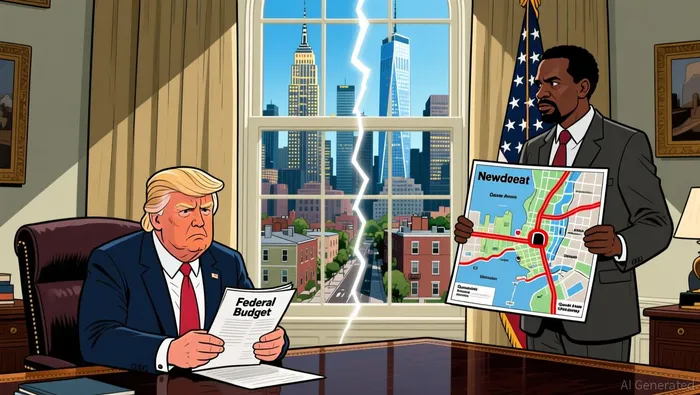 The stakes extend beyond rhetoric. New York, a Democratic stronghold, has faced cuts to federal funding under the Trump administration, alongside immigration raids and National Guard deployments. Experts argue that the meeting could reset the city's strained relationship with Washington. "Cities are engines of the nation's economy," said Ester Fuchs, a Columbia University professor and former adviser to Mike Bloomberg. "It's critical the president recognizes that" according to reports. Mitchell Moss, a New York University public policy expert, added that even symbolic interactions between Trump and Mamdani could foster "a positive dynamic" in navigating their ideological differences according to reports.
Mamdani's platform-ranging from rent freezes to universal childcare-has drawn sharp criticism from Trump, who views it as a threat to free-market principles. Yet, the mayor-elect has found common ground with Trump in their shared focus on affordability. Mamdani noted that 1 in 10 New Yorkers who voted for Trump ultimately supported his campaign, drawn by similar promises to tackle rising living costs according to CBS News. This overlap could serve as a bridge, though Trump's history of using the Oval Office to publicly antagonize opponents raises concerns about the meeting's tone.
The broader implications for corporate interests are also significant. Mamdani's push for higher taxes on corporations and the wealthy aligns with a growing critique of economic inequality, a stance that analysts like the unnamed Bloomberg analyst see as a "day of reckoning" for capital-heavy industries. Trump, meanwhile, has championed corporate-friendly policies, including tariffs and deregulation, which critics argue exacerbate inflation . The clash underscores a national debate over how to balance economic growth with social equity.
As the meeting approaches, Mamdani faces the challenge of navigating Trump's unpredictability while advocating for New York's interests. His team has emphasized the need for federal funding reinstatement, particularly for infrastructure projects like the Gateway tunnel and Second Avenue Subway according to reports. Meanwhile, Trump's leverage-ranging from federal aid to security clearances for Mamdani-could complicate the mayor-elect's agenda.
In a broader context, the encounter reflects the intensifying divide between progressive urban centers and a federal administration prioritizing conservative economic policies. With New York's GDP nearing $1.286 trillion and its status as a global financial hub at stake, the outcome of this meeting could set a precedent for future city-state dynamics under Trump's second term.

Stay ahead of the market.
Get curated U.S. market news, insights and key dates delivered to your inbox.






Comments
No comments yet