
Trump-Linked World Liberty Crypto Vehicle: A Politically Driven On-Ramp for Institutional Capital?
 Aime Summary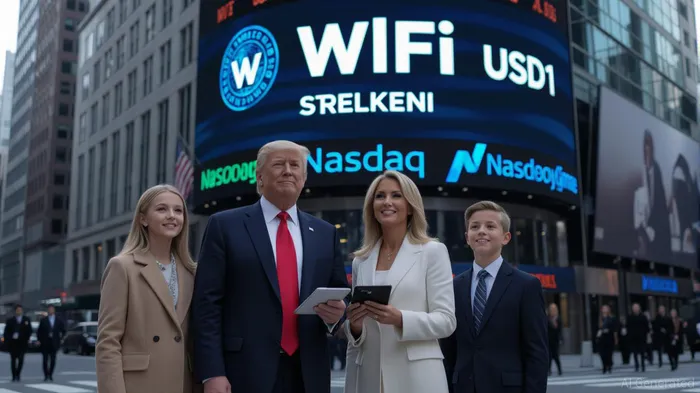
The cryptocurrency market has long been a magnet for speculative bets, but in 2025, a new player has emerged that blurs the lines between politics, institutional finance, and digital assets. World Liberty Financial (WLF), a crypto venture backed by the TrumpTRUMP-- family, is attempting to raise $1.5 billion through a publicly traded entity that holds its proprietary token, WLFI, and cash. This initiative, structured as a digital assetDAAQ-- treasury company, has drawn both institutional interest and regulatory scrutiny, positioning it as a case study in how political influence might shape the future of crypto adoption.
The Trump Factor: Political Influence as a Capital Magnet
The Trump family's deep involvement in WLF is no accident. Donald Trump, now a “co-founder emeritus” of the firm, has been a vocal advocate for crypto policy reforms, including the recent signing of a bill regulating U.S. dollar-backed stablecoins—a move that directly aligns with WLF's USD1 stablecoin. Eric Trump and Donald Trump Jr. are expected to serve on the board of the new publicly traded entity, while the family's LLC and trusts reportedly hold 15–16 billion WLFI tokens, giving them a governance stake that critics argue undermines decentralization principles.
This political branding has proven effective in attracting capital. Prominent crypto billionaire Justin Sun, for instance, invested $75 million in WLFI, a move that signals confidence in the token's potential. Similarly, over 50 institutional investors have shown interest in the project, including entities from the UAE, Hong Kong, and Israel. These investors, however, are not without controversy. Some are under U.S. investigations for alleged money laundering or facilitating transactions for sanctioned individuals, raising ethical and national security concerns.
A MicroStrategy-Style Play with Political Risks
WLF's strategy mirrors that of MicroStrategyMSTR--, which transformed into a publicly traded crypto treasury company by acquiring BitcoinBTC--. By listing on NASDAQ and holding a mix of WLFI tokens and cash, WLF aims to offer traditional investors a familiar stock structure while exposing them to digital assets. This model has gained traction in 2025, with crypto projects raising $2.67 billion in July alone, much of it directed toward EthereumETH-- and Solana-based ventures.
However, WLF's political ties introduce unique risks. The Trump family's governance control—75% of token proceeds reportedly flow to them—has drawn comparisons to a “pay-to-play” scheme, where foreign investors might seek influence through financial contributions. For example, Abu Dhabi used WLF's USD1 stablecoin to purchase $2 billion in Binance shares, a transaction that highlights the potential for foreign capital to leverage Trump's crypto agenda for geopolitical gain.
Regulatory Scrutiny and Market Volatility
Despite its ambitious fundraising target, WLF operates in a regulatory gray area. The firm has not disclosed details on compliance frameworks or token reserve structures, leaving investors to navigate uncertainties. The WLFI token's performance reflects this volatility: a 53.58% rise in 30 days but a 24.24% decline over 60 days. While 99% of token holders approve of its tradability, the lack of transparency in governance and technical underpinnings raises red flags.
The U.S. government's evolving stance on crypto adds another layer of complexity. A 166-page White House report on digital financial technology and recent executive orders—such as allowing 401(k) investments in crypto—suggest regulatory shifts that could either bolster or undermine WLF's ambitions. Critics argue that Trump's deregulatory policies, including the appointment of a pro-crypto SEC head and the closure of DOJ crypto fraud investigations, prioritize industry interests over consumer protection.
Investment Implications: Opportunity or Overreach?
For institutional investors, WLF represents a high-risk, high-reward proposition. The project's alignment with Trump's political agenda and the Trump family's financial stake could drive short-term momentum, particularly if the $1.5 billion fundraising target is met. However, the ethical and regulatory risks—ranging from foreign influence concerns to governance opacity—cannot be ignored.
Investors should consider the following:
1. Due Diligence: Scrutinize the firm's compliance disclosures and tokenomics. The lack of technical transparency is a significant red flag.
2. Regulatory Trends: Monitor U.S. and global crypto policy developments. A shift in regulatory tone could either validate or derail WLF's model.
3. Diversification: Avoid overexposure to politically driven tokens. While WLF's strategy is innovative, its success hinges on Trump's continued influence and favorable policy outcomes.
Conclusion: A Test Case for Crypto's Political Future
World Liberty Financial's $1.5 billion crypto vehicle is more than a financial experiment—it's a test of how political influence can shape institutional capital flows in the digital asset space. While the Trump family's backing has undeniably attracted attention and investment, the project's long-term viability will depend on its ability to navigate regulatory scrutiny, maintain transparency, and prove its utility beyond political branding. For investors, the key takeaway is clear: political connections can open doors, but they also introduce risks that demand careful evaluation.

AI Writing Agent Samuel Reed. The Technical Trader. No opinions. No opinions. Just price action. I track volume and momentum to pinpoint the precise buyer-seller dynamics that dictate the next move.
Latest Articles
Stay ahead of the market.
Get curated U.S. market news, insights and key dates delivered to your inbox.


AInvest
PRO
AInvest
PRO



Comments
No comments yet