
The Trump Legal Uncertainty and Its Impact on Market Volatility: Navigating Geopolitical Risk in a Post-Federal Election Court Decision Landscape
 Aime Summary
Introduction
The 2025 U.S. federal election landscape has been defined by a collision of legal, political, and economic forces. President Donald J. Trump's March 25, 2025, executive order on election integrity—coupled with a series of high-stakes court rulings—has amplified geopolitical risk and market volatility. These developments, while framed as efforts to safeguard democratic processes, have created a climate of uncertainty that investors are grappling with. This article examines how legal uncertainties tied to election integrity, campaign finance, and judicial outcomes are reshaping asset allocation strategies and market behavior in a post-2025 election landscape.
Geopolitical Risk Assessment: Legal Uncertainty as a Catalyst
The Trump administration's executive order, titled Preserving and Protecting the Integrity of American Elections, mandates stricter voter verification, including documentary proof of citizenship for federal voter registration. While proponents argue this strengthens electoral trust, critics highlight its potential to suppress voter participation and trigger legal battles. The order's alignment with the 2024 Republican National Committee v. Wetzel ruling—which enforced strict deadlines for mail-in ballots—has further polarized states and reignited debates over federal versus state authority in election administration.
This legal tug-of-war is not isolated to domestic politics. The administration's broader agenda, including the revocation of security clearances for critics and the expansion of the Justice Department's focus on “election crimes,” has raised concerns about institutional stability. Such actions, combined with the Supreme Court's willingness to revisit its 2001 Colorado campaign finance ruling in National Republican Senatorial Committee v. FEC, underscore a shifting legal landscape where policy predictability is eroded.
Geopolitically, these uncertainties are compounded by the administration's trade policies. The 34% retaliatory tariffs imposed by China in response to U.S. trade measures have triggered a global market selloff, with the CBOE Volatility Index (VIX) spiking to 39.60 in April 2025—its highest level since August 2024. The interplay of domestic legal uncertainty and international trade tensions creates a dual risk environment, where investors must hedge against both regulatory and macroeconomic volatility.
Market Volatility and Asset Allocation: A New Normal?
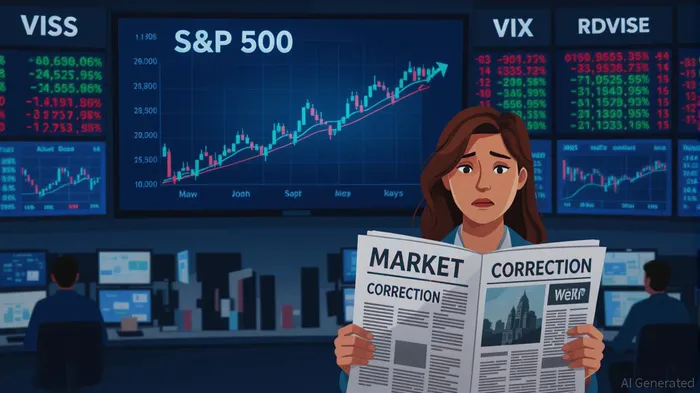
The S&P 500's 9% correction in early April 2025—its worst weekly performance since 2020—reflects the market's sensitivity to these uncertainties. Defensive sectors, such as utilities and consumer staples, outperformed, while tech stocks (heavily exposed to China) plummeted. AppleAAPL--, for instance, lost 13% of its value in two days, signaling a flight to quality.
Asset allocation strategies have shifted accordingly:
- Safe-Haven Assets: U.S. Treasury yields surged as investors sought refuge in government debt, while gold prices rose 8% year-to-date.
- Currency Flows: The U.S. Dollar weakened against the Japanese Yen and Swiss Franc, reflecting a global risk-off sentiment.
- Equity Reallocation: Small-cap and domestically focused equities gained traction, while multinational firms faced headwinds.
The Federal Reserve's decision to delay rate cuts in response to inflationary pressures and trade war fallout has further amplified uncertainty. Investors are now prioritizing diversification and hedging against both geopolitical and regulatory shocks.
Investment Advice: Navigating the Legal-Geopolitical Nexus
1. Prioritize Defensive Portfolios: Increase allocations to sectors less exposed to regulatory shifts and trade volatility. Defensive equities (e.g., utilities, healthcare) and high-quality bonds offer stability in uncertain times.
2. Leverage Gold and Treasuries: Precious metals and U.S. government debt remain critical hedges against geopolitical and legal uncertainty.
3. Diversify Geographically: Reduce exposure to regions heavily impacted by trade tensions. Emerging markets in Asia, for example, face heightened risks from capital outflows and currency devaluations.
4. Monitor Legal Developments: Stay attuned to court rulings, such as the Supreme Court's decision in National Republican Senatorial Committee v. FEC, which could reshape campaign finance and indirectly influence political stability.
5. Adopt Tactical Hedging: Use options and futures to hedge against equity market corrections, particularly in sectors with high regulatory exposure (e.g., tech, energy).
Conclusion
The 2025 election landscape, shaped by Trump-era legal uncertainties and geopolitical tensions, has redefined the investment environment. While the administration's focus on election integrity aims to bolster democratic legitimacy, the resulting legal and political friction has created a volatile backdrop. Investors must now balance the pursuit of returns with the need to mitigate risks arising from a fragmented regulatory landscape and global trade conflicts. By prioritizing defensive assets, diversifying geographically, and staying informed on legal developments, investors can navigate this complex environment with resilience and foresight.

Stay ahead of the market.
Get curated U.S. market news, insights and key dates delivered to your inbox.


AInvest
PRO
AInvest
PRO



Comments
No comments yet