
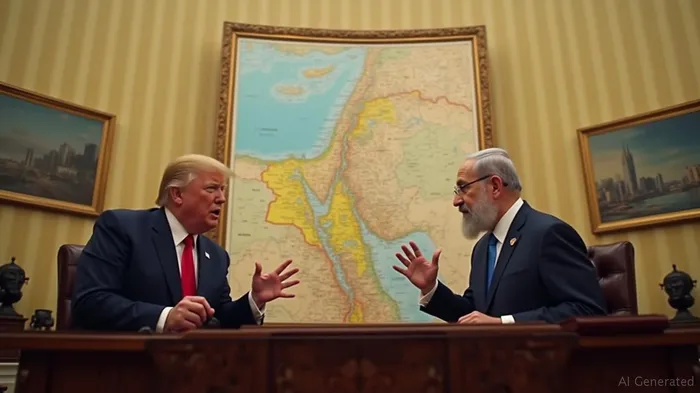
Trump and Israel's Netanyahu: Spoke after US conducted strikes on Iran
ByAinvest
Saturday, Jun 21, 2025 9:11 pm ET1min read
NNBR--
Trump's approach to the conflict has been characterized by ambiguity. Initially, he threatened Iran with "even more brutal" attacks and supported Israel's strikes. However, he has also emphasized his preference for a diplomatic solution, reflecting his self-described image as a world-class dealmaker. This vacillation has added to the uncertainty surrounding the conflict [1].
Netanyahu, on the other hand, has pressed for a more aggressive stance, arguing that the attacks on Iran are "fully coordinated" with the U.S. and that targeting Iran's Supreme Leader Ali Khamenei would end, not escalate, the conflict. However, an anonymous U.S. official briefed to some news outlets has indicated that Trump is against such a move [1].
The conflict has significant financial implications. The U.S. has been providing military support to Israel, including naval destroyers and ground-based missile batteries. The escalation of the conflict could potentially lead to increased defense spending and economic instability in the region. Furthermore, the risk of any American casualties would likely see the "America First" isolationist argument grow exponentially, potentially adding pressure on Trump to pull back and urge Netanyahu to bring the offensive to a swifter end [1].
The conflict also has geopolitical ramifications. Iran has threatened to attack U.S. bases in the region if the U.S. continues to assist Israel's defense. This could potentially lead to a broader conflict in the Middle East, with significant economic and financial consequences.
In conclusion, the Israel-Iran conflict is a complex and evolving situation that requires careful navigation by both Trump and Netanyahu. The financial and geopolitical implications of the conflict are significant, and the leaders will need to weigh the risks and benefits of military action and diplomatic efforts carefully.
References:
[1] https://www.bbc.com/news/articles/cx23e4pzjg3o
[2] https://cbn.com/news/israel/trump-calls-irans-unconditional-surrender-ayatollahs-response-battle-begins
Trump and Israel's Netanyahu: Spoke after US conducted strikes on Iran
In a complex geopolitical scenario, U.S. President Donald Trump and Israeli Prime Minister Benjamin Netanyahu have been navigating the escalating Israel-Iran conflict. The dynamic between the two leaders has been marked by shifting stances and strategic considerations, reflecting the intricate balance between military action and diplomatic efforts.Trump's approach to the conflict has been characterized by ambiguity. Initially, he threatened Iran with "even more brutal" attacks and supported Israel's strikes. However, he has also emphasized his preference for a diplomatic solution, reflecting his self-described image as a world-class dealmaker. This vacillation has added to the uncertainty surrounding the conflict [1].
Netanyahu, on the other hand, has pressed for a more aggressive stance, arguing that the attacks on Iran are "fully coordinated" with the U.S. and that targeting Iran's Supreme Leader Ali Khamenei would end, not escalate, the conflict. However, an anonymous U.S. official briefed to some news outlets has indicated that Trump is against such a move [1].
The conflict has significant financial implications. The U.S. has been providing military support to Israel, including naval destroyers and ground-based missile batteries. The escalation of the conflict could potentially lead to increased defense spending and economic instability in the region. Furthermore, the risk of any American casualties would likely see the "America First" isolationist argument grow exponentially, potentially adding pressure on Trump to pull back and urge Netanyahu to bring the offensive to a swifter end [1].
The conflict also has geopolitical ramifications. Iran has threatened to attack U.S. bases in the region if the U.S. continues to assist Israel's defense. This could potentially lead to a broader conflict in the Middle East, with significant economic and financial consequences.
In conclusion, the Israel-Iran conflict is a complex and evolving situation that requires careful navigation by both Trump and Netanyahu. The financial and geopolitical implications of the conflict are significant, and the leaders will need to weigh the risks and benefits of military action and diplomatic efforts carefully.
References:
[1] https://www.bbc.com/news/articles/cx23e4pzjg3o
[2] https://cbn.com/news/israel/trump-calls-irans-unconditional-surrender-ayatollahs-response-battle-begins
Stay ahead of the market.
Get curated U.S. market news, insights and key dates delivered to your inbox.
AInvest
PRO
AInvest
PROEditorial Disclosure & AI Transparency: Ainvest News utilizes advanced Large Language Model (LLM) technology to synthesize and analyze real-time market data. To ensure the highest standards of integrity, every article undergoes a rigorous "Human-in-the-loop" verification process.
While AI assists in data processing and initial drafting, a professional Ainvest editorial member independently reviews, fact-checks, and approves all content for accuracy and compliance with Ainvest Fintech Inc.’s editorial standards. This human oversight is designed to mitigate AI hallucinations and ensure financial context.
Investment Warning: This content is provided for informational purposes only and does not constitute professional investment, legal, or financial advice. Markets involve inherent risks. Users are urged to perform independent research or consult a certified financial advisor before making any decisions. Ainvest Fintech Inc. disclaims all liability for actions taken based on this information. Found an error?Report an Issue


ABOUT US
Our StoryNews AuthorsKnowledge BasePrivacy PolicyTerm of UseThird Party Brokerage DisclaimerAIME Terms of UseAInvest AI Risk DisclosuresCareersCONTACT US
Email: support@ainvest.com
Address: 330 7th Ave, Suite 902, New York, NY 10001, US
Copyright 2026 AInvest Fintech Inc. All rights reserved.


Comments
No comments yet