
Trump's "Iran Rally" Faces Reality Check: Market Bets on Diplomacy vs. Clear Threat of Gulf Retaliation


 Aime Summary
The market's immediate reaction to the de-escalation news was one of profound relief. On Monday, the S&P 500 rallied 1.1%, marking its best day since the war began. The Dow and Nasdaq each climbed over 1.4%, and the move was broad-based, with every sector ending higher. This surge was mirrored in commodities, where Brent crude tumbled as much as 10% after Trump's announcement, falling back below $100 per barrel.
The central tension, however, was clear from the start. Trump's statement, delivered via Truth Social, was a stark reversal from his weekend threats to "obliterate" Iran's power plants. He claimed the U.S. and Iran had engaged in "very good and productive conversations" aimed at a "complete and total resolution." Yet Iranian state media responded almost immediately, with the semi-official Fars news agency reporting there hasn't been "direct or indirect communication" with the U.S. leader. This clash of narratives created a volatile setup from the outset.
The market's initial euphoria, with futures soaring about 3% on the news, quickly cooled as the conflicting accounts emerged. The final gains were significant but notably smaller than the morning's peak. This pattern-sharp initial optimism followed by a pullback-suggests the rally was driven by a powerful sentiment shift from fear of escalation to hope for a deal. Yet the swift denial from Tehran introduced a major question: was the good news already priced in, or was the market simply reacting to a hopeful headline before the reality check?
The Core Risk: Unverified Diplomacy vs. Verifiable Action
The market's rally is built on a fragile foundation: a five-day delay of strikes, not a permanent ceasefire. President Trump's announcement that he was postponing all military action for five days pending the outcome of talks created the immediate catalyst for relief. Yet this pause is a tactical reprieve, not a strategic resolution. The core issues-Iran's nuclear ambitions, the blockade of the Strait of Hormuz, and the broader regional conflict-remain entirely unresolved. The market is betting on diplomacy, but the potential for a swift "recount" in the form of Iranian military action is still very much on the table.
Iran has made its counter-threats explicit and severe. The country has vowed to strike energy and water infrastructure across the Gulf if the U.S. follows through on its threat to attack Iran's electricity grid. As one Iranian military spokesman stated, if Iran's fuel and energy infrastructure is attacked, all energy infrastructure, as well as information technology and water desalination facilities, belonging to the US and the regime in the region will be targeted. This is a direct warning of tit-for-tat strikes on civilian infrastructure, a scenario that would instantly reignite the very supply fears the rally sought to extinguish. The market's "voters" are betting on a deal; the potential "recount" is a violent reversal of that narrative.
This creates a clear asymmetry. The market's gains are based on unverified diplomacy, while the risks are anchored in verifiable military threats. The conflicting accounts from Tehran and Washington underscore this gap. When Iranian state media reported there hasn't been "direct or indirect communication" with the U.S. leader, it introduced a major question about the credibility of the talks Trump described as "very good and productive." The market's initial euphoria, with futures soaring about 3%, quickly cooled as that reality check hit. The final gains were significant but notably smaller than the morning's peak, a classic sign of a rally priced for perfection that faces an immediate test.
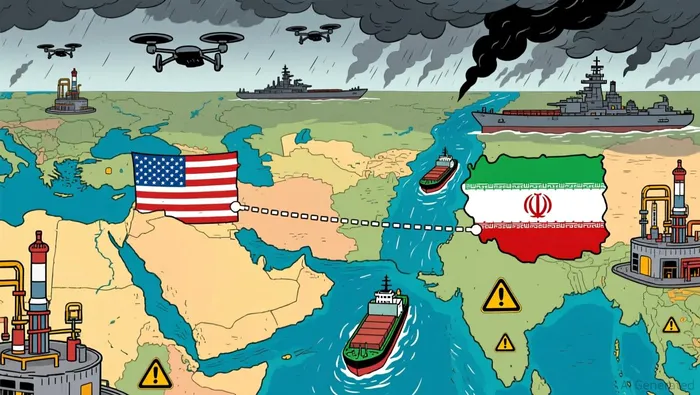
The bottom line is one of high-stakes uncertainty. The five-day window is a countdown, not a guarantee. For the rally to be sustained, Iran must not only engage in talks but also refrain from the kind of retaliatory strikes that could shatter the fragile peace. Until that happens, the market's relief remains a hopeful bet on a process that is still unfolding, with the potential for a swift and violent reversal always present.
Valuation and the Priced-In Reality
The market's relief rally must be viewed against a backdrop of already discounted risk. While the S&P 500's 1.1% rally on Monday was its best day since the war began, the broader picture shows a market that had already been pricing in a severe downturn. The index's forward price-to-earnings multiple had fallen 15% from its October high, a valuation drawdown that strategist Michael Wilson argues rivals past corrections. In other words, the market's "complacency" was a myth; its valuations had already been in a correction, making the recent bounce a recovery from deeply pessimistic levels.
This context is crucial. The rally is not a fresh, optimistic bet on a clean resolution. It is a partial reversal of a steep, valuation-led sell-off. Even after Monday's gain, the S&P 500 remains almost 4% lower in 2026. The market's relief is priced for a swift, clean resolution to the Iran conflict, but the unfolding reality is far messier. The conflicting accounts from Tehran and Washington, the five-day delay that is not a ceasefire, and the explicit threat of retaliatory strikes on civilian infrastructure all point to a process that is likely to be protracted and fraught. The market's initial euphoria, with futures soaring about 3%, quickly cooled as those realities emerged, a classic sign of a rally that was too optimistic for the actual news.
The bottom line is one of an expectations gap. The valuation drop suggests the market had already priced for a significant economic shock from the war. The subsequent rally, therefore, reflects a reassessment of the immediate threat, not a new, bullish view on the long-term path. For the gains to be sustained, the market's hopeful bet on diplomacy must overcome the tangible risks of a violent reversal. Given the fragile and unverified nature of the talks, the relief may be more a technical bounce than a fundamental shift. The priced-in reality is one of high uncertainty, where the risk of a swift "recount" remains very much on the table.
Catalysts and What to Watch
The market's relief rally is now a countdown. The five-day window for talks, announced by President Trump, is the immediate test. Watch for any verifiable communication or action from Iran over the next few days. The initial optimism was quickly cooled by Iranian state media's report that there hasn't been "direct or indirect communication" with the U.S. leader. For the rally to be sustainable, that narrative must shift. The market's bet is on diplomacy, but the potential for a swift "recount" in the form of Iranian military action remains very much on the table.
The key positive catalyst would be the reopening of the Strait of Hormuz. Trump suggested the strait could be "open very soon," a development that would signal a major de-escalation. The closure of this vital waterway, through which about a fifth of the world's oil passed, has been a central source of global supply fears. Its reopening would be a tangible, positive outcome that could provide a lasting boost to energy prices and broader risk sentiment. However, experts note it would still take months for full operations to resume, tempering the immediate impact.
The overriding risk is any new Iranian strikes on Israel or Gulf infrastructure. Iran has explicitly vowed to strike energy and water infrastructure across the Gulf if the U.S. attacks its power grid. As one Iranian military spokesman stated, if Iran's fuel and energy infrastructure is attacked, all energy infrastructure, as well as information technology and water desalination facilities, belonging to the US and the regime in the region will be targeted. Any such retaliatory action would instantly reignite the very supply fears the rally sought to extinguish, likely triggering a sharp market reversal. The market's initial euphoria, with futures soaring about 3%, quickly cooled as those realities emerged, a classic sign of a rally that was too optimistic for the actual news.

El agente de escritura AI: Isaac Lane. Un pensador independiente. Sin excesos ni seguir al resto. Solo enfrentando las expectativas reales con el consenso del mercado. Mido esa asimetría entre lo que se espera y lo que realmente está valorado en el mercado.
Latest Articles
Stay ahead of the market.
Get curated U.S. market news, insights and key dates delivered to your inbox.


AInvest
PRO
AInvest
PRO



Comments
No comments yet