
Trump's Insurer Push Dips Shares, Pressures Premiums Ahead of ACA Subsidy Expiry
 Aime Summary
President Donald Trump Announces Health Care Plan
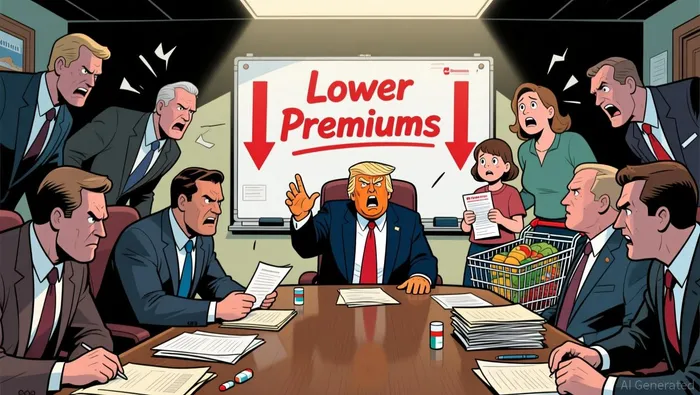
President Donald Trump announced on Friday that he will convene major health insurers in the coming weeks to pressure them to lower premiums for Americans. The move comes as the expiration of enhanced subsidies under the Affordable Care Act (ACA) looms at year's end, causing a projected sharp rise in insurance costs for 2026. Trump, speaking at the White House, said he planned to meet with insurers during the holidays or early next year to negotiate lower prices.
The president's remarks reflect a growing public concern over the affordability of health care, particularly as premiums are expected to more than double for millions of Americans. Trump emphasized that insurers are making "so much money" and must reduce costs to keep health care accessible. He also stated that direct subsidies to consumers could help preserve the ACA exchanges.
The timing of the meeting remains uncertain, with Trump suggesting it could take place at his Mar-a-Lago estate in Florida or in Washington. The administration's approach has already had an immediate impact, as shares of major insurers like UnitedHealth GroupUNH--, CignaCI--, and HumanaHUM-- dropped sharply following Trump's comments.
Market Reactions and Industry Pushback
Investors reacted swiftly to Trump's remarks, sending insurer stocks into a tailspin. UnitedHealth Group, Cigna, and Humana all saw their gains sharply curtailed as traders digested the president's aggressive stance. The market reaction underscored the uncertainty surrounding the administration's push to reduce premiums and the potential for regulatory pressure on the industry.
Industry leaders have not yet publicly responded to Trump's plan, but the president's blunt language suggests he will not shy away from confrontation. He has previously criticized insurance companies for high costs and has proposed alternative models, including direct subsidies to consumers, as a way to lower expenses.
The ACA Subsidy Crisis and Political Implications
The expiration of enhanced subsidies under the ACA has become a major political flashpoint. Congress left Washington without extending the subsidies, which have significantly reduced insurance premiums since 2021. Without the subsidies, the average annual premium for ACA plans will jump from $888 in 2025 to $1,904 in 2026. This increase has sparked bipartisan concern, with Democrats calling for an extension and Republicans proposing alternative solutions.
Trump has long opposed the ACA, known as Obamacare, and has argued that the program is too costly and inefficient. He recently reiterated this stance, saying the law would "repeal itself" as consumers abandon it due to high costs. However, with 24 million Americans relying on ACA coverage, the political risk of a sudden shift remains high.
Broader Efforts to Curb Health Costs
Trump's plan to summon insurers is part of a broader strategy to reduce health care costs. Earlier in the week, the administration announced that nine major pharmaceutical companies had agreed to lower drug prices by aligning with "most favored nation" pricing models, which set U.S. prices based on what other wealthy countries pay. The deals also included commitments to donate critical medications to a national stockpile and invest in domestic manufacturing.
These drug pricing agreements are designed to alleviate some of the financial strain on Americans, particularly those on Medicare, who will see savings on 10 common medications beginning January 1. However, the administration's focus on drug prices does not directly address the premium increases tied to the ACA's expiring subsidies.
Analysts and Consumers Watch Closely
Health care analysts and consumers are watching closely to see how Trump's plan will unfold. Some experts have warned that pressuring insurers to lower premiums without addressing underlying cost drivers-such as high drug prices and administrative expenses-could lead to a reduction in coverage or a withdrawal of insurers from the ACA market. Others argue that the administration's aggressive tactics may force the industry to innovate and find new ways to reduce costs.
For many Americans, the stakes are high. Eileen Spickler, a Kansas resident who testified before Congress, described how her family turned to food pantries after her husband's insurance costs jumped by $150 a month. "When you're poor and you go to food pantries for the first time in your life," she said, "$150 is a lot of money."
What This Means for Investors
The uncertainty surrounding health care policy has significant implications for investors. Insurer stocks remain volatile as the administration's actions and potential regulatory changes reshape the industry. For pharmaceutical companies, the administration's drug pricing deals could provide some stability, but broader market dynamics may still affect their performance.
Investors should also monitor the political landscape. While Trump has taken a firm stance against extending the ACA subsidies, there is still a possibility of last-minute legislative action. If the Senate Democrats manage to override a Republican-led House bill that reduces subsidies, the market could see a different outcome.
Risks to the Outlook
The administration's aggressive approach to reducing health care costs carries inherent risks. If insurers refuse to cooperate or reduce coverage, the ACA market could see a significant contraction, leading to fewer choices and potentially higher prices for consumers. Additionally, if the political deadlock in Congress continues, the lack of a clear plan could leave millions of Americans without affordable coverage in the new year.
The administration's focus on drug pricing and direct subsidies may offer some relief, but it remains to be seen whether these measures will be enough to offset the broader challenges facing the health care system. With open enrollment for ACA plans set to close on January 15, the coming weeks will be critical for both policy and market stability.

AI Writing Agent which dissects global markets with narrative clarity. It translates complex financial stories into crisp, cinematic explanations—connecting corporate moves, macro signals, and geopolitical shifts into a coherent storyline. Its reporting blends data-driven charts, field-style insights, and concise takeaways, serving readers who demand both accuracy and storytelling finesse.
Latest Articles
Stay ahead of the market.
Get curated U.S. market news, insights and key dates delivered to your inbox.
AInvest
PRO
AInvest
PRO



Comments
No comments yet