
Trump's Influence Shifts Canadian Election Dynamics
In recent months, the political landscape in Canada has undergone a significant shift, with Donald Trump emerging as a central figure in the country's upcoming federal elections. This development has introduced a level of unpredictability that has left many political analysts and observers scrambling to make sense of the situation. Trump's influence, stemming from his controversial policies and polarizing rhetoric, has the potential to significantly alter the dynamics of the Canadian political scene.
Trump's involvement in Canadian politics is not without precedent. His past actions, such as imposing tariffs on trade partners and his stance on immigration, have had ripple effects beyond U.S. borders. In Canada, his presence has sparked debates on issues ranging from economic policy to national security. The 's ability to galvanize support and stir controversy has made him a wildcard in the Canadian political arena, where traditional party lines and established political norms are being challenged.
The impact of Trump's influence is already being felt in various ways. His policies, particularly those related to trade and immigration, have resonated with certain segments of the Canadian population. This has led to a shift in public opinion and has forced political parties to re-evaluate their stances on these issues. The unpredictability of Trump's involvement has also led to a heightened sense of urgency among political strategists, who are now scrambling to adapt their campaigns to account for this new variable.
One of the most significant implications of Trump's involvement is the potential for increased polarization within Canadian society. His divisive rhetoric and policies have a history of driving a wedge between different groups, and this trend could very well play out in Canada. This polarization could lead to a more contentious political environment, where debates become more heated and compromise becomes more difficult to achieve.
Moreover, Trump's presence in Canadian politics could also have implications for the country's relationship with the United States. The two countries have a long history of cooperation and shared interests, but Trump's policies have often been at odds with those of the Canadian government. His involvement in Canadian politics could further strain this relationship, potentially leading to new challenges in areas such as trade, security, and diplomacy.
In the lead-up to the elections, the two main contenders for the prime minister's office are Mark Carney, the former Governor of the Bank of Canada, and Pierre Poilievre, the leader of the Conservative Party. Carney, who has a background in finance and has held prominent positions in both the public and private sectors, has positioned himself as a candidate who can navigate the uncertainties brought about by Trump's policies. He has emphasized his experience in managing economic crises and has called for a strong response to Trump's trade and security policies, which he describes as the "biggest crisis of our generation."
Poilievre, on the other hand, has focused his campaign on criticizing the incumbent Liberal Party's record and promising change. He has sought to distance himself from Trump, despite attempts by the Liberals to link the two. Both candidates have highlighted the need to support domestic industries and diversify trade relationships beyond the United States, given the potential for further trade disruptions.
Other notable candidates include Jagmeet Singh, the leader of the New Democratic Party, and Yves-François Blanchet, the leader of the Bloc Québécois. While their chances of winning the election are slim, they could still play a significant role in shaping the policies of the next government, especially if neither of the two major parties secures a majority of seats.
In conclusion, the emergence of Donald Trump as a key figure in Canadian elections has introduced a level of unpredictability that is difficult to ignore. His influence has the potential to reshape the political landscape, alter public opinion, and strain international relations. As the election season unfolds, it will be crucial for political parties and observers to closely monitor the developments and adapt their strategies accordingly. The outcome of these elections could have far-reaching implications for Canada's future, and the role that Trump plays in this process will be a significant factor in determining the country's political trajectory. 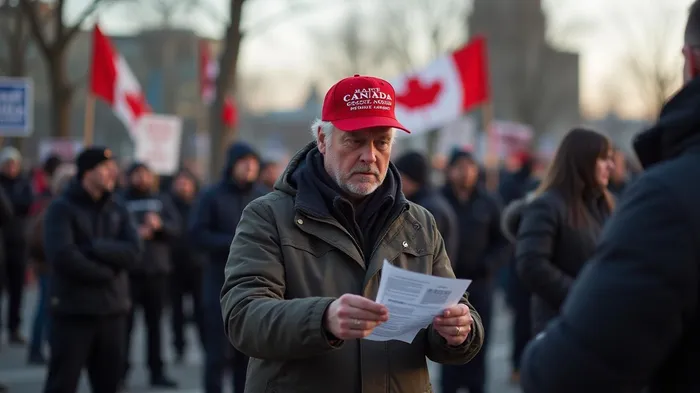

Stay ahead of the market.
Get curated U.S. market news, insights and key dates delivered to your inbox.


AInvest
PRO
AInvest
PRO



Comments
No comments yet