
Trump Imposes 30% Tariffs on Mexico, EU, August 1 Deadline Looms
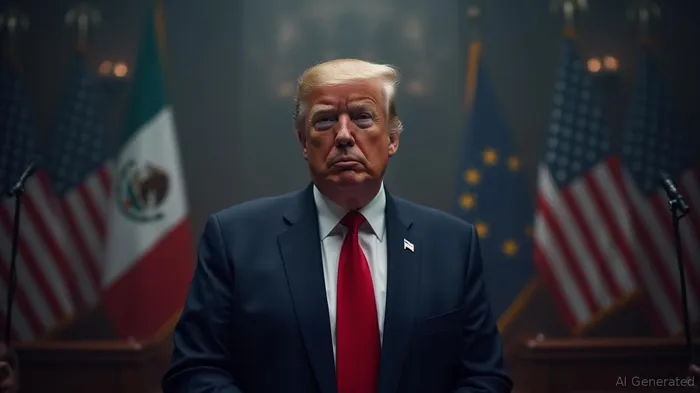
President Trump has issued formal tariff notices to Mexican President Claudia Sheinbaum and European Commission President Ursula von der Leyen, announcing that 30% tariffs will be imposed on both countries starting August 1. In these letters, Trump accused Mexico of failing to halt the flow of fentanyl into the US and blamed the EU for an “unfair” trade imbalance. He did not request negotiations but instead informed them of the impending tariffs. Both countries were given the opportunity to act swiftly to mitigate the impact, but Trump also warned that the tariff rates could be increased further if their responses were unsatisfactory.
This move is not a vague threat but a concrete action with a ticking clock. As countries from India to Japan scramble for breathing room, the administration is proceeding as if nothing is negotiable. Treasury Secretary Scott Bessent is traveling to Japan, and EU trade officials are attempting to secure last-minute deals on cars and farm exports. However, there is uncertainty about whether these efforts will make a difference. What Trump has initiated appears more like a declaration than a discussion.
The August 1 deadline was already severe, but Trump did not stop with Mexico and the EU. He added South Korea, Japan, Canada, and Brazil to the list. South Korea and Japan faced additional tariffs after negotiations stalled. Canada’s Prime Minister Mark Carney was also targeted, despite what one official described as a “charm offensive.” Canada now faces 35% tariffs, with energy and USMCA-compliant goods capped at 10%. Brazil was hit with 50% tariffs, not for trade reasons, but due to political motivations. Specifically, Trump wants Brazil to drop its legal actions against Jair Bolsonaro and is using tariffs to achieve this.
As more letters are sent out, countries that believed they had more time are beginning to panic. The White House has made it clear that countries deemed “no longer worthy of talks” will simply be informed of their new tariff rates. Some of these countries may not even receive a phone call beforehand. This approach is not new; on April 2, Trump announced what he called “Liberation Day,” where trade surplus nations were hit with unilateral tariff hikes. Now, he is pushing further. Peter Navarro, Trump’s trade adviser, stated that the door for negotiations is still open but did not specify for how long. In essence, if a deal has not been secured by now, it may be too late.
The original deadline was July 9. During a cabinet meeting, Scott informed officials that the US was collecting record import taxes. Trump used this opportunity to re-announce his copper tariff, now set at 50% and applicable to a wide range of byproducts. He also introduced a 200% tariff on pharmaceuticals, although the activation date for this tariff was not specified. Trump also criticized the financial press and investors who bet on what has been termed the TACO trade, short for “Trump always chickens out.” This bet is not faring well. With countries like India moving forward with deals to reduce proposed tariffs to under 20%, there is a growing belief that this deadline is the real one. A person close to the Indian government stated that they do not expect to receive a formal demand letter but that talks are still ongoing as a precaution.
Despite Scott’s trip to Tokyo, there is no confirmation that Japan’s offer will be sufficient. A US official stated that they are still awaiting “a better number.” Lars Suedekum, an adviser to German Finance Minister Lars Klingbeil, views the situation as tactical. “We’ve seen this many times in recent weeks: customs announcements followed by suspensions and customs breaks,” he said. “It’s been quite a back and forth. I see no reason why it should be any different this time.”
So far, only three deals have been confirmed: one with the UK, one with Vietnam, and a tariff “truce” with China. However, none of these agreements are finalized. The UK agreement is facing new issues with metals. China’s deal has eased tensions but left most significant questions unresolved. Vietnam was surprised by a higher tariff rate than expected, which officials there described as more punitive than collaborative.

Stay ahead of the market.
Get curated U.S. market news, insights and key dates delivered to your inbox.


AInvest
PRO
AInvest
PRO



Comments
No comments yet