
Trump Imposes 25% Tariff on Imported Cars, Escalating Trade War
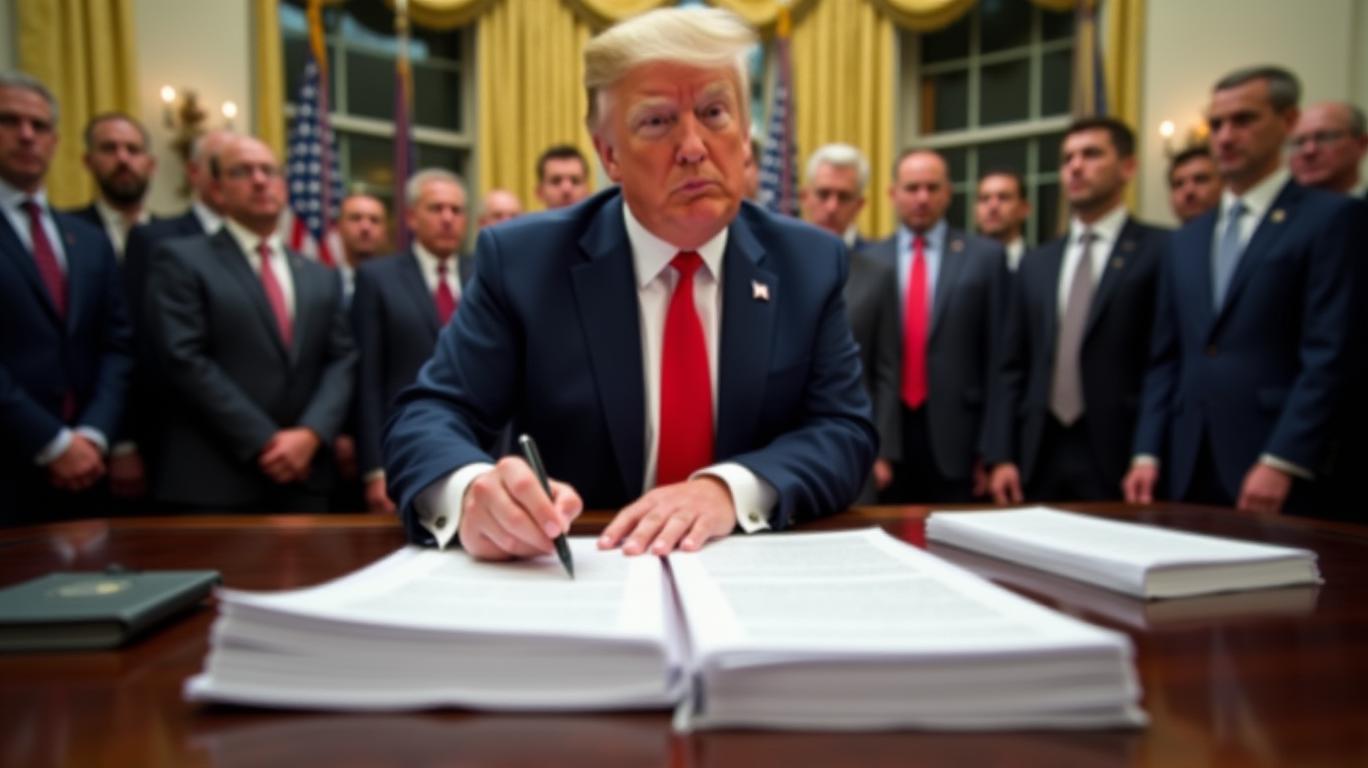
U.S. President Donald Trump has issued an executive order imposing a 25% tariff on imported cars, marking a significant escalation in the trade war aimed at bringing more manufacturing jobs to the U.S. The tariffs are set to take effect on April 2nd, a move that is expected to have wide-ranging implications for both domestic and international automotive industries, as well as for consumers who may face increased car prices.
Trump's announcement is part of a broader strategy to overhaul U.S. trade relationships. Speaking at the White House, Trump emphasized that the tariffs would be implemented on April 2nd, marking a significant shift in U.S. trade policy. The move is expected to have far-reaching implications for both domestic and international automotive industries, as well as for consumers who may face increased car prices.
The tariffs are set to impact major automotive manufacturers from Japan, Germany, and South Korea, who are likely to face significant challenges in navigating the new trade landscape. The U.S. president has also hinted at additional tariffs on other sectors, including wood products, although he has not provided specific details on the scope or timing of these measures.
In a press conference, Trump clarified that the tariffs would be applied equally to all countries, but he assured that the rates would be lower than anticipated. He stated, "We will make it very lenient. I think people will be very surprised. In many cases, it will be lower than the tariffs they have been charging us for decades." This approach aims to create a more balanced trade environment, although the exact details of how this will be achieved remain unclear.
Trump's announcement has sparked concerns about the potential economic impact of the tariffs, both domestically and internationally. While the U.S. president has long criticized trade partners for "exploiting" the U.S., the implementation of these tariffs could lead to retaliatory measures from other countries, further complicating global trade dynamics. The move has also raised questions about the potential for market volatility, as investors assess the broader implications of the U.S.'s shifting trade policies.
The tariffs are part of a larger plan to reform U.S. trade relationships, with Trump promising to announce comprehensive tariff measures next week. He has described this as a "liberation day" for U.S. trade, although the specifics of the new tariffs, including their scope and implementation, have not been fully disclosed. Trump has indicated that there will be limited exceptions to the tariffs, suggesting that companies and countries may have limited opportunities to negotiate exemptions for their products.
The announcement has been met with mixed reactions, with some industry experts expressing concern about the potential economic fallout, while others see it as a necessary step to protect U.S. manufacturing jobs. The tariffs are expected to have a significant impact on the automotive industry, with potential repercussions for both domestic and international manufacturers. Consumers may also face higher car prices as a result of the increased tariffs, although the full extent of the impact remains to be seen.
Trump's tariffs are expected to have a significant impact on the automotive industry, with potential repercussions for both domestic and international manufacturers. The tariffs are set to impact major automotive manufacturers from Japan, Germany, and South Korea, who are likely to face significant challenges in navigating the new trade landscape. The U.S. president has also hinted at additional tariffs on other sectors, including wood products, although he has not provided specific details on the scope or timing of these measures.
Trump's announcement has sparked concerns about the potential economic impact of the tariffs, both domestically and internationally. While the U.S. president has long criticized trade partners for "exploiting" the U.S., the implementation of these tariffs could lead to retaliatory measures from other countries, further complicating global trade dynamics. The move has also raised questions about the potential for market volatility, as investors assess the broader implications of the U.S.'s shifting trade policies.
Trump's tariffs are expected to have a significant impact on the automotive industry, with potential repercussions for both domestic and international manufacturers. The tariffs are set to impact major automotive manufacturers from Japan, Germany, and South Korea, who are likely to face significant challenges in navigating the new trade landscape. The U.S. president has also hinted at additional tariffs on other sectors, including wood products, although he has not provided specific details on the scope or timing of these measures.
Trump's announcement has sparked concerns about the potential economic impact of the tariffs, both domestically and internationally. While the U.S. president has long criticized trade partners for "exploiting" the U.S., the implementation of these tariffs could lead to retaliatory measures from other countries, further complicating global trade dynamics. The move has also raised questions about the potential for market volatility, as investors assess the broader implications of the U.S.'s shifting trade policies.

Stay ahead of the market.
Get curated U.S. market news, insights and key dates delivered to your inbox.


AInvest
PRO
AInvest
PRO



Comments
No comments yet