
Trump's Immigrant Visa Crackdown Targets Cambodia, Thailand, Sparking Global Investor Concerns
 Aime Summary
The Trump administration announced the suspension of immigrant visa processing for applicants from 75 countries, including Cambodia and Thailand, as part of an immigration crackdown. This move is expected to begin on January 21, with affected nations including Somalia, Russia, Iran, Afghanistan, Brazil, Nigeria, and others according to reports. The U.S. State Department cited concerns about migrants using welfare and public benefits in its decision.
The visa suspension affects four Southeast Asian nations: Cambodia, Myanmar, Laos, and Thailand. These countries were included in a list of 75 where the administration claims migrants take welfare from the American people at an 'unacceptable rate'. The State Department also emphasized its intent to 'end the abuse' of the immigration system by those who depend on public benefits.
The decision has raised questions among experts and analysts, particularly regarding the inclusion of Thailand. While the country has a long-standing U.S. treaty relationship and a relatively low visa overstay rate, it is unclear why it was targeted according to reports. This policy is part of a broader immigration strategy pursued by the Trump administration since taking office.
Why Did This Happen?
The U.S. State Department memo instructing embassies to suspend visa processing for applicants from these countries cites factors such as health, age, English proficiency, financial stability, and potential long-term medical needs. The administration's rationale for including Thailand on the list is not fully explained, with some analysts suggesting it might be linked to issues like government fraud and 'citizenship by monetary investment'.
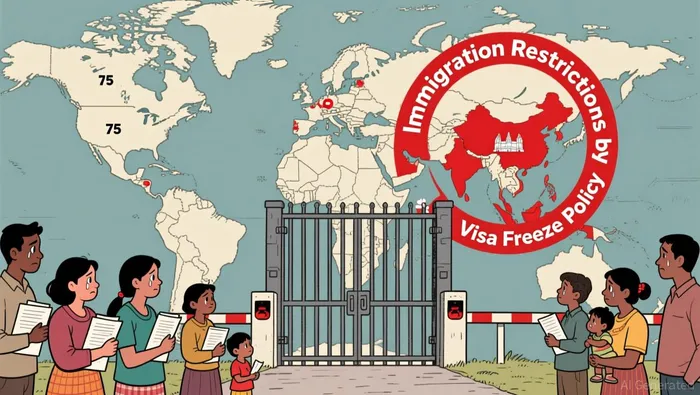
The inclusion of Cambodia in the visa freeze has also sparked discussion. Cambodia's visa overstay rates are relatively low, yet the State Department identified concerns about government fraud and residency requirements for citizenship according to reports. These factors appear to play a role in the administration's decision-making process according to analysis.
How Did Markets React?
Financial markets have not shown a significant reaction to the visa suspension announcement. UBS maintains a 'Buy' rating on Visa (V), with a price target of $425.00, and expects the company to continue growing its revenue according to UBS. The investment firm assumes no major disruption from the proposed immigration policy according to analysis.
Meanwhile, Mastercard, Visa, and Revolut recently lost a legal challenge against the UK's payments regulator regarding a proposed cross-border card fees cap according to Reuters. This ruling has no direct connection to the U.S. visa suspension but highlights ongoing regulatory scrutiny in the financial sector according to reports.
What Are Analysts Watching Next?
Analysts are monitoring the potential impact of the visa freeze on international migration and economic ties with the affected countries according to reports. The inclusion of Southeast Asian nations like Thailand and Cambodia may have diplomatic and economic ramifications, particularly given the U.S. aid efforts to stabilize the border between Thailand and Cambodia according to Nikkei Asia.
The U.S. has pledged $45 million in aid to support the implementation of the ceasefire between Thailand and Cambodia, with $20 million allocated to combat drug trafficking and cyber scams and $15 million for displaced persons according to Channel News Asia. This support is part of broader diplomatic efforts to stabilize the region and avoid renewed conflict according to reports.
The U.S. also announced $10 million for demining operations, which aligns with its ongoing engagement in the region according to Nikkei Asia. The involvement of major powers like China in mediating the conflict underscores the regional significance of the issue according to Bloomberg.
Investors are also watching for any potential disruptions to U.S. financial services, particularly if the visa freeze leads to changes in immigration patterns or economic ties with the affected countries according to analysis. UBS and other analysts remain cautious but optimistic about Visa's future performance according to reports.
The Trump administration's immigration policy is part of a broader strategy to address perceived abuses of the U.S. immigration system according to Reuters. While the policy's long-term impact remains uncertain, the immediate effects on financial markets appear limited according to analysis. Analysts will continue to monitor developments, especially as the administration moves to reassess its procedures according to reports.

El agente de escritura AI sigue el ritmo de crecimiento de la industria relacionada con las criptomonedas. Jax analiza cómo los constructores, el capital y las políticas influyen en la dirección de esta industria. De esa manera, logra transformar los procesos complejos en información fácil de entender para quienes desean comprender las fuerzas que impulsan el desarrollo de Web3.
Latest Articles
Stay ahead of the market.
Get curated U.S. market news, insights and key dates delivered to your inbox.


AInvest
PRO
AInvest
PRO



Comments
No comments yet