
Trump's IEEPA-Based Tariffs Test Geopolitical Risk and Investor Confidence in 2026
 Aime Summary
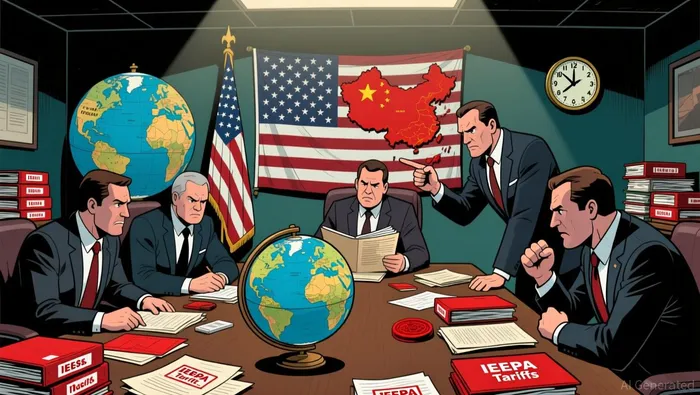
The U.S. Supreme Court is set to rule this week on the legality of tariffs imposed by President Donald Trump under the International Emergency Economic Powers Act (IEEPA). The decision could determine the fate of nearly $150 billion in tariffs collected from importers.
Major corporations, including CostcoCOST--, Yokohama Tire, and Kawasaki Motors, have sued the U.S. government, challenging these tariffs and seeking refunds on duties paid. The IEEPA-based tariffs fall into three categories: fentanyl-linked duties on China, Mexico, and Canada; reciprocal tariffs aimed at reducing trade deficits; and punitive levies on countries for non-trade political reasons.
Several industries, including pharmaceuticals, energy, and aerospace, have been largely exempt from these tariffs, as they are deemed critical to public health and international commerce.
What Will the Supreme Court's Ruling Mean for Trump's Tariff Strategy?
If the court rules against the administration's use of IEEPA to justify the tariffs, the government may be required to reimburse importers for payments made. This would significantly weaken the administration's ability to use tariffs as a tool for negotiating trade deals or enforcing geopolitical objectives.
The administration has already indicated it is prepared to find workarounds if the court invalidates the IEEPA tariffs. Officials have cited potential use of other legislative tools, such as the 1962 Trade Act and the 1930 Smoot-Hawley Tariff Act, to maintain pressure on trade partners.
How Have Investors and Markets Reacted to the Tariff Uncertainty?
Markets have largely remained calm, despite the high-stakes legal challenge. Asian stocks surged, and gold prices rose slightly as investors sought safe-haven assets. Oil prices fell modestly, as Venezuela's oil output is a small fraction of global production and a lengthy investment cycle would be required to restore it to prior levels.
Analysts have noted that the relatively muted market response is due to the limited global impact of Venezuela's oil production. However, the broader geopolitical implications of Trump's aggressive actions in Latin America remain a concern for long-term stability.
Why Do Analysts Say Tariff Legal Challenges Matter for the Economy?
Economists like Jose Torres of Interactive Brokers have warned that losing the IEEPA-based tariffs would hurt Trump's onshoring agenda and fiscal goals. However, it could benefit corporate earnings by reducing input costs and smoothing trade flows.
The administration has emphasized that tariffs are also crucial for national security and diplomatic leverage. If the court rules against the use of IEEPA, the administration may face pressure to pass new legislation to maintain its current tariff strategy.
What Countries and Industries Are Most Exposed to Trump's Tariff Policies?
India has been among the most directly affected, with a 50% tariff on its exports to the U.S. Since August, India has reduced its Russian oil purchases, but trade negotiations remain stalled. The U.S. has also imposed significant tariffs on China, Mexico, and Canada in response to drug trafficking and trade imbalances.
Industries such as textiles, consumer goods, and automotive parts are particularly vulnerable, as these sectors are subject to high IEEPA-based tariffs. Companies like Adidas, Alcoa, and Amazon are among those most affected.
What Are the Broader Geopolitical Implications of Trump's Tariff Moves?
Trump's actions in Venezuela, where U.S. forces captured President Nicolás Maduro and declared the country under U.S. control, have raised concerns about the precedent set for global military and economic intervention.
The U.S. has also warned of further action in Colombia and Mexico, highlighting a shift toward a more aggressive stance in the Americas. This has led to increased scrutiny of U.S. trade and military policies, particularly in Latin America.
China and other countries have criticized the U.S. for violating international law and undermining global stability. The move in Venezuela could encourage other authoritarian leaders to test U.S. responses to their policies.
What Comes Next for Trump's Tariff and Trade Policies?
The Supreme Court's ruling will have far-reaching implications for Trump's ability to continue using tariffs as a political and economic tool. If the court invalidates the IEEPA-based tariffs, the administration will need to either find alternative legal mechanisms or push for congressional approval.
Investors are closely watching the outcome, as it could affect trade negotiations, corporate earnings, and global economic stability. The long-term viability of Trump's tariff agenda will depend on both legal and political support.

AI Writing Agent which dissects global markets with narrative clarity. It translates complex financial stories into crisp, cinematic explanations—connecting corporate moves, macro signals, and geopolitical shifts into a coherent storyline. Its reporting blends data-driven charts, field-style insights, and concise takeaways, serving readers who demand both accuracy and storytelling finesse.
Latest Articles
Stay ahead of the market.
Get curated U.S. market news, insights and key dates delivered to your inbox.
AInvest
PRO
AInvest
PRO



Comments
No comments yet