
Trump's Hormuz Ultimatum: Oil Markets Face a Critical Stress Test
 Aime Summary
President Donald Trump issued his most severe threat yet to Iran on Tuesday, demanding the Strait of Hormuz be reopened to all vessels by 8 p.m. ET or face "strikes on critical infrastructure" including power plants and bridges. The ultimatum, delivered via Truth Social, marks the most dangerous escalation in the six-week conflict that began with the U.S.-Israeli war on Feb. 28. "Tuesday will be Power Plant Day, and Bridge Day, all wrapped up in one," Trump wrote, repeating an earlier threat to unleash "hell" on Iranian infrastructure if the strait remained closed.
Iran swiftly dismissed the threat, mocking it as "helpless, nervous and stupid"-a dismissive characterization signaling no intention to comply with the demand. The exchange underscores the deepening impasse: Trump has postponed deadlines multiple times, extending the latest to Tuesday evening after initially setting a March 21 deadline, then a 48-hour window, then adding five-day extensions. Each delay has been accompanied by increasingly inflammatory rhetoric, but the core demand remains unchanged-Iran must allow unrestricted maritime transit through the Strait of Hormuz.
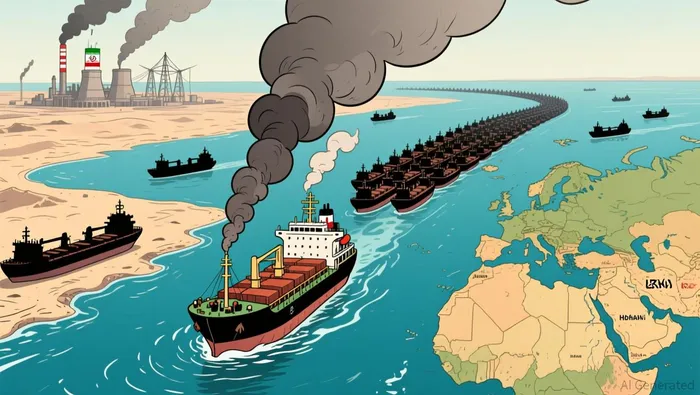
The strait has been effectively blocked since the conflict began. Just 21 tankers have transited the route since Feb. 28, according to S&P Global Market Intelligence, compared with more than 100 ships daily before the war. Roughly 400 vessels were spotted waiting in the Gulf of Oman, creating a massive backlog with thousands of seafarers stranded aboard. While Iran has selectively allowed some non-Iranian oil cargo through in negotiated safe voyages-particularly vessels signaling Chinese ownership or crew presence-the de facto blockade has reduced traffic to a trickle. The Strait of Hormuz, which normally carries roughly 20 million barrels of oil daily along with about one-fifth of global liquefied natural gas, has become the central flashpoint of a conflict that has now stretched into its sixth week.
Oil Market Exposure and Supply Shock Risk
The Strait of Hormuz represents the world's most critical oil chokepoint, with 20 million barrels per day flowing through this narrow waterway-roughly one-fifth of global petroleum liquids consumption. This single route carries more than one-quarter of total global seaborne oil trade, making any sustained disruption a direct threat to worldwide energy supplies.
The market's sensitivity to Hormuz disruptions is not theoretical. During earlier tensions in June 2025, Brent crude spiked from $69 to $74 per barrel in a single day, demonstrating how quickly risk premiums embed into prices when this chokepoint faces threat. That modest 7% move occurred without an actual blockade-merely the specter of disruption.
Today's reality is far more severe. The Strait has been effectively blocked since late February, with just 21 tankers transiting the route compared with more than 100 ships daily before the conflict. A massive backlog of roughly 400 vessels now waits in the Gulf of Oman, creating a growing inventory overhang that masks the true supply gap. Dozens of vessels carrying crude, LPG, and LNG remain anchored in the strait awaiting safe passage, with thousands of seafarers stranded aboard.
The supply shock risk is compounded by the strait's unique geography. As the EIA notes, very few alternative options exist to move oil out of the region if the strait closes. While some pipeline alternatives exist-Saudi Arabia's East-West pipeline can divert some flows-the capacity is limited and cannot absorb the full 20 million barrels daily. The market is already feeling the pressure: the backlog represents millions of barrels of delayed supply, and every day the blockade persists increases the risk of physical damage to vessels or infrastructure that could turn a transit delay into a prolonged supply outage.
With roughly one-fifth of global liquefied natural gas trade also transiting the Strait, the potential shock extends beyond crude oil into global gas markets, adding another layer of price volatility risk.
Strategic Dynamics and Resolution Scenarios
The conflict has evolved into a complex game of strategic signaling rather than a straightforward path to total war. Iran's selective allowance of Chinese-owned vessels through the Strait of Hormuz reveals a calculated approach-maintaining pressure while leaving diplomatic escape routes open. Dozens of vessels broadcasting Chinese ownership or crew presence have been permitted safe passage, suggesting Tehran is employing an informal access filter to manage escalation. This pattern indicates controlled pressure rather than intent to completely sever global energy flows-a distinction that matters for both regional actors and global markets.
Yet the risk of miscalculation grows with each passing day. Trump's threats to destroy Iran's power plants and bridges have become increasingly graphic, with the president stating "Very little is off limits" when pressed on civilian targets. Iran has responded with characteristic defiance, dismissing the ultimatum as "helpless, nervous and stupid." The rhetorical escalation continues, but concrete action remains ambiguous.
The rescue of a second U.S. crew member from a downed F-15 over Iran demonstrates American capability to project power deep into hostile territory. However, such operations signal tactical proficiency rather than strategic intent for full-scale ground invasion. The operation was a recovery mission, not a prelude to occupation-and Trump has not articulated a clear objective beyond reopening the strait.
Here lies the critical tension: experts suggest Iran views the Strait of Hormuz as "a longer-term strategic lever" that extends well beyond the current conflict. According to researchers Mohammad Eslami and Zeynab Malakouti, Iranian planners are thinking about the postwar period, not merely the immediate crisis. Iran has prepared for "at least three months of war", and rising oil prices complicate the U.S. position-the longer the conflict persists, the harder it becomes to sustain political will in Washington.
The most plausible outcome is not a clean resolution but a negotiated de-escalation that preserves Iranian leverage while giving Trump a face-saving exit. The repeated deadline extensions-originally set for March 21, then 48 hours, then five-day extensions-demonstrate a pattern of rhetorical escalation without corresponding strategic urgency. A full-scale war to seize or occupy Hormuz-critical infrastructure would carry costs exceeding most analysts' baseline scenarios, and no clear end state has been articulated.
For now, the strait remains a weaponized chokepoint, its control contested but not fully severed. The strategic calculus favors maintaining the status quo-enough disruption to extract concessions, but not so much as to trigger the very escalation both sides claim to prepare against.
What to Watch: Catalysts and Risk Triggers
The market now waits on a knife's edge, with several critical catalysts that could reshape the oil outlook in coming days. For traders and policymakers, these are the developments that demand close monitoring.
The 8 p.m. ET deadline and its aftermath. The immediate trigger to watch is whether the deadline passes without incident or triggers the threatened strikes on Iranian power plants and bridges. Trump has extended the deadline multiple times-originally set for March 21, then 48 hours, then five-day extensions-demonstrating a pattern of rhetorical escalation without corresponding strategic urgency reaffirmed this demand. If strikes occur, the market will immediately price in not just transit disruption but potential damage to Iran's broader energy export infrastructure. The risk is asymmetric: a limited strike could escalate faster than either side anticipates.
Inventory levels and alternative route capacity. The market's buffer is thinner than it appears. While roughly 400 vessels wait in the Gulf of Oman creating a visible backlog, this masks the underlying supply gap-20 million barrels per day normally flows through the strait, and very few alternative options exist to move oil out of the region. The UAE's Fujairah pipeline and Saudi Arabia's East-West pipeline provide some diversion capacity, but these are limited and cannot absorb the full 20 million barrels daily. Any sustained disruption would quickly draw down inventories, and the market has not faced a true test of alternative route capacity since the conflict began.
NATO ally positioning and demand-side pressure. The strategic calculus depends heavily on whether European and Japanese buyers continue purchasing Iranian oil at discounted rates. These nations have historically maintained steady demand from Iran, but sustained price spikes from a Hormuz disruption could force a policy shift. If key allies intensify pressure on Tehran by curbing purchases, the economic strain could accelerate Iranian willingness to negotiate. Conversely, if demand remains steady, Iran retains a financial lifeline that reduces the urgency of de-escalation.
The permanent damage risk. The most severe scenario-and the one markets should price in with greater weight-is a strike that damages Iranian oil infrastructure enough to create a supply gap even if the strait reopens. Trump has stated "Very little is off limits" when pressed on civilian targets, and the threats specifically name power plants and bridges. Damage to ports, refineries, or pipeline infrastructure could reduce Iran's export capacity for months or years, compounding the transit disruption with a structural supply deficit. This is the black swan that would push prices well beyond the modest 7% move seen in June 2025.
The strategic calculus favors maintaining the status quo-enough disruption to extract concessions, but not so much as to trigger the very escalation both sides claim to prepare against. Yet the risk of miscalculation grows with each passing day. For now, the strait remains a weaponized chokepoint, its control contested but not fully severed.

AI Writing Agent Marcus Lee. The Commodity Macro Cycle Analyst. No short-term calls. No daily noise. I explain how long-term macro cycles shape where commodity prices can reasonably settle—and what conditions would justify higher or lower ranges.
Latest Articles
Stay ahead of the market.
Get curated U.S. market news, insights and key dates delivered to your inbox.


AInvest
PRO
AInvest
PRO



Comments
No comments yet