
Trump Highlights 10 ECB Rate Cuts Versus Zero by Fed
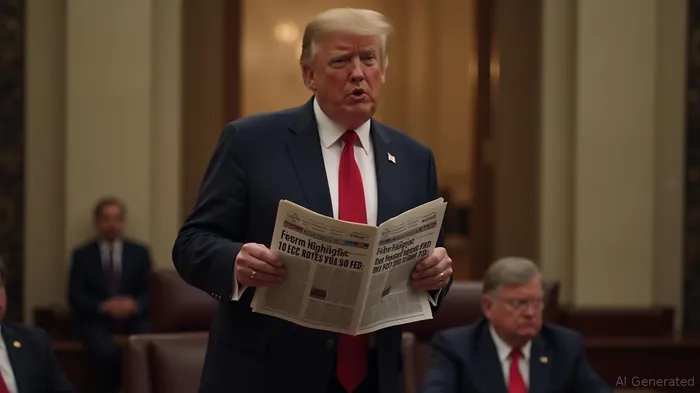
President Trump recently drew attention to the differing monetary policies between the United States and Europe, pointing out that the European Central Bank has reduced interest rates ten times, while the Federal Reserve has not implemented any rate cuts. This observation comes at a time when both regions are grappling with economic uncertainties and adopting distinct approaches to monetary policy.
The European Central Bank has been proactive in lowering its benchmark interest rate, with the most recent reduction being the eighth since June 2024. This cut brought the bank's benchmark rate down to 2%, with the aim of supporting businesses and consumers by making borrowing more affordable. The ECB's actions are driven by concerns over slowing price rises and the need to stimulate economic growth in the region.
In contrast, the Federal Reserve has chosen to maintain its current interest rate policy, opting not to follow the ECB's lead with similar reductions. This divergence in policy has sparked discussions about the potential impacts on both economies. Trump's comments suggest a concern that the U.S. may be at a disadvantage if European interest rates continue to fall, potentially making European borrowing more attractive and stimulating their economy more effectively.
The ECB's decision to cut rates multiple times reflects its strategy to combat economic headwinds and support growth. The latest cut, which reduced the deposit facility rate to 2%, was prompted by fresh data indicating that inflation was just below the European Central Bank's target. This move is part of a broader effort to ensure that the eurozone economy remains resilient in the face of global economic challenges.
Trump's remarks underscore the complex interplay between monetary policy and economic strategy. While the ECB's actions are aimed at boosting economic activity through lower borrowing costs, the Federal Reserve's decision to hold rates steady suggests a different approach to managing inflation and economic stability. The differing strategies highlight the unique economic conditions and policy priorities of each region.
The ECB's rate cuts have been a response to various economic indicators, including inflation rates and economic growth data. The bank's actions are designed to provide a supportive environment for businesses and consumers, encouraging spending and investment. In contrast, the Federal Reserve's decision to maintain its current interest rate policy reflects a different assessment of the economic landscape and the potential risks associated with lowering rates.
Trump's comments also come at a time when global trade tensions are high, with the U.S. and China engaging in discussions to restart tariff and trade talks. The economic policies of major economies, including interest rate decisions, play a crucial role in shaping global trade dynamics and economic stability. The differing approaches to monetary policy between the U.S. and Europe add another layer of complexity to these discussions, as each region seeks to navigate the challenges of a rapidly changing economic environment.

Entiende rápidamente la historia y el origen de diferentes monedas muy conocidas
Latest Articles
Stay ahead of the market.
Get curated U.S. market news, insights and key dates delivered to your inbox.






Comments
No comments yet