
"Trump Halts Afghan Immigration as Courts Challenge Guard Deployments in Security vs. Sovereignty Clash"


 Aime Summary
The Afghan national suspected of shooting two National Guard members near the White House in Washington, D.C., entered the United States under the Biden administration's Operation Allies Welcome (OAW) program in 2021. Rahmanullah Lakanwal, who was wounded in the attack and later taken into custody, had previously worked with the CIA in Afghanistan before relocating to the U.S. under the initiative, which aimed to resettle vulnerable Afghans following the 2021 Taliban takeover according to reports. His arrest has reignited debates over the security vetting of evacuees and the political tensions surrounding the program.
Operation Allies Welcome, launched in August 2021, was designed to provide humanitarian parole to Afghans at risk of retaliation for their collaboration with U.S. forces. The Department of Homeland Security (DHS) stated that evacuees underwent "rigorous" biometric and biographic screenings involving intelligence, law enforcement, and counterterrorism agencies. However, the DOJ's Office of Inspector General later acknowledged shortcomings in the process, including data inaccuracies and the expedited evacuation timeline, which increased risks of allowing individuals with ties to terrorism to enter the country. A 2024 report noted that 55 evacuees were later identified on terrorism watch lists, though the FBI concluded most posed no significant threat.
Lakanwal's case has become a focal point for political criticism, particularly from the Trump administration, which halted all Afghan immigration requests "indefinitely" following the shooting. President Trump condemned the attack as a "crime against humanity" and accused the Biden administration of allowing "20 million unknown and unvetted foreigners" into the U.S., a claim widely dismissed as exaggerated . The administration has since deployed 500 additional National Guard troops to D.C., bringing the total to over 2,200, as part of its broader anti-crime strategy . This move mirrors similar deployments in cities like Los Angeles, Chicago, and Portland, which have faced legal challenges over the legality of using military forces for domestic law enforcement .
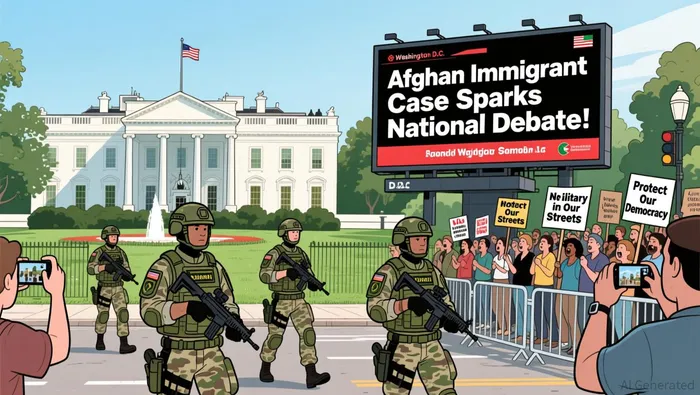
Legal battles have intensified as D.C. Attorney General Brian Schwalb sued the federal government, arguing that the National Guard deployment violates local governance rights. A federal judge recently ruled the deployment unlawful, citing constitutional concerns about congressional authority over the District of Columbia . The Trump administration has vowed to appeal, framing the troops' presence as essential for "protecting federal assets" and combating crime . Meanwhile, critics warn that the militarization of American cities risks eroding democratic norms and public trust .
The incident has also highlighted the precarious status of Afghans in the U.S. Over 190,000 Afghans have settled in the country under OAW and its successor, Operation Enduring Welcome, but tens of thousands remain in limbo, awaiting asylum or immigration decisions . Veterans and advocacy groups have urged the administration to protect those who aided U.S. operations, emphasizing the moral obligation to safeguard individuals who risked their lives for American interests.
As investigations into Lakanwal's motives continue, the shooting has underscored the complex interplay between national security, immigration policy, and political rhetoric. The Trump administration's response-expanding military deployments while suspending Afghan immigration-reflects a hardline approach to domestic security, even as courts and local leaders push back against what they describe as an overreach of federal power . The outcome of ongoing legal challenges and the fate of OAW beneficiaries will likely shape the debate over balancing safety and humanitarian obligations in the years ahead.

Stay ahead of the market.
Get curated U.S. market news, insights and key dates delivered to your inbox.


AInvest
PRO
AInvest
PRO



Comments
No comments yet