
Trump's Greenland Tariff Threats Prompt EU to Consider Strong Countermeasures
 Aime Summary
Germany has issued a stark warning that U.S. President Donald Trump’s latest threats to impose tariffs on European countries opposing his attempt to annex Greenland have crossed a red line. German Finance Minister Lars Klingbeil emphasized the need for Europe to respond with firm, premeditated measures to counter what he described as economic coercion.
Klingbeil, speaking in Berlin alongside his French counterpart Roland Lescure, called out Trump for what he termed a pattern of provocations and antagonism. He stated that European allies must make it clear that limits have been reached and that unilateral economic pressure is no longer acceptable. “Our hand is extended, but we are not prepared to be blackmailed,” he declared.
The finance minister outlined the potential use of a legal tool within the European Union known as the Anti-Coercion Instrument (ACI). Though never activated before, the ACI offers the bloc a range of retaliatory measures that could restrict U.S. access to European public tenders, investments, and banking opportunities. It could also target sectors in which the U.S. holds a trade surplus, such as digital services.
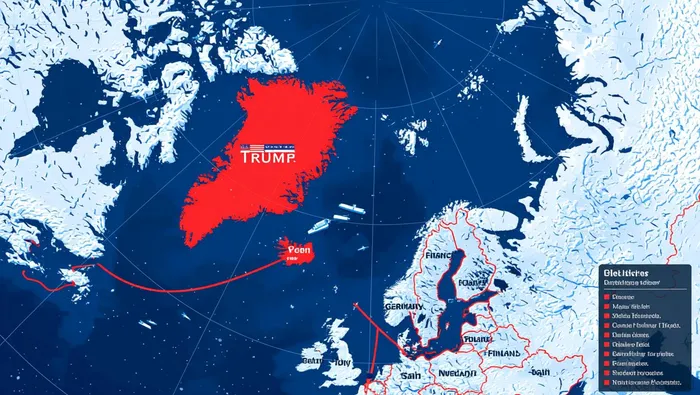
Trump’s tariff threats, announced over the weekend, involve a 10% levy on goods from eight European nations starting in February 2026, with the rate increasing to 25% by June if no agreement is reached on Greenland. The targeted countries include Denmark, France, Germany, the Netherlands, Norway, Sweden, Finland, and the United Kingdom. The tariffs, framed as part of Trump’s insistence on acquiring the Arctic island, have triggered a strong and coordinated response from EU leaders.
European nations are now in active discussions to revive a €93 billion ($108 billion) package of retaliatory tariffs on U.S. imports. Products such as Boeing aircraft, American cars, and bourbon could be affected. The plan is set to automatically take effect on February 6 following a six-month suspension. However, EU leaders aim to maintain a diplomatic tone and have scheduled an emergency summit for Thursday in Brussels to finalize their strategy.
Despite the growing solidarity, not all EU leaders are in complete agreement. German Chancellor Friedrich Merz, for instance, has called for caution, noting Germany’s heavy reliance on exports and the need to avoid further economic damage to transatlantic relations. Nevertheless, Merz reaffirmed Germany’s commitment to a unified stance, stating that the EU must “extend its hand” while preparing strong responses if necessary.
The situation has intensified geopolitical tensions, with European NATO members reinforcing Greenland’s security and Denmark expanding its military presence in the region. Meanwhile, the EU’s foreign policy chief, Josep Borrell, is set to meet with Danish and Greenlandic representatives to further coordinate the bloc’s response.
As the EU weighs its options, the message from Berlin is clear: Europe is no longer willing to tolerate economic pressure as a tool of influence. The coming days will determine whether Trump’s threats lead to a transatlantic trade war or if diplomatic efforts at the upcoming Davos summit can de-escalate the crisis.

Stay ahead of the market.
Get curated U.S. market news, insights and key dates delivered to your inbox.


AInvest
PRO
AInvest
PRO



Comments
No comments yet